Centre, provinces 'struggle to reach consensus' on targeted fuel subsidy
No agreement on subsidy model for motorcyclists, farmers and transport sectors, say sources
Published April 01, 2026
- Provinces asked to share Rs150-200bn subsidy burden.
- Centre says Rs125bn relief already provided.
- Fuel price hike likely in the next review.
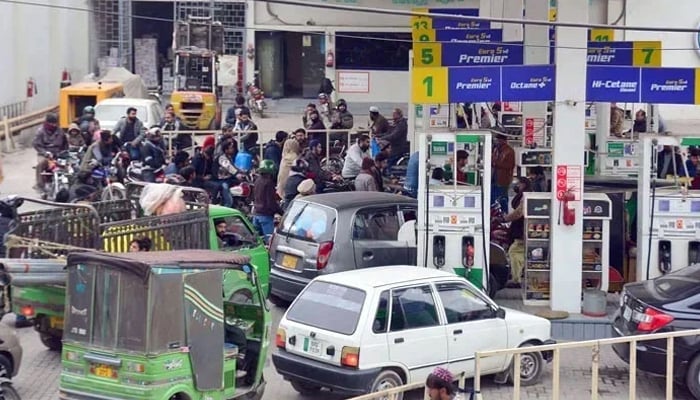
ISLAMABAD: The federal government and provinces have failed to finalise a unified mechanism for targeted fuel subsidy, as differences persist over funding and implementation for millions of consumers, The News reported.
The Centre and the provinces also discussed the possibility for targeted subsidy on diesel for farmers for the upcoming harvesting of wheat, as well as public and goods transport, but no consensus could be achieved.
The Centre has informed the provinces that they have provided a subsidy on fuel to the tune of Rs125 billion so far by keeping the prices unchanged, and now they are unable to provide more subsidy.
The Centre possessed Rs25 billion to Rs35 billion on account of PM’s Austerity Fund and the Centre could contribute through targeted subsidy on behalf of Islamabad, Gilgit Baltistan and Azad Jammu and Kashmir if the provinces agreed upon a unified targeted subsidy for two and three-wheelers.
“It has been largely agreed that the full or partial prices of fuel will be hiked in the upcoming review and a targeted subsidy will be provided,” said the official sources.
According to the data shared by the provinces, there are 22 million motorbikes in Punjab, 8 million in Sindh, 1.5 million in KP and remaining in Balochistan as well as in ICT, GB and AJK.
The provinces will have to contribute from their NFC share to the tune of Rs150-200 billion for the targeted subsidy.
According to a finance ministry’s statement issued on Tuesday, a high-level meeting involving the federal government and the top political leadership of the provinces on petroleum prices and targeted subsidy modalities was held at the Finance Division. The finance minister underscored the importance of collaborative decision-making and maintaining close coordination between the federation and the provinces.
The forum held a comprehensive discussion on the transition from generalised subsidy mechanisms towards more targeted and efficient support frameworks. Various proposals and perspectives were shared by the provincial governments, reflecting their respective administrative capacities, data availability, and socioeconomic considerations.
The participants deliberated on different approaches to ensuring that any support measures are directed towards vulnerable segments of society while maintaining fiscal prudence and minimising market distortions. The discussion also covered potential mechanisms for subsidy delivery, including the use of existing databases, digital platforms, and cash transfer systems.
It was agreed that a working framework outlining the broad contours of a possible targeted subsidy mechanism will be developed and shared with all stakeholders for further input.