Pakistan repays $1.43bn in external debt, says finance ministry adviser
$1.43bn repayment also includes $126m in coupon obligations on other Eurobond issuances, says Schehzad
Published April 07, 2026
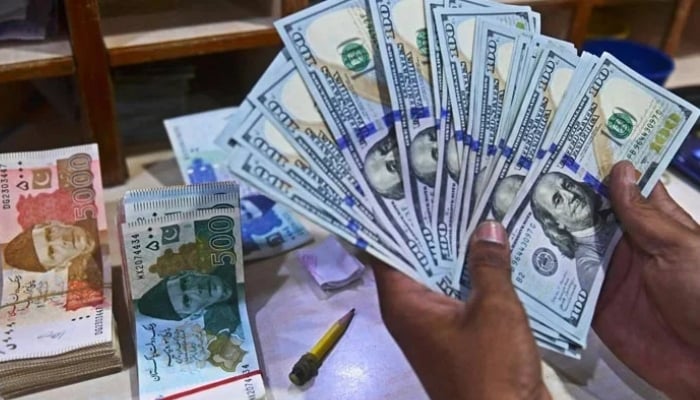
- Repayment includes $1.3bn Eurobond maturing on April 8
- Debt servicing continued to be executed as non-event: adviser.
- Repayment reinforces Pakistan's credibility, says Schehzad.
Pakistan has repaid $1.43 billion in external debt, including the $1.3 billion Eurobond maturing on April 8, said Khurram Schehzad, adviser to the finance minister, on Tuesday.
Schehzad made the announcement in a post on X, saying debt servicing continued to be executed, "... reflecting consistency, discipline, and strengthened capacity."
The $1.43 billion repayment also includes $126.125 million in coupon obligations on other Eurobond issuances, he added.
Schehzad attributed the timely repayment to stable external buffers, improved liquidity, and continued macroeconomic stabilisation.
He said that the performance was underpinned by the government’s measures to strengthen investor confidence and a sustainable and disciplined debt trajectory.
"The seamless execution of large external repayments underscores both capacity and consistency — reinforcing Pakistan's credibility across global investors and financial institutions," he added.
The development comes as Islamabad prepares to repay over $3 billion debt to the United Arab Emirates (UAE).
The loan had been rolled over since 2018 before Islamabad decided to repay it in full, with clearance expected by April 23, Reuters quoted a Pakistani government official as saying.
Previously, the Foreign Office said that the State Bank of Pakistan would begin repayments, and rejected "misleading and unfounded" reports concerning the return of the debt.
In a statement on April 4, the FO spokesperson said that the debt repayment was "a routine financial transaction" and any attempt to portray it otherwise was "erroneous and misleading".
Pakistan previously tried to convert some of the UAE debt into equity. Deputy Prime Minister and Foreign Minister Ishaq Dar said in November last year that the UAE was looking to convert investments into equity stakes in subsidiaries of the military-managed Fauji Foundation.
UAE companies have made investments into Pakistan recently. The Abu Dhabi-based firm International Holding Co acquired a small Pakistani lender First Women Bank Ltd, while AD Ports Group signed a 25-year concession pact for bulk and general cargo operations with Karachi Port Trust in 2024. Pakistan has also offered its airports in government deals to Middle East countries.
Meanwhile, Pakistan's central bank reserves stand at about $16.4 billion as of March 27, with the UAE loan — around 18% of holdings — adding pressure on an economy still recovering as fuel costs rise and shortages linked to the Iran war spur inflation and weigh on growth.
The country managed to stabilise its economy in recent years with the help of loans from the International Monetary Fund and friendly donors like the UAE, China and Saudi Arabia.
— With additional input from Reuters.