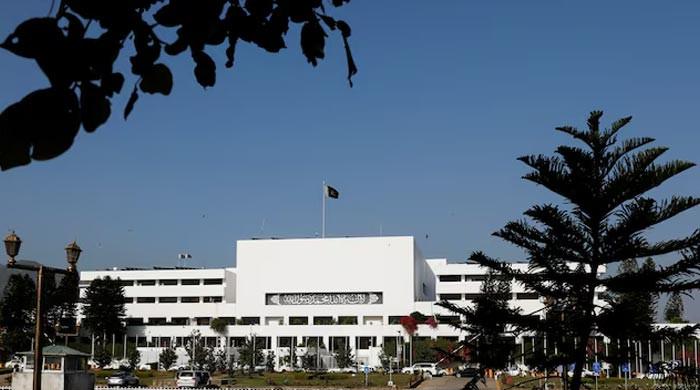
Pakistan's hyperscale moment
Recent geopolitical tensions have exposed a structural vulnerability in this model: concentration risk
Published April 08, 2026
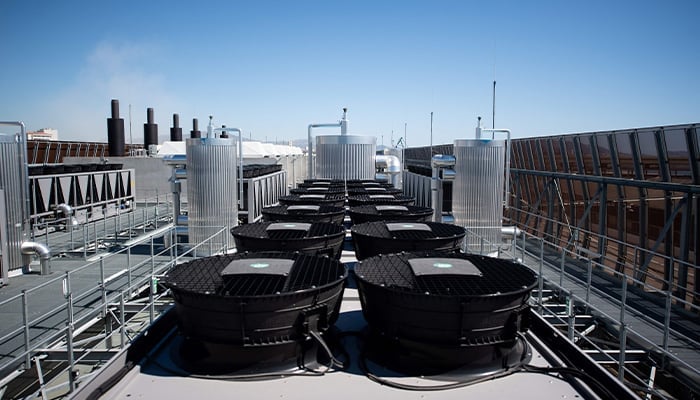
The Gulf region has long stood as the epicentre of digital infrastructure in the broader Middle East, with countries like the United Arab Emirates (UAE) and Saudi Arabia building formidable ecosystems to attract hyperscale data centres; the vast, energy-intensive facilities that underpin cloud computing, artificial intelligence and the modern digital economy.
Yet, recent geopolitical tensions have exposed a structural vulnerability in this model: concentration risk. When digital infrastructure is geographically clustered, it becomes susceptible not only to market fluctuations but also to physical disruption and geopolitical spillovers.
Against this backdrop, the search for redundancy is a strategic imperative. Increasingly, attention is turning eastward, toward Pakistan, not as a replacement for the Gulf, but as a complementary geography that could anchor the next phase of distributed digital infrastructure.
At the heart of Pakistan’s potential lies geography. Situated at the intersection of South Asia, the Middle East and Western China, the country is uniquely positioned to function as a bridge for data flows. New and planned subsea cable landings along Karachi’s coast, combined with terrestrial connectivity northward, give Pakistan a structural advantage that few emerging markets can replicate.
As hyperscalers seek to distribute workloads across multiple regions to mitigate geopolitical and operational risks, such positioning becomes invaluable.
Pakistan’s case begins with connectivity, an area where perception has long lagged reality. Today, at least nine major international submarine cable systems connect the country to global data routes, linking Karachi to Europe, the Middle East, East Africa, and Southeast Asia. These include major systems such as AAE-1, IMEWE, TW1, PEACE, Africa-1 cable and SEA-ME-WE 4, 5 & 6, with additional capacity expected from emerging cables like 2Africa. This places Pakistan not at the margins of the global internet, but along one of its principal corridors.
What makes this positioning more compelling is the country’s gradual evolution from a maritime endpoint into a terrestrial bridge. The fibre optic link developed under the China-Pakistan Economic Corridor stretches from Rawalpindi to the Khunjerab Pass and into China, embedding Pakistan within a broader Eurasian connectivity framework.
This land-based route provides an alternative to subsea routes, which are increasingly viewed as vulnerable to both disruptions and geopolitical chokepoints. As discussions emerge about routing regional traffic, including potentially Chinese data, through Pakistan, the country’s role is beginning to shift from merely being connected to becoming connective.
There is also a domestic story unfolding. Pakistan’s digital economy is expanding, driven by rising demand for cloud services, local data hosting, and AI infrastructure. Early-stage investments in GPU clusters and localised cloud solutions indicate that the ecosystem, while nascent, is beginning to take shape. Hyperscalers typically follow demand, and Pakistan is steadily building that baseline.
Policy, too, is beginning to align with infrastructure. The Cloud First Policy, introduced in 2022, signals a deliberate shift toward cloud adoption in the public sector, creating an anchor for domestic demand and sending an important signal to global investors.
While implementation remains uneven, the policy reflects a broader recognition that digital infrastructure is not ancillary but foundational to economic growth. In emerging markets, such directional clarity often precedes capital inflows.
Yet Pakistan’s most underappreciated advantage may lie beyond its coastline, in the cooler and energy-rich regions of its north. Data centres are, at their core, thermodynamic systems: they consume vast amounts of energy not only to compute but to dissipate heat. In many facilities, cooling alone accounts for a substantial share of total power consumption.
Cooler ambient temperatures, therefore, translate directly into operational efficiency. Regions such as Gilgit-Baltistan and parts of Khyber Pakhtunkhwa offer naturally lower temperatures for much of the year, creating the possibility of free or hybrid air cooling – an approach that has drawn hyperscalers to northern Europe and other cold-climate geographies.
This climatic advantage is reinforced by Pakistan’s significant hydropower potential. Northern regions host some of the country’s largest existing dams and the bulk of its untapped hydel capacity. At a time when energy availability has become the principal constraint on global hyperscale expansion, the combination of abundant renewable power and lower cooling requirements presents a rare opportunity. For cloud providers operating under increasingly stringent environmental commitments, such conditions offer not just cost efficiencies but also a pathway to greener infrastructure.
And yet, geography alone does not determine outcomes. The very features that make northern Pakistan attractive from an energy and climate perspective also introduce practical challenges. Distance from submarine cable landing points increases reliance on long-haul fibre, with implications for latency and redundancy. Mountainous terrain complicates construction and maintenance, while transmission infrastructure must evolve to deliver consistent, high-quality power. Seismic considerations further add to the engineering complexity required for hyperscale facilities.
For these reasons, the most plausible pathway forward is not a substitution of coastal hubs with inland ones, but a synthesis of both. Pakistan is uniquely positioned to develop a dual geography model in which coastal cities such as Karachi and potentially Gwadar serve as connectivity anchors, while northern regions emerge as energy-efficient compute zones. High-capacity fibre networks can bind these layers together, enabling a distributed architecture that aligns with the evolving needs of cloud and AI workloads. In particular, the rise of artificial intelligence, with its enormous appetite for compute but relatively lower sensitivity to latency in training environments, makes inland, energy-rich locations increasingly viable.
None of this diminishes the structural challenges Pakistan must address. Regulatory uncertainty, particularly around data governance, privacy and investment frameworks, continues to weigh on investor confidence. Reliability, both in perception and in operational terms, must reach the exacting standards that hyperscalers demand. Broader concerns around macroeconomic stability and risk perception also remain part of the equation.
But these constraints coexist with a convergence of advantages that is difficult to ignore. Pakistan’s growing network of submarine cables, its integration into Eurasian terrestrial connectivity, its emerging policy alignment through initiatives such as the Cloud First framework and its distinctive combination of cooler climates and hydropower resources together form a foundation that few countries in the region can replicate.
Pakistan’s role in the global data centre landscape will not mirror that of Dubai or Riyadh – and it does not need to. Instead, it can define a different value proposition: failover and disaster recovery region for Gulf-based workloads, cost-efficient AI and compute hub, leveraging hydropower and climate advantages, transit corridor for regional data flows, linking China, South Asia, and beyond and sovereign cloud destination for domestic and adjacent markets. In other words, not the centre – but a critical node.
Pakistan’s convergence of subsea connectivity, terrestrial integration with China, Cloud First policy direction and northern energy-climate advantages places it in a stronger position than is often acknowledged.
The opportunity, however, is time sensitive. Global cloud providers are actively diversifying their infrastructure footprints. Countries that move quickly to create enabling environments, through special digital infrastructure zones, guaranteed power supply, streamlined approvals and regulatory clarity, will capture this next wave of investment.
The Gulf’s moment of vulnerability may prove temporary. But the broader shift it has triggered, towards distributed and resilient digital infrastructure, is structural. In that emerging landscape, Pakistan has a narrow but meaningful window to reposition itself.
For Pakistan, the path forward is clear. It must transition from being seen as an emerging market with potential to a reliable digital corridor with execution capability. This requires not just policy reform, but also a coordinated national strategy that aligns energy planning, connectivity infrastructure and investment incentives. To translate potential into investment, Pakistan must act decisively: create digital infrastructure zones, guarantee power and connectivity, streamline approvals and, above all, offer regulatory certainty.
The Gulf will remain a dominant force in digital infrastructure for the foreseeable future. Yet the future of the cloud is unlikely to be defined by singular hubs. It will be distributed, redundant and geographically diversified. In that future, Pakistan’s opportunity is not to displace established centres, but to embed itself within their architecture.
If it can translate potential into execution, Pakistan will not replace the Gulf; it will become essential to its resilience.
The writer is an ICT regulatory expert with over 20 years of experience. He can be reached at: [email protected]
Disclaimer: The viewpoints expressed in this piece are the writer's own and don't necessarily reflect Geo.tv's editorial policy.