Great expectations, greater stakes
On the outcome, there is hope, but no guarantee, because broader context depends on much that lies beyond Pakistan’s control
Published April 11, 2026
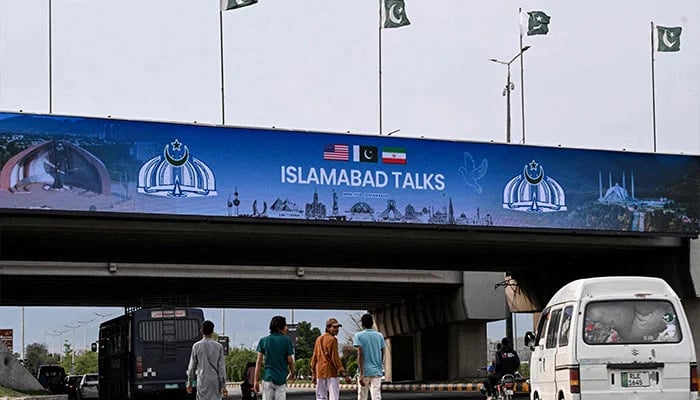
Being the sole country in the world to have had the convening power to bring together two states – one the aggressor, the other the aggressed against – for talks on an effort it has itself piloted, Pakistan has entered one of the most consequential moments in its diplomatic history.
The convening itself was critical, and that has been achieved. On the outcome, there is hope, but no guarantee, because the broader context depends on much that lies beyond Pakistan’s control. Clearly, the ground realities are staring the US in the face: this has become a protracted and damaging war, not the prompt, magical victory over Iran that Trump and his war team, tutored by Benjamin Netanyahu, appear to have believed in.
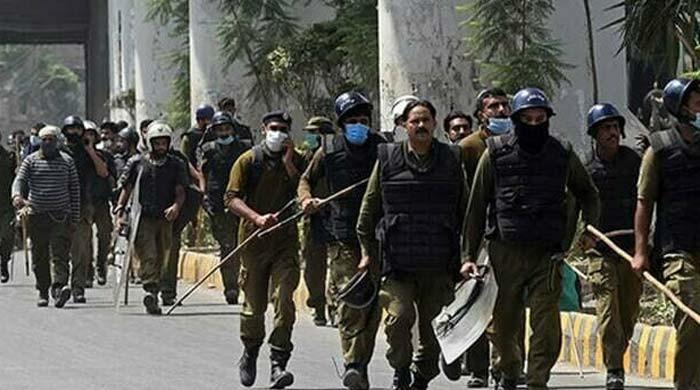
As delegations are expected to arrive (at the time of writing this piece), Islamabad has effectively moved into lockdown mode. This is not routine summit choreography. It reflects both the sensitivity of the negotiations and Pakistan’s awareness that any disruption, physical or political, could derail an opening that remains exceedingly fragile.
This fragility is embedded in four sobering facts. One, the atmosphere in Islamabad is that of a city hosting a negotiation whose modalities remain fluid but whose strategic purpose is clear. The exact format of the talks is still open-ended. The number of sessions, the sequencing of meetings, and the level of direct or indirect engagement are expected to be shaped as the process unfolds rather than fixed in advance. What is defined, however, is the objective: to convert a shaky, behind-the-scenes understanding into something more durable, defensible and operationally sustainable. More than that, an agreement is expected. The task now is to see whether that understanding can be translated into a more permanent arrangement through structured engagement in Islamabad.
Two, these talks are not beginning within diplomatic calm; they are beginning under the shadow of a ceasefire already under severe stress. There was a ceasefire, there was movement toward an understanding, and then came the expected spoiler dynamic. Israel attacked Lebanon, causing the deaths of more than 200 people, later reported to be above that too. The attack came at a moment when diplomacy appeared to be gaining ground and when some form of understanding was moving towards finalisation. This is the central tension framing the Islamabad talks.
This spoiler role by Israel is deeply troublesome, not least because it has pushed maximalist and illegitimate objectives, expanded the war and kept its killing machine in hyper mode in Lebanon. Netanyahu is continuing the attacks while simultaneously demanding that talks begin with Lebanon to disarm Hezbollah – an utterly contrived excuse to smother an Iran-US understanding.
Nor did this spoiler dynamic begin with Lebanon alone. Earlier, Israel attacked Iran’s oil-rich Kharg Island at a critical moment, in what appeared to be a deliberate attempt to provoke a wider regional reaction and sabotage the diplomatic opening that Pakistan had been painstakingly constructing. Seen in that sequence, the Lebanon attacks are not an isolated development but part of a repeated spoiler pattern.
That is precisely why the Islamabad process matters. It is an attempt not merely to continue a conversation between Tehran and Washington, but to rescue an emerging de-escalatory architecture from being overtaken by escalation on another front. Pakistan is therefore not just hosting a meeting; it is trying to protect a diplomatic opening from the spoiler logic that has repeatedly imperilled it.
Three, Pakistan has become an active political shaper, indeed a creator of content for the process itself. Pakistani officials, including the civilian and military leadership, have been in constant contact over several days – indeed, over the last ten to twelve days in an especially intensive manner – to work through possible formulations, relay positions, narrow differences, and create the basis for a common understanding between Iran and the US.
Pakistan has advised, cautioned and shaped. Pakistan’s intervention has therefore been substantive from the beginning of this de-escalatory effort, which began roughly a month ago and has since gained momentum through backchannel work, regional engagement and high-level contact with multiple capitals. Saudi Arabia was kept in the picture. China was kept in the loop and remains a critical player. Pakistani outreach to key capitals formed part of an integrated diplomatic effort to ensure that this process could actually reach the point of face-to-face engagement in Islamabad.
Four, the Islamabad talks are critical because here it’s no longer only about stopping immediate escalation but about seeing whether a fragile pause can be turned into a more permanent arrangement. Pakistani authorities are being extremely careful and meticulous, as they should be. Fingers are crossed, but this much is already clear: these talks are taking place because preparatory work has been done.
The stakes, however, remain immense. Israel remains the principal spoiler variable in this equation. If there was ever doubt about Israel’s long-term objective vis-a-vis Iran, that doubt has steadily narrowed. Bill Clinton has revealed that Netanyahu came to him, went to George W Bush, and went to Barack Obama, repeatedly pressing for an attack on Iran, and that they refused.
That is an extraordinarily important point because it places the current Israeli conduct in a much longer strategic continuum. It suggests that what is being witnessed today is not an episodic objection to a particular diplomatic arrangement, but a sustained Israeli push over many years for confrontation with Iran. Islamabad is therefore hosting a race between diplomacy and a deadly spoiler escalation.
And yet, for Pakistan, this remains an extraordinary diplomatic opening. Only recently, Pakistan was often spoken of as a state pushed to the margins of major diplomacy. Today, it is hosting perhaps the most sensitive and urgently required negotiation in the world. If the process holds, Islamabad will have demonstrated not only relevance but convening power, political credibility and strategic authority. If an initial settlement or even a durable framework emerges, Pakistan will have shown that it can do more than express concern about crises or engage with parties in conflict; it can actually shape the pathways out of them. That is no small achievement.
For now, all eyes are on Islamabad. The capital is secured, the process is beginning under conditions of uncertainty, urgency and enormous geopolitical pressure, and the purpose is clear even if some modalities remain fluid. Pakistan has masterfully facilitated and created this moment. The coming hours will show whether that moment can be protected, widened into a durable arrangement and turned from a precarious ceasefire into a more permanent political understanding.
The writer is a foreign policy & international security expert. She tweets/posts @nasimzehra Email: [email protected]
Disclaimer: The viewpoints expressed in this piece are the writer's own and don't necessarily reflect Geo.tv's editorial policy.
Originally published in The News