Two sides
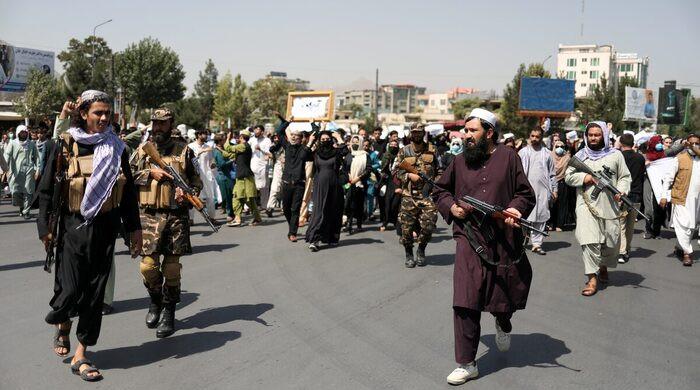
During the recent war, the fierce resistance against the foreign invaders was essential to safeguard national identity and sovereignty
Published April 11, 2026
Today is April 10. According to Hindu Vedic astrology, the horrific fiery effects of Angar Dosh are starting to fade today, as I already predicted in my previous writings. Astrologically, it is a welcome development that efforts to end the devastation of war are now beginning to bear fruit. Undoubtedly, Pakistan is a shining star on the horizon of global diplomacy.
Recently, I read an interesting column by renowned senior journalist Suhail Warraich, published in Jang, in which he presented an imaginative dialogue between Jam-e-Jam (the cup of the ancient Persian king Jamshed) and Jam-e-Safal (a simple clay cup). Drawing upon deep Persian literary symbolism to reflect on the recent Iran war and the eventual ceasefire, he highlights the contrasting perspectives within Iranian and broader regional discourse.
Jam-e-Jam (the Cup of Jamshid) is rooted in ancient Persian mythology. It is associated with the ancient Persian visionary King Jamshid, who used it to analyse the current situation, predict the future and devise successful roadmaps. Over centuries, various Persian and Urdu poets, including Mirza Ghalib and Allama Iqbal, invoked Jam-e-Jam as a metaphor for wisdom, foresight, and universal awareness. In contrast, Jam-e-Safal symbolises simplicity, fundamentalism and cultural pride.
In this fictional conversation, these two symbolic objects debate Iran’s conduct during the recent conflict and the role of regional diplomacy, particularly Pakistan’s remarkable efforts in achieving a ceasefire.
Jam-e-Jam criticises that while other nations explore space and make scientific progress, Iran remains entangled in ideological rigidity and conflict-driven policies. To support its stance, Jam-Jam highlights the heavy losses Iran suffered during the war, including damage to its infrastructure, weakening of its military capacity, and the loss of key leaders. It also says that this posture alienated neighbouring Gulf countries. It emphasises that Iran is on the brink of a terrible collapse, with the possibility of nationwide destruction of infrastructure, energy systems and transport networks.
Within this context, Jam-e-Jam credits Pakistan for the quiet yet decisive diplomatic intervention. Referring to the Islamabad Draft, prepared in collaboration with Saudi Arabia, Turkiye and Egypt, it acknowledges the effort as crucial for peace, preventing further loss and protecting Iran from deeper destruction.
However, Jam-e-Safal presents a contrasting perspective rooted in ideological belief and resistance. While representing an average mindset approach, it defends Iran’s retaliatory actions as a necessary struggle for sovereignty, religious honour and cultural survival. According to this viewpoint, the conflict was not merely political but an attack on Iranian civilisation. During the recent war, the fierce resistance against the foreign invaders was essential to safeguard national identity and sovereignty.
Jam-e-Safal justifies Iran’s strikes on regional countries by arguing that these states provided military bases to the US. It frames Iranian actions as defensive and strategic, insisting that retaliation was very important to prove worthiness. From this perspective, the ceasefire does not signify defeat but rather a strategic success, forcing the superpower into retreat and exposing its inability to achieve its ultimate target of changing the regime.
During the entire debate, Jam-e-Safal glorifies resistance and struggle to safeguard freedom, whereas Jam-e-Jam emphasises tackling challenges tactfully, wisely and carefully. Together, both illustrate the complex dynamics of today’s war, where perceptions of victory and defeat often diverge.
While appreciating the sincere efforts of Pakistan's COAS, prime minister and foreign minister, it is concluded that the real winner is peace and humanity, whereas the true losers are extremism, war hysteria and destruction.
In my view, this symbolic exchange of narratives offers a unique assessment of modern conflict from a Persian literary perspective.
The writer is a member of the National Assembly and patron-in-chief of the Pakistan Hindu Council. He tweets/posts @RVankwani
Disclaimer: The viewpoints expressed in this piece are the writer's own and don't necessarily reflect Geo.tv's editorial policy.
Originally published in The News