A place in the sun
Pakistan’s diplomatic performance in brokering a ceasefire and hosting the talks is a revelation
Published April 12, 2026
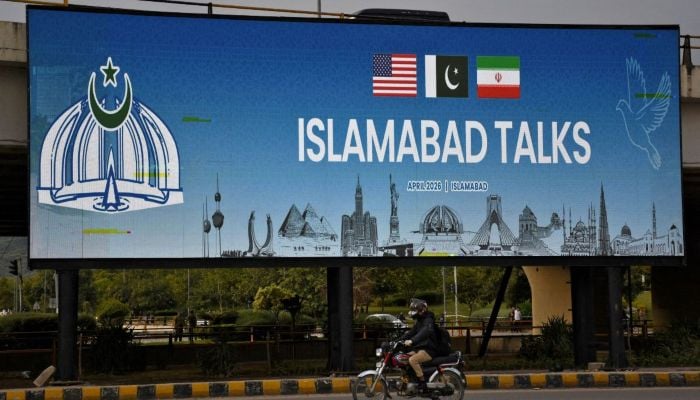
While the world waits, with bated breath, for the outcome of extremely critical talks between the US and Iran to work out a peace agreement, Pakistan has a good reason to rejoice in the fact that it has not only played the leading role in brokering a two-week ceasefire but is now hosting the historic talks.
This is a great diplomatic triumph and allows ordinary Pakistanis to feel proud of what their government has achieved with its creative diplomacy in such treacherous circumstances. The Iran war had pushed the world to the brink of a catastrophic disaster when, literally at the eleventh hour, the ceasefire was announced by President Donald Trump.
The way he put it is resounding evidence of the role Pakistan has played at a historic moment. President Trump wrote on his Truth Social platform: "Based on conversations with Prime Minister Shehbaz Sharif and Field Marshal Asim Munir, of Pakistan, and wherein they requested that I hold off the destructive force being sent tonight to Iran ….. I agree to suspend the bombing and attack of Iran for a period of two weeks".
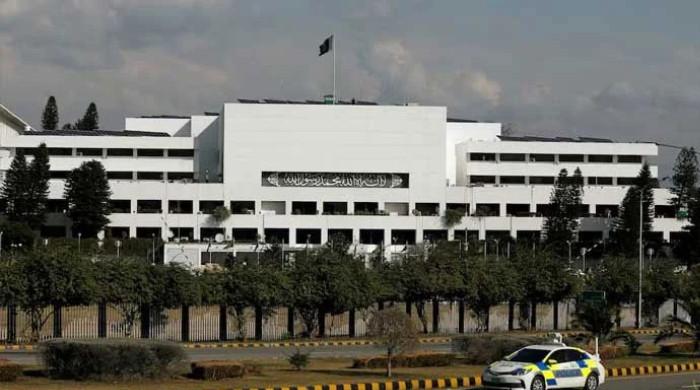
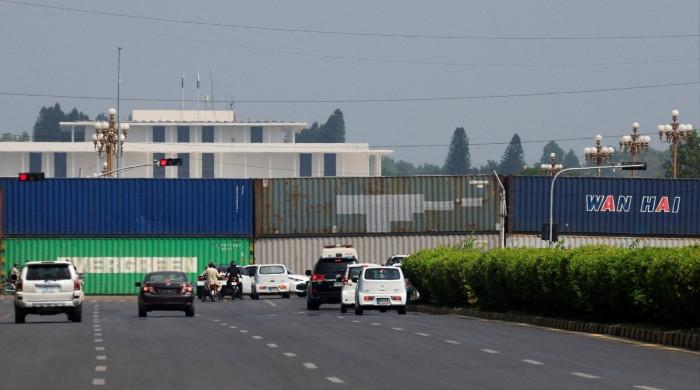
And now, Pakistan is hosting the talks in Islamabad. What this means is that the most urgent talks at this moment in history will be reported across the world with dateline Islamabad. Pakistan, in that sense, is at the centre of the world. It is true that the focus will mainly remain on the proceedings of a difficult encounter between the US and Iran, but a little diversion should be possible to underline the glory that belongs to Pakistan.
For Pakistan, becoming a mediator in this conflict would be an impossible task, given the antagonistic relations between America and Iran at one level and between regional countries at another. There are bound to be many interesting details about how Pakistan was able to deal with this challenge to, in a manner of speaking, find its place in the sun.
For many of us, Pakistan’s diplomatic performance in brokering a ceasefire and hosting the talks is a revelation. It prompts a sense of joy and pride that we are not really accustomed to. Normally, Pakistan’s projection in the world is rarely positive. Our social development indicators are constantly depressing. We are not doing well in our economic and social sectors. On many other counts, we lag behind other countries of the region.
Amid all these deficits, we have this gift of a diplomatic achievement tied to a global event of historic importance. It is also gratifying that Pakistan has earned this high profile through hard work and a resolute sense of purpose. It is easy to see that this was a very, very difficult assignment. The Iran war had the intimations of a global conflict, with unforeseen consequences.
There was this long piece in the New York Times on Wednesday that recorded the “scramble for a ceasefire” titled: ‘36 hours of chaos’. It noted that in the middle of the afternoon in Washington on Tuesday, “an encouraging message about an agreement taking shape was vetted by the White House and posted on social media by Pakistan’s prime minister”.
There is another reference to Pakistan’s involvement in the negotiations for a ceasefire. “Shortly after 5pm Pakistan's army chief, Field Marshal Syed Asim Munir called Mr Trump to discuss the contours of the ceasefire agreement. Mr Munir told the president that the Iranians had agreed to Pakistan’s proposal.”
There is a long list of world leaders who have lauded Pakistan’s courageous diplomacy. Though this ceasefire is very fragile and there are apprehensions about how the negotiations could unfold, this first step towards peace was taken less than two hours before the deadline given by President Trump to Iran to reopen the Strait of Hormuz. Otherwise, “a whole civilisation will die tonight”. That the leader of the most powerful country would make such a threat is something the world has struggled to comprehend.
Anyhow, the talks are now being held in Islamabad against the backdrop of Israel’s heaviest bombardment of Lebanon, though Pakistan and Iran have held that Lebanon was part of the ceasefire agreement. President Trump has argued that the conflict between Israel and Hezbollah is a separate issue. Iran’s control of the Strait of Hormuz is another source of strain.
By securing a two-week ceasefire, Pakistan has opened the possibility of lasting peace in the Middle East. There are observers who believe it would not be easy to reach a final agreement to resolve all the disputes between America and Iran. At the same time, the very thought of a resumption of the war is forbidding. Still, there is some talk of a ceasefire being a calm before a bigger storm.
With the ceasefire in place, there is also time to reflect on a number of questions. One, of course, is whether this ceasefire will hold. In other words, what next? Since the war was started, without any justification, by the US and Israel, a good question is whether they have achieved any of their objectives.
In a separate context, President Trump is in the limelight for his actions and pronouncements. He wanted to bring Iran back to the Stone Age and then obliterate its civilisation in one night. One question that does seem valid is whether he personifies the beginning of the decline of the American empire. Does the Iran war mark the waning of American power in the world?
Some hope that the Islamabad talks will be fruitful perhaps resides in the fact that America has repeatedly declared its victory without being specific about the objectives it has achieved. By and large, military experts are of the opinion that America has suffered a massive strategic setback. Iran, on the other hand, is seen as strategically stronger.
We will have to see how these perceptions are reflected in positions taken by America and by Iran in Islamabad. Will peace prevail?
The writer is a senior journalist. He can be reached at: [email protected]
Disclaimer: The viewpoints expressed in this piece are the writer's own and don't necessarily reflect Geo.tv's editorial policy.