IMF keeps Pakistan growth outlook unchanged at 3.6%
Inflation in Pakistan is projected to average 7.2% during ongoing fiscal year, says Fund in latest report
Published April 15, 2026
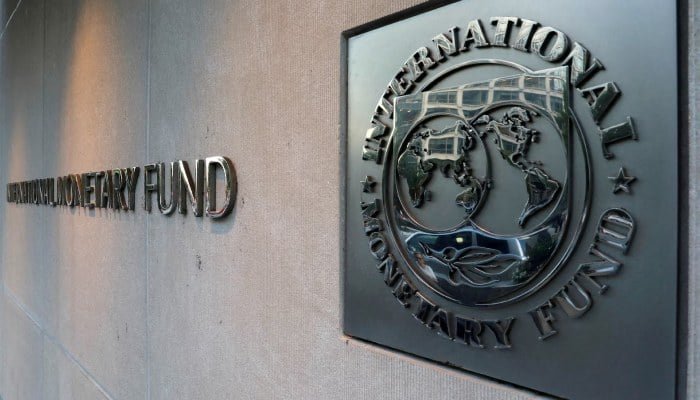
- IMF releases World Economic Outlook 2026.
- Fund forecast is below official target of 4.2%.
- Inflation expected to rise in next fiscal year.
ISLAMABAD: The International Monetary Fund (IMF) has kept Pakistan’s growth rate unchanged at 3.6% for FY26, lower than the officially envisaged target of 4.2% amid a downward revision in global economic growth outlook in the wake of the ongoing war in the Gulf region.
The IMF released its latest World Economic Outlook 2026, The News reported, warning that the ongoing conflict in the Middle East has adversely affected global economic growth.
Global economic growth, according to the IMF, is projected to reach 3.4%, reflecting a 0.2% decline due to geopolitical tensions, particularly the war in the Middle East. The IMF noted that disruptions to global energy supplies and financial markets have weighed on the economic prospects of countries worldwide.
For Pakistan, the IMF forecasts economic growth at 3.6% for the current fiscal year, falling short of the government’s target of 4.2%. The report indicates that while economic activity is expected to continue recovering, growth remains constrained by structural challenges and external risks.
Inflation in Pakistan is projected to average 7.2% during the ongoing fiscal year and is expected to rise further to 8.4% in the next fiscal year, 2026-27.
This compares with an inflation rate of 4.5% recorded in the previous fiscal year, highlighting renewed price pressures. The IMF also projects a modest improvement in Pakistan’s labour market. Unemployment is expected to decline from 7.1% to 6.9% during the current fiscal year and further ease to 6.5% in the following year. On the external front, the current account deficit is projected at 0.4% of GDP for the ongoing fiscal year, with a possible increase to 0.9% of GDP in the next fiscal year.
After withstanding higher trade barriers and elevated uncertainty last year, global activity now faces a major test from the outbreak of war in the Middle East. Assuming that the conflict remains limited in duration and scope, global growth is projected to slow to 3.1% in 2026 and 3.2% in 2027. Global headline inflation is projected to rise modestly in 2026 before resuming its decline in 2027. The slowdown in growth and increase in inflation are expected to be particularly pronounced in emerging market and developing economies.
Downside risks dominate the outlook. A longer or broader conflict, worsening geopolitical fragmentation, a reassessment of expectations surrounding artificial-intelligence-driven productivity, or renewed trade tensions could significantly weaken growth and destabilise financial markets. Elevated public debt and eroding institutional credibility further heighten vulnerabilities. At the same time, activity could be lifted if productivity gains from AI materialise more rapidly or trade tensions ease on a sustained basis.
Fostering adaptability, maintaining credible policy frameworks and reinforcing international cooperation are essential to navigating the current shock while preparing for future disruptions in an increasingly uncertain global environment. The rise in geopolitical tensions could boost economic activity in the short term but also bring about inflationary pressures, weaken fiscal and external sustainability, and risk crowding out social spending, which could in turn ignite discontent and social unrest.