Failure to monetise
Pakistan does not lack opportunities; it lacks direction
Published April 19, 2026
The war began on December 24, 1979. Washington first offered Pakistan $400 million. President General Zia-ul-Haq dismissed it as “peanuts”. Islamabad refused.
In 1981, the two sides agreed to a $3.2 billion six-year military and economic assistance package. A second phase followed another $4.0-4.2 billion for 1988-93.
But the story does not end with Washington. Saudi Arabia added $6-8 billion in parallel flows. The UN system financed refugees at $3-5 billion. The World Bank and IMF provided $5-7 billion in concessional finance, program support, and balance-of-payments relief. Add it up: Total inflow (1980s): $20-27 billion.
In today’s dollars: around $60-85 billion. Red alert: That was not charity. That was geography converted into cash.
After 9/11, the US released $600 million in emergency cash to Pakistan. Paris Club creditors then restructured about $12.5 billion of Pakistan’s debt stock. Congress later backed a $3 billion five-year package, and Pakistan was also allowed to use FY2003–FY2004 allocations to cancel $1.5 billion in debt to the US government.
During Musharraf’s tenure, the US provided over $13 billion in military and economic aid, much of it through Coalition Support Funds. That’s a total of $45 billion in today’s dollars.
The balance-of-payments effect was visible. Pakistan’s total liquid foreign exchange reserves rose from $3.23 billion in 2000-01 to $6.44 billion in 2001-02, $10.77 billion in 2002-03, and $15.65 billion by 2006-07.
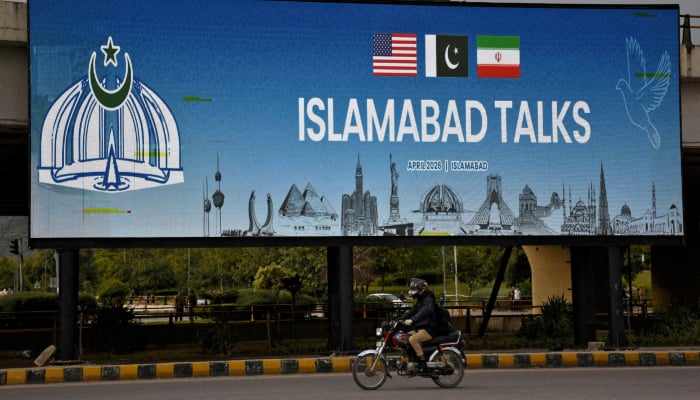
In 2026, Pakistan became indispensable. Leaders flew in. Cameras zoomed in. Islamabad became the stage. Hands were shaken. Statements were issued. Islamabad was on every screen in the world. The world watched. Red alert: This time, geography did not convert into cash.
In 1979, war on Pakistan’s frontier brought $60–85 billion in. In 2001, war on Pakistan’s frontier brought $45 billion again. In 2026, war on Pakistan’s frontier sent $5.7 billion out of the country. This was not just an outflow. It was a balance-sheet shock against a $16 billion reserve base.
Yes, Saudi Arabia has now offered a $3 billion deposit. It provides temporary breathing space, but it does not change the underlying equation.
Here’s the hard truth: The first two wars brought billions into Pakistan. The third is taking billions out. Once, Pakistan’s geography earned strategic rent. Now it attracts strategic risk. Once, wars brought grants, debt relief, and reimbursements. Now they bring bond repayments, reserve depletion, and capital flight.
In 2026, war near Pakistan triggered reserve loss, bond repayment and capital flight. Same geography. Opposite balance-of-payments outcome.
Remember: moments fade — mechanisms endure. This is where we failed: Pakistan hosted the moment, but did not build the mechanism. No reconstruction platform. No energy contracts. No monetisation pipeline. Optics were captured. Cashflows were not.
We must build a National Capital Command (NCC). One window. One signature. Ninety-day approvals. We must bundle diplomacy into deals — reconstruction MoUs, oil supply contracts, labour quotas, logistics corridors. We must guarantee continuity. We must enforce contracts. We must convert every handshake into a pipeline. Pakistan does not lack opportunities. Pakistan lacks direction.
Red alert: If geography is not monetised, it will be taxed.
The writer is a columnist based in Islamabad. He tweets/posts @saleemfarrukh and can be reached at: [email protected]
Disclaimer: The viewpoints expressed in this piece are the writer's own and don't necessarily reflect Geo.tv's editorial policy.
Originally published in The News