Iran and the bomb
Iran's nuclear question looks very different when viewed from Tehran than it does from Washington or Tel Aviv
Published April 21, 2026
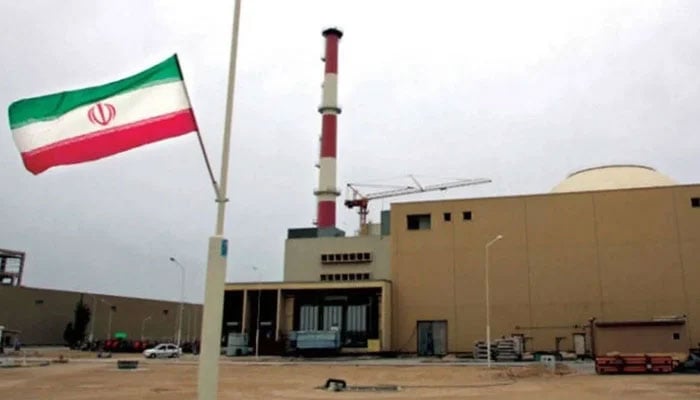
Iran’s nuclear question looks very different when viewed from Tehran than it does from Washington or Tel Aviv. For a country that has been bombed, encircled and sabotaged for decades, the pursuit of a nuclear deterrent appears less an act of adventurism than a bid for survival.
Since 1979, Iran has lived under the shadow of regime-change talk, economic warfare and covert operations led or backed by the US and UK. At the same time, Israel has acquired and quietly expanded an undeclared nuclear arsenal, remains outside the Non-Proliferation Treaty, and has struck nuclear facilities in Iraq and Syria without consequence. From Tehran, this looks less like a rules-based order than a hierarchy of force in which friends are indulged and adversaries are punished.
Pakistan understands this pattern. When India tested nuclear weapons in 1974 and again in 1998, it did so as a state already protected by powerful Western partners. Pakistan, facing an existential rival four times its size, was told to show restraint and trust ‘international guarantees’ that had never saved it in past wars.
Islamabad’s decision to acquire its own deterrent was condemned in Western capitals yet instantly understood by ordinary Pakistanis as a harsh necessity. In Iran’s case, the asymmetry is starker still: it confronts a hostile US, a post-colonial Britain that helped overthrow its elected government in 1953 and a nuclear-armed Israel that openly threatens its destruction.
Modern Iran’s strategic outlook was forged in humiliation and blood. In 1953, a CIA-MI6 coup removed Mohammad Mossadegh, a nationalist prime minister who had dared to nationalise Iranian oil and restored the Shah as a Western client. The security apparatus built with Western help used torture and repression to keep Iran aligned with Washington and London.
The 1979 revolution ended that order but delivered no peace. Within months, Saddam Hussein invaded, betting that a revolutionary state would collapse under pressure. Instead, Iranians endured eight years of war in which Iraqi forces used chemical weapons with near-total impunity. Western powers blocked effective action at the UN even as Iranian troops and civilians were gassed on the battlefield. For many Iranians, that war is the defining trauma: proof that when their people are attacked with banned weapons, the world will look away.
The siege never ended. In the decades since, Iran has watched American forces topple regimes to its east in Afghanistan and to its west in Iraq, while US warships patrol its coastline. The US has continued to support the Mujahideen-e Khalq (MEK), an armed opposition movement seeking to overthrow the Iranian regime that has carried out attacks inside Iran and fought alongside Saddam Hussein during the Iran-Iraq war. Israel, meanwhile, has acted with impunity to overthrow the regime, assassinating Iranian scientists, striking targets linked to Iran’s allies and killing senior military figures, all under the umbrella of its undeclared nuclear monopoly.
Kenneth Waltz, one of the most influential realist thinkers of the last century, argued that nuclear weapons in the hands of additional states often produce more caution, not less. His claim was grounded not in optimism but in observation: the US and the Soviet Union fought peripheral wars and engaged in reckless rhetoric yet never attacked each other directly once both possessed secure nuclear arsenals. The costs were simply too high. Waltz insisted that an Iranian nuclear arsenal would not be the worst outcome, as Western governments claim, but probably ‘the best possible result’ – the outcome most likely to restore a measure of stability by balancing Israel’s nuclear monopoly.
The experience of South Asia bears this out. India and Pakistan have fought wars, exchanged artillery fire and come close to the brink more than once, but since both became overt nuclear powers, their leaders have also shown a striking instinct for pulling back from the edge. Crises are managed, not resolved, because the alternative is annihilation.
None of this absolves Iran’s rulers of responsibility for repression, corruption or the silencing of dissent. Iranians have repeatedly shown in the streets and at the ballot box that they desire political change and greater freedoms. But history suggests that populations under siege will rally around even unpopular regimes when they fear national dismemberment or foreign domination more than domestic injustice.
For outside observers, including those from South Asia, the dilemma is clear. Pushing for regime change from abroad, or threatening to ‘destroy’ the Islamic Republic, only strengthens the very factions most hostile to reform. Easing the existential pressure – by recognising Iran’s legitimate security concerns and working towards a balanced regional order – would give internal forces for change more room to breathe. A state that no longer believes it can be bombed into submission is more likely to take risks on openness and gradual transformation.
The debate over Iran’s nuclear future will not be settled in opinion pages or think-tank panels. It will be decided by leaders calculating risks in Tehran, Tel Aviv and Washington – and by whether the international system continues to accept a world of nuclear haves and have-nots enforced at gunpoint.
For those from South Asia who have lived through their own nuclear reckoning, one lesson stands out: deterrence does not erase conflicts, but it can keep them from consuming entire nations. In a Middle East haunted by Iraq, Syria, Gaza and decades of covert war, that may be the closest thing to stability on offer.
The writer is the founder of Internews, a global non-profit organisation that fosters independent media and access to information worldwide. He has testified before the US House and Senate committees on issues of press freedom.
Disclaimer: The viewpoints expressed in this piece are the writer's own and don't necessarily reflect Geo.tv's editorial policy.
Originally published in The News