New tariff cuts on the cards under new auto policy to liberalise vehicle imports
Weighted average tariff expected to be reduced from 10.6% to 9.5% in upcoming budget for 2026-27
Published April 22, 2026
- Four-tier tariff structure to replace system.
- Used car duties to gradually decline.
- Policy aims to boost localisation, cut prices.
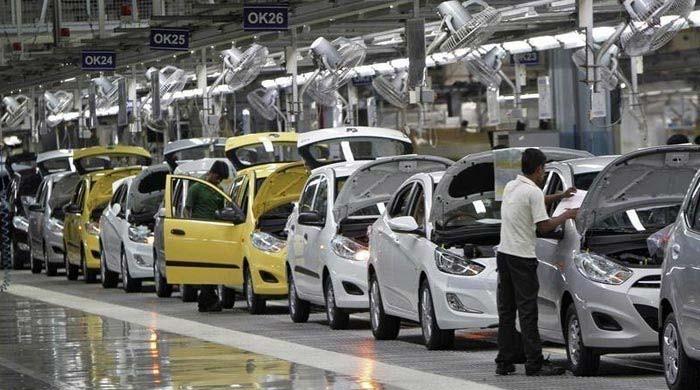
ISLAMABAD: Pakistan is set to roll out a new five-year auto sector policy in consultation with the International Monetary Fund (IMF), aimed at reducing import tariffs, restructuring duties and opening up the vehicle market by 2030, The News reported on Wednesday.
It has also been agreed with the Washington-based lender under the $7 billion Extended Fund Facility (EFF) that no Regulatory Duty (RD) will be introduced on imports.
The weighted average tariff is expected to be reduced from 10.6% to 9.5% in the upcoming budget for 2026-27, which is tentatively expected to be unveiled on June 1, 2026.
For liberalising auto sector imports, a new auto sector policy will be unveiled, which is currently at the stage of preparation. The policy will be shared with the Washington-based lender by the end of the current month.
“The new auto policy is going to envisage a roadmap to implement duty reduction under the National Tariff Policy (NTP) to reduce the weighted average from 10.6 per cent in FY25 to 7.4% by FY30. The duty reduction for the auto sector will bring the weighted average tariff to below 6% and exactly to the level of 5.99%,” top official sources confirmed while speaking to The News.
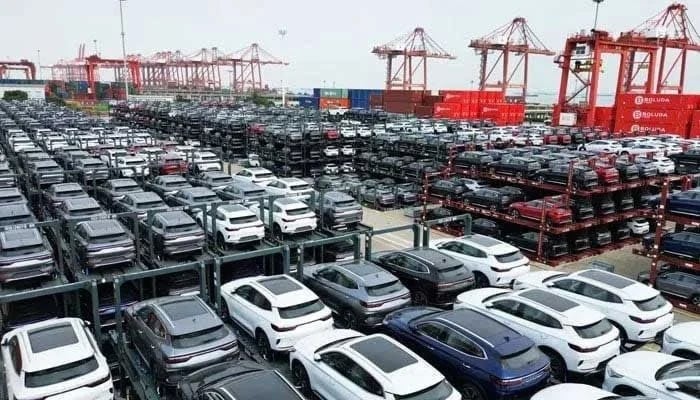
Pakistan is set to unveil a new auto policy with effect from July 1, 2026, aimed at boosting local manufacturing, increasing localisation of parts and curbing vehicle prices.
Over the next five years, customs duties on finished vehicles are expected to be capped at 15%. A new four-slab system (0%, 5%, 10%, 15%) is expected to replace the current tariff structure. A 40% regulatory duty is scheduled on used vehicle imports for FY2026, which is expected to taper off in the coming fiscal year and will be brought down to zero.
This scribe contacted Adviser to the Prime Minister on Industries, Haroon Akhtar Khan, for comments. Haroon said that the auto sector policy was at an advanced stage and would be presented to the prime minister and federal cabinet, after which it would be made public. “We have consulted all stakeholders to strike a consensus, and in case of disagreement, a balancing act will be applied,” he added.
However, the government and the IMF have agreed that the new auto sector policy will be shared with the IMF by the end of the current month, ahead of its approval by the federal cabinet. Through its progressive elimination of all Additional Customs Duty (ACD) and Regulatory Duty (RDs) and a substantial reduction in Customs Duty (CD) rates by FY30, it will be consistent with the agreed overall reduction in the weighted average tariff in line with the agreement with the IMF.
The Motor Vehicle Development Act, the sources said, gives the Engineering Development Board a statutory basis for the new regime of environmental and safety standards for vehicles. It has been submitted to parliament and is expected to be approved by the National Assembly before the end of June 2026.
With commercial importation now legalised, the government has abolished the personal baggage scheme and tightened the criteria for the gift and transfer of residence schemes for used vehicle imports, in order to avoid misuse of these schemes, the sources concluded.