Naqvi, Pezeshkian discuss Pakistan's regional peace push, reports Iranian media
Interior minister holds separate meeting with Iran's Parliament Speaker Ghalibaf
Published May 17, 2026
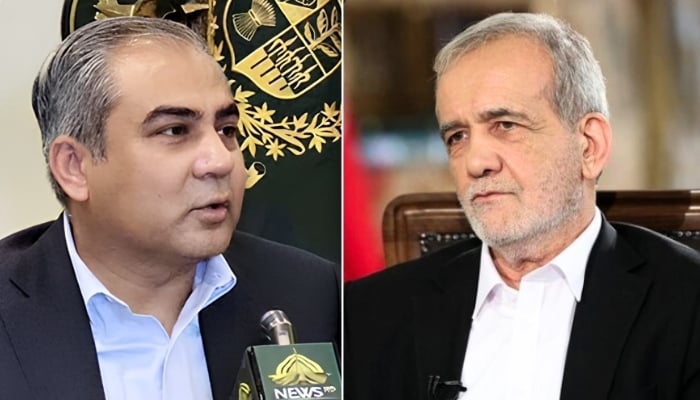
- Naqvi's meeting with Pezeshkian lasted 90 minutes: report.
- Naqvi, Iranian president discuss bilateral ties: Iranian media.
- Interior minister, Ghalibaf discuss key issues during meeting.
Interior Minister Mohsin Naqvi and Iran's President Masoud Pezeshkian discussed Pakistan's mediation efforts for peace in the Middle East, Iranian state media reported on Sunday, amid Islamabad's efforts to keep US-Iran dialogue going.
Naqvi held a 90-minute meeting with the Iranian president, discussing bilateral ties and Islamabad’s mediation efforts, according to the reports.
During the meeting, President Pezeshkian said that the US-Israeli attacks on Iran were aimed at spreading insecurity inside the country.
However, the plans failed due to regional countries' refusal to allow use of their soil for the attacks, he added.
The Iranian president thanked Pakistan, Iraq and Afghanistan for not allowing their territory to be used for military actions against Tehran.
The interior minister also held a separate meeting with Iran's parliament speaker Mohammad Bagher Ghalibaf, who was part of Tehran's delegation in the Islamabad talks.
During the meeting, Naqvi and Ghalibaf exchanged views on key matters, according to Iranian media reports.
Ghalibaf praised Islamabad's stance during the recent conflict, stressing expanded economic, cultural and security cooperation between the two nations.
The presence of the US forces in the region is causing insecurity and opening the way for further security damage, he said, adding that regional countries should strengthen trust and cooperation to advance political and security collaboration.
Naqvi recalled Ghalibaf's efforts in the Islamabad talks, saying Islamabad stood witness to the Iranian leadership's efforts to protect Tehran's interests.
The interior minister said that both countries were witnessing growing closeness between their peoples and reiterated Pakistan's goodwill towards Iran's leadership and public.
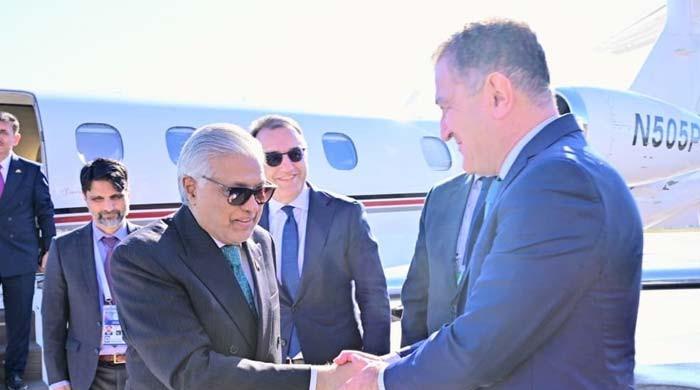
Naqvi arrived in Tehran a day earlier "to facilitate" peace talks between the two sides, Iranian media reported.
"Mohsin Naqvi arrived in the Islamic Republic of Iran on an official two-day visit as part of Pakistan's ongoing efforts to facilitate talks and promote regional peace," the Tasnim news agency reported on Saturday.
Following his arrival, Naqvi met Iranian Interior Minister Eskandar Momeni, who lauded Chief of Defence Forces (CDF) and Chief of Army Staff (COAS) Field Marshal Asim Munir's efforts to help resolve tensions with the US.
Naqvi's meeting with President Pezeshkian comes shortly after Iranian media said that Washington failed to make any concrete concessions in its response to Tehran's proposal for negotiations to end the war.
Fars news agency said that Washington gave a five-point list, which included a demand for Iran to keep only one nuclear site in operation and transfer its stockpile of highly enriched uranium to the United States.
Mehr news agency, meanwhile, said: "The United States, offering no tangible concessions, wants to obtain concessions that it failed to obtain during the war, which will lead to an impasse in the negotiations."
Last week, Prime Minister Shehbaz Sharif confirmed that Pakistan received Iran's response to the US proposal.
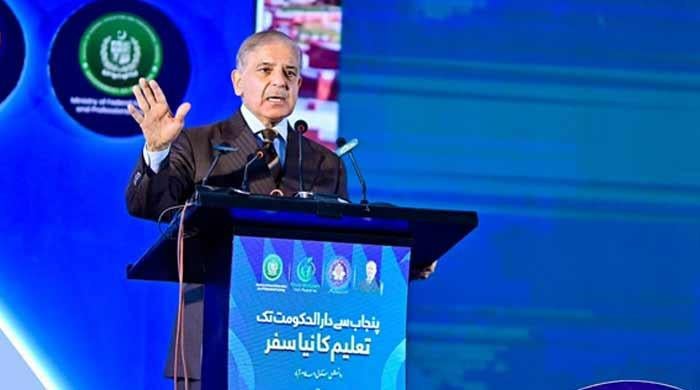
"Right now, the Field Marshal [Asim Munir] informed me that [we have] received Iran's response. I cannot go further into details," he said while addressing an event in Islamabad on May 10.
Later, the Foreign Office spokesperson confirmed that Islamabad forwarded Tehran's response to Washington's proposal for a lasting peace.
"The US-Iran peace process is underway. We are engaged in it and remain hopeful," he said.
Pakistan has been serving as a key mediator between the US and Iran since brokering a ceasefire between the two sides on April 8, ending six weeks of hostilities that have upended global oil and energy markets.
The war in the Middle East began after the US and Israel launched coordinated attacks on Iran on February 28. In response, Tehran targeted Israel and US bases across the region, while effectively blocking the Strait of Hormuz.
Islamabad hosted both sides for peace talks between April 11 and 12; however, the dialogue ended without an agreement for a permanent end to the conflict, as Tehran and Washington disagreed on key issues such as Iran's nuclear and missile programmes and control over Hormuz.
— With additional input from AFP.