The real test of Budget 2026-27 is job creation
Any credible prescription for June 12 must begin with an honest accounting of what the preceding two budgets did not achieve
Published June 11, 2026
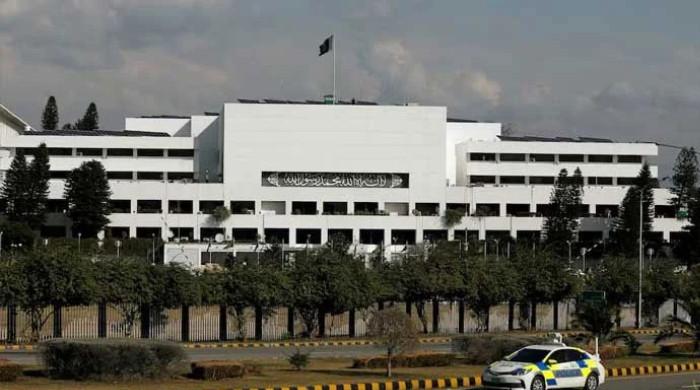
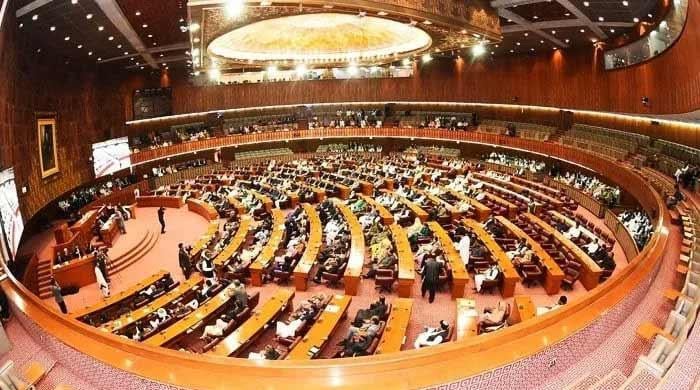
On June 12, Pakistan's Federal Budget 2026-27 will be presented in the National Assembly. Markets will watch the revenue targets. Businesses will scan the tax measures. Economists will debate the deficit projections. But the single question that will determine whether this budget succeeds or fails is simpler and more consequential than any of those: Does it create jobs?
The country's economy is stabilising. GDP growth reached 3.7% in fiscal year 2025-26 (FY26), up from 3.2% the previous year, with agriculture, industry, and services all contributing. After years of balance of payments crises and punishing inflation, this recovery is real. But stabilisation without employment is not recovery.
It is a temporary reprieve. Pakistan, with nearly 5.9 million citizens unemployed and millions more entering a labour market that cannot absorb them, cannot afford to treat job creation as a secondary objective any longer.
Jobs crisis deepens
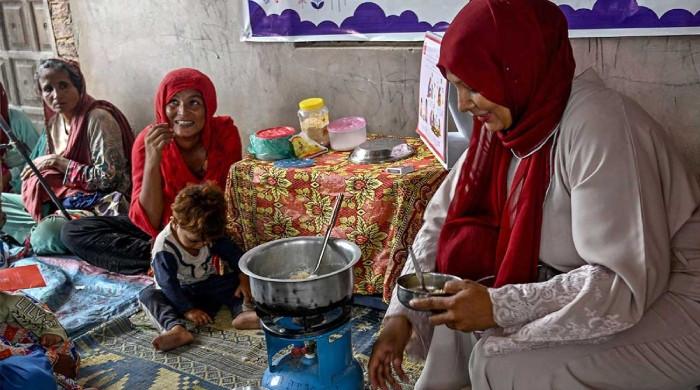
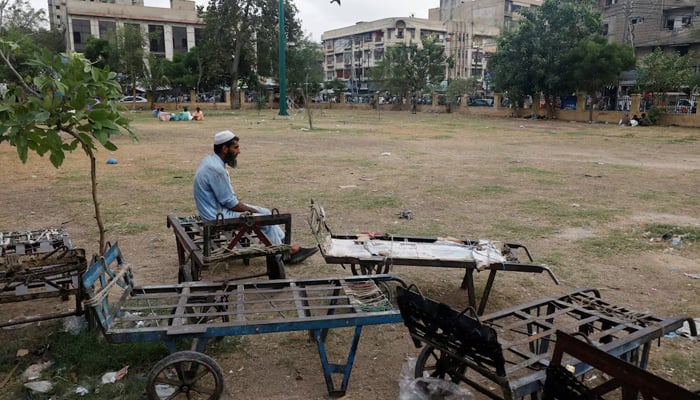
The Labour Force Survey 2024-25 documents an employment situation of genuine severity. Unemployment stands at 7.1%, the highest in 21 years, rising from 6.3% in 2020 21. The labour force has grown from 71.8 million to 83.1 million over the same period, expanding rapidly as young Pakistanis enter an economy not generating sufficient formal work for them. Youth unemployment reaches 12.5%. Female unemployment is higher at 9.7%. Nearly one in three young people between 15 and 24 is not in education, employment, or training.
These are not peripheral statistics. They define the central challenge that June 12 must confront.
World Bank President Ajay Banga stated the arithmetic plainly during his February 2026 visit: Pakistan must generate 25 to 30 million new jobs over the next decade, roughly 2.5 to 3 million annually, to absorb its growing workforce productively.
Failure to meet that threshold will extend consequences well beyond economics into political instability and accelerate the emigration of skilled talent Pakistan can least afford to lose.
Budget gaps
Any credible prescription for June 12 must begin with an honest accounting of what the preceding two budgets did not achieve.
The 2024-25 Budget raised the minimum wage, expanded the Benazir Income Support Programme with skills training, introduced farm mechanisation incentives, and provided modest relief to exporters and small businesses. The 2025-26 Budget shifted toward education, youth internships, digital skills, infrastructure, and small business credit. Both contained defensible policy choices. Both generated some employment, particularly in services and publicly funded projects.
And yet unemployment rose through both cycles.
The explanation is structural and consistent. Public spending entered the system without converting into sustained private sector employment because the real obstacles — high energy costs suppressing manufacturing, regulatory complexity deterring business growth, skills training disconnected from market demand, and weakly targeted investment incentives were identified in budget documents and left inadequately addressed in practice. A budget that names structural barriers without removing them is not a jobs budget. It is a missed opportunity with good documentation.
A further missing link has been job-linked tax incentives and tax holidays, which remain fragmented and inconsistently applied. Well-designed tax holidays tied to employment creation in labour-intensive sectors, especially manufacturing and export-oriented industries, can significantly accelerate private sector hiring. However, these must be conditional, time-bound, and directly linked to verified job creation rather than investment volume alone. Without this shift, fiscal incentives remain inefficient subsidies instead of employment engines.
June 12 must mark a decisive break from that pattern.
Delivery or illusion
The government has set a target of 2 million new jobs for FY2026 27 — 1.1 million in services, 0.5 million in industry, and 0.4 million in agriculture. That ambition is correct. The critical question is whether the budget will be accompanied by structural measures that actually deliver it, or whether the target will remain a statement of intent rather than a delivery plan.
Every decision on taxation, expenditure, energy pricing, investment incentives, including tax holidays, and regulatory reform must pass one test: how many real, formal, and sustainable jobs will this create, and for whom? The IMF programme imposes constraints, including a fiscal deficit target of approximately 3.5% of GDP and a tax revenue target of Rs15.267 trillion. But within those limits, job creation must become the organising principle of budget design, not a secondary narrative.
Three engines of job creation
Of everything this budget must address, three areas carry the greatest employment impact.
1) Energy costs and industry: This is the most binding constraint on formal job creation in Pakistan today. Electricity tariffs are suppressing industrial output, especially in textiles, one of the largest sources of formal employment. Chambers of commerce have consistently identified energy costs as the top barrier to investment and hiring. The budget must deliver measurable energy relief for manufacturing and a credible plan to address circular debt. Lower energy costs translate directly into higher production and more jobs. This can no longer wait.
2) Small and medium enterprises: Small and medium enterprises employ the majority of the non-farm workforce and contribute around 40% of GDP, yet remain constrained by expensive credit, heavy compliance, and punitive tax structures. The recent fixed tax initiative for small retailers is a step forward but not enough. The budget must expand credit access, simplify registration, and support labour-intensive businesses at scale. Every SME job multiplies through local economies and supply chains, making this the highest return employment channel available.
3) Investment linked to employment: Tax incentives and tax holidays must be directly tied to employment outcomes rather than investment volume. Special Economic Zones in underserved regions offer a powerful platform to direct industrial growth where unemployment is highest. International evidence is clear: incentives linked to jobs consistently outperform blanket concessions. This shift must be implemented now.
Structural reforms that cannot wait
Beyond the three core engines, several structural reforms remain essential.
Export policy must move beyond low-value concentration. Duty drawbacks, export-linked financing, and rationalised tariffs can expand both foreign exchange earnings and formal employment. The IT sector shows what is possible, with exports reaching 3.38 billion dollars in FY26 and freelance earnings rising sharply. Manufacturing needs a similar focus.
Skills development must be tied to actual hiring outcomes rather than training completion. Employers, not training providers, must define success.
Infrastructure, housing, and construction must include employment benchmarks, not only spending targets. Agriculture must move from rhetoric to financing, especially for women, where productivity gaps remain large.
Ease of doing business reform must be treated as a job creation policy. Regulatory friction, unpredictable taxation, and weak contract enforcement directly reduce private sector hiring capacity.
Final verdict
When the June 12 budget speech ends, its judgement will not rest on fiscal numbers or macroeconomic projections. It will rest on whether it turns stability into opportunity and opportunity into jobs at scale.
Pakistan’s demographic pressure is already here. Every year of delay compounds the cost of inaction.
This budget will be judged by a single truth: whether it finally converts economic stability, tax policy, and investment incentives into sustained employment for millions who cannot afford another year without work or dignity.
The author is an economic analyst and a former secretary general of the Federation of Pakistan Chambers of Commerce and Industry (FPCCI). He can be reached at [email protected]
Disclaimer: The viewpoints expressed in this piece are the writer's own and don't necessarily reflect Geo.tv's editorial policy.