Seize the day, Pakistan
Pakistan's successful mediatory role provides us with valuable opportunity to develop wide-ranging cooperation with Iran
Published July 02, 2026
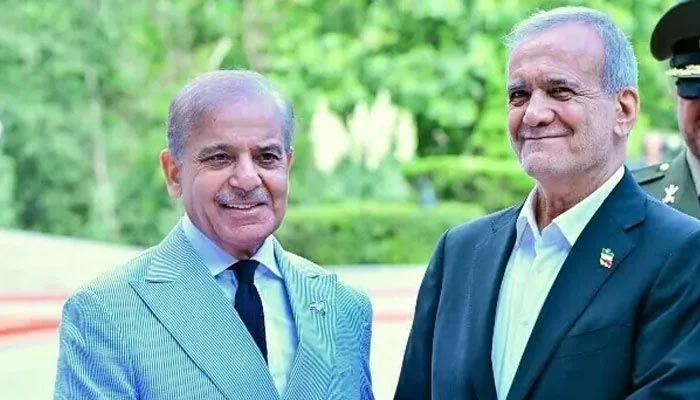
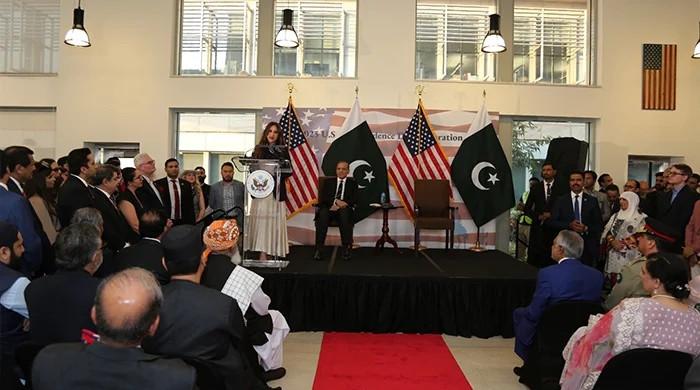
The recent visit of Iranian President Masoud Pezeshkian to Pakistan at the invitation of Prime Minister Shehbaz Sharif took place in the wake of the signing of the Islamabad Memorandum of Understanding between Iran and the US.
Pakistan’s mediation helped put an end to the conflict between the two countries, and the issuance of the Joint Statement by Pakistan and Qatar set in motion the process of technical talks to resolve the outstanding issues identified in the MOU. The first session of the technical talks between Iran and the US ended in Switzerland with the prospect of further negotiations during the 60-day period as visualised in the Islamabad MOU.
The Iranian president’s visit to Pakistan was obviously a gesture of goodwill and appreciation by Iran for the critically important mediatory role Pakistan played in initiating the peace process between Iran and the US. It also reflected the importance that Iran attaches to its brotherly relations with Pakistan and augured well for the development of their bilateral relations to new heights.
Meanwhile, the Strait of Hormuz has been partially opened to commercial shipping, the US has lifted restrictions on the export of Iranian oil, petroleum products and petrochemicals to the rest of the world, except North Korea, Cuba and Ukraine, and a part of the frozen Iranian financial assets has been reportedly released by the US through Qatar.
Unfortunately, there have also been military clashes between the US and Iran because of their differences on the extent of Iranian control in the management of the Strait of Hormuz. Hopefully, these differences will soon be resolved, enabling the technical talks to proceed further. The technical talks in future sessions will focus on the Iranian nuclear programme, especially its uranium enrichment activities, disposal of Iran’s stockpile of highly enriched uranium, lifting of all remaining sanctions on Iran, future management of shipping through the Strait of Hormuz, reconstruction fund for Iran, and ceasefire in Lebanon.
The sudden US-Israeli attack on February 28 this year, despite reports of progress in Iran-US indirect talks in Switzerland with Oman’s mediation, was a blatant violation of the UN Charter and international law, besides being in bad faith. While ostensibly the attack was aimed at preventing Iran from acquiring nuclear weapons, a closer look reveals that the real purpose of the US-Israeli attacks was regime change in Iran with a view to bringing into power a new regime which would be friendly towards the US and Israel, as was the case during the rule of the late Shah of Iran.
Needless to add, the attacks had the opposite effect. The Iranian people, despite their internal differences, united under the leadership of the present Iranian Islamic government and resolutely faced the external threat to the country’s security.
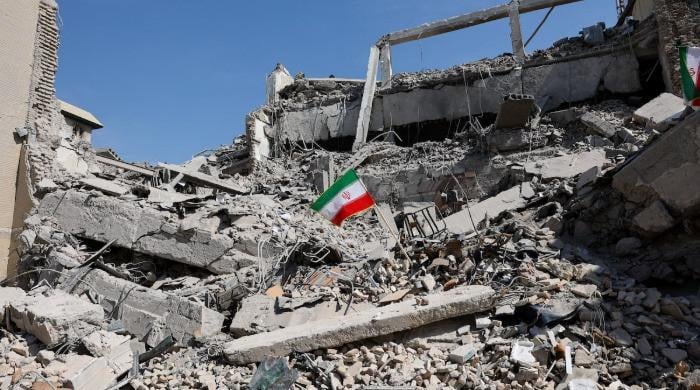
The recent Iran-US conflict and the subsequent developments carry important implications for Iran, the US, Pakistan, the Middle East and the world at large. Iran, as a middle-level country, has defied a superpower and succeeded in defending its essential national interests both during the conflict and the subsequent negotiations, although at considerable cost in the form of martyrdom of its top leadership and extensive damage to its civilian and military infrastructure. It has established its position as a country which needs to be treated with respect by both its friends and foes.
Iran has also demonstrated its potential to emerge as the most powerful country in the Persian Gulf region, considering its population numbering over 90 million, its highly educated people, its vast natural resources of oil, gas, uranium and other minerals, its geographical location, which enables it to control the Strait of Hormuz, and its fairly developed industrial and technological base. No strategically important decision concerning the Persian Gulf region henceforth can be taken without taking into account Iran’s views.
On the other hand, the US, despite its enormous economic and military power, has lost the image of invincibility in the region because of its failure to force Iran to accept an unconditional surrender. As the Islamabad MOU shows, Iran has emerged with considerable gains with the acceptance by the US of its dominant position in managing the flow of the maritime traffic through the Strait of Hormuz, the commitment by the US to unfreeze Iranian frozen assets upon the implementation of this MOU, and the American willingness to issue waivers for the export of Iranian oil and petroleum products immediately after the signing of this MOU.
There is also a growing realisation among some of the Arab Gulf countries that the American security umbrella and the American military bases on their territory have undermined their security and economic interests instead of strengthening them.
These developments will, in due course, erode the US’s dominant position in the Middle East, where it has reigned supreme since the end of World War II, encouraging regional countries to develop security architectures and economic mechanisms to promote cooperation free of interference by non-regional powers. The R-4 group, consisting of Pakistan, Saudi Arabia, Turkiye and Egypt, through its periodic meetings, may be exploring the possibilities of such regional cooperation.
Pakistan, which is located in proximity of the Persian Gulf region, must encourage this trend with a view to playing an active role in the evolution of new security and economic cooperation mechanisms since its own security and economic interests are closely tied with developments in the Persian Gulf region. Ideally, Pakistan should join hands with Saudi Arabia, Iran, Turkiye, Egypt, Qatar, and other willing partners in the region to develop new economic and security cooperation structures in the Middle East.
The latest developments in the Persian Gulf region cannot but have important repercussions in other regions where governments must be watching with considerable interest Iran’s success in defying the US threats and pressure while defending its own essential national interests. This may lead in due course to similar challenges to American supremacy in other parts of the world such as Latin America, Africa and the Far East. From this perspective, these repercussions may prove to be a harbinger of the gradual decline of US global hegemony.
Finally, it should be said that, due to geographical proximity, historical and cultural ties, and economic complementarities, the security and economic well-being of Pakistan and Iran are closely linked. Our successful mediatory role in the signing of the Islamabad MOU provides us with a valuable opportunity to develop friendly relations and wide-ranging cooperation with Iran, both bilaterally and within the framework of the Economic Cooperation Organisation, while simultaneously strengthening our friendly relations with the Arab countries in the Persian Gulf region.
Pakistan should, as soon as the situation permits, proceed with the completion of the Iran-Pakistan gas pipeline project, with the option to extend it to China as part of CPEC. Hopefully, we will not miss this golden opportunity of the century for the strengthening of peace, stability and cooperation in the Persian Gulf region.
The writer is a retired ambassador and author of ‘Pakistan and a World in Disorder – A Grand Strategy for the Twenty-First Century’. He can be reached at: [email protected]
Disclaimer: The viewpoints expressed in this piece are the writer's own and don't necessarily reflect Geo.tv's editorial policy.
Originally published in The News