SC orders immediate FIR registration, warns police of legal action over delays
Trial courts directed to act against officials responsible for delayed FIRs
Published September 18, 2026
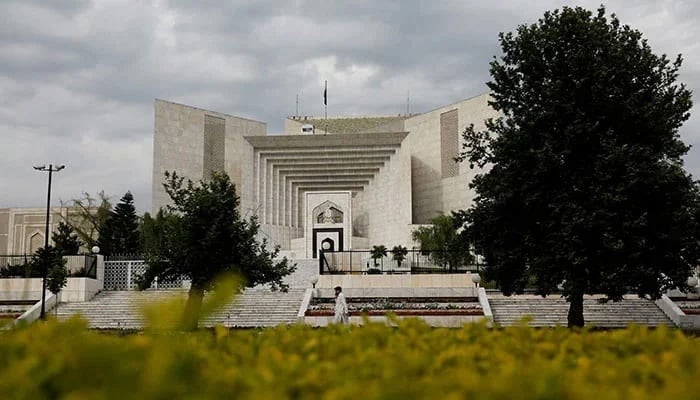
- Court warns police officials facing contempt over FIR delays.
- Trial courts directed to act against delayed FIRs.
- Sindh prosecutor general ordered district-wise murder case report.
The Supreme Court has ordered the immediate registration of FIRs upon receiving information about a cognisable offence, warning that officials responsible for delays could face legal and departmental action.
The directives were issued in a seven-page judgment authored by Justice Salahuddin Panhwar while dismissing a jail petition filed by convict Ali Raza in a 2012 murder case in Dadu.
Ali Raza had been sentenced to life imprisonment and fined Rs100,000 by the trial court, with the Sindh High Court subsequently upholding the sentence.
The judgment noted that police had received information about the murder on the night of the incident but registered the FIR after a delay of more than three days.
“Before parting with this judgment, we observe with dismay, once again, the consistent practice of delayed registration of FIRs in the Province of Sindh,” Justice Panhwar wrote, noting that the practice had continued despite directions issued by the Supreme Court and the appearance of the Sindh inspector general of police.
The court reiterated its directions in the Muhammad Bux case, under which inspectors general of police across the country must ensure the prompt registration of FIRs once information about a cognisable offence reaches the officer in charge of a police station.
“Delay can result in the loss or deterioration of evidence, more particularly forensic evidence, ultimately prejudicing the merits of the case,” the judgment stated.
The SC held that delays in FIR registration should not be treated as mere irregularities where police are aware of a cognisable offence and fail to initiate proceedings.
The court directed trial courts to take notice of such conduct where it is apparent from the record, record a finding on the cause of the delay and take action permitted under the law.
“When the record discloses that the officer in charge, knowing of a cognisable offence, delayed registration of an FIR, the trial court is competent and in a proper case obliged to notice that conduct,” the judgment stated.
It added that the matter could be referred to the inspector general of police for departmental action, while proceedings under Section 201 of the Pakistan Penal Code (PPC) could also be initiated if the legal requirements were met.
The court further observed that once information about a cognisable offence reaches the officer in charge, the FIR must be registered forthwith under Section 154 of the Code of Criminal Procedure (CrPC).
“The excuse that the informant was occupied with funeral rites is alien to that provision,” the judgement stated.
The SC ordered the prosecutor general of Sindh to submit district-wise details of all murder cases from January 1, 2025, until the date of the judgement, in which FIR registration took more than 24 hours.
The report must set out the time of occurrence against the time of reporting and identify cases involving delays exceeding 24 hours.
“The report shall be submitted within two months for perusal in our chambers,” the court directed.
The Supreme Court further warned that non-compliance with its directions in the Muhammad Bux case could lead to contempt proceedings against inspectors general of police, superintendents of police (investigation) and concerned sub-divisional police officers.
“Any further defiance of the judgment of this Court in Muhammad Bux, from this date onwards, may invite proceedings for contempt,” the judgment stated.
The court also directed its registrar to ensure that the Muhammad Bux judgment was translated into Sindhi and uploaded to the Supreme Court's website for public understanding in Sindh.
Moreover, the judgement reiterated the Supreme Court's earlier direction against the use of the term “faryaadi” in police proceedings, noting that it reflected a colonial mindset.
The court emphasised that citizens approach authorities as a matter of right rather than mercy, while also discouraging the phrase “Bakhidmat Janaab SHO” for its subordinate tone and lack of legal backing.
“Needless to say that the citizen approaches the authorities as a matter of right and not as a matter of mercy,” the court observed.
It added, “We concur that it's actually the SHO, who serves the citizens, not the other way around.”
Concluding the judgment, the Supreme Court refused leave to appeal and dismissed Ali Raza's jail petition.