What CPEC 2.0 means
Pakistan, China entering qualitatively new phase reinforced by unprecedented alignment in long-term economic planning
Published December 11, 2025
The 14th Meeting of the China-Pakistan Economic Corridor (CPEC) Joint Cooperation Committee (JCC), held in Beijing on September 26, 2025, represents a historic shift in Pakistan-China cooperation.
More than a review platform, it signalled the evolution of CPEC from an infrastructure-led initiative to a comprehensive, productivity-driven development partnership.
For Pakistan, it marked the consolidation of a new development philosophy — one that merges connectivity with competitiveness, industrial modernisation with human development and physical assets with climate resilience.
For over 10 years, CPEC has stood as the flagship of the Belt and Road Initiative (BRI) and a pillar of the all-weather Pakistan-China strategic relationship. Phase-I successfully resolved Pakistan’s acute energy deficit, upgraded road and logistics networks, and built the foundational infrastructure for economic activity.
With the launch of Phase-II, both countries now enter a qualitatively new phase aligned with President Xi Jinping's emphasis on "high-quality development" and Pakistan's national transformation roadmap, URAAN Pakistan, anchored in the 5Es Framework.
This moment is reinforced by an unprecedented alignment in long-term economic planning between the two countries. China is preparing its 15th Five-Year Plan, while Pakistan’s Ministry of Planning is drafting the 13th Five-Year Plan.
Both frameworks converge on core themes — industrial upgrading, innovation ecosystems, digital transformation, renewable energy, green growth, modern agriculture, rural revitalisation and people-centred development. This structural alignment provides CPEC 2.0 with clarity, purpose and long-term continuity.
At the heart of Pakistan's approach is the 5Es Framework: Exports, E-Pakistan & Innovation, Energy & Infrastructure Efficiency, Environment & Climate Resilience and Equity & Empowerment. CPEC 2.0 advances these through five corridors: growth, livelihood, innovation, green and openness corridors.
The convergence of 5Es and 5Cs defines a unified mission – to steer Pakistan from a consumption-driven, low-productivity economy toward a high-productivity, export-oriented, innovation-led, climate-resilient growth trajectory.
Growth Corridor + Export Engine: CPEC 2.0's Growth Corridor is tightly aligned with Pakistan’s export pillar, aiming to transition from low-value domestic production to high-value global integration. China’s 15th Five-Year Plan emphasises industrial relocation and advanced manufacturing across BRI economies. Pakistan’s Special Economic Zones (SEZs) — including Rashakai, Dhabeji, Bostan and Allama Iqbal — are strategically placed to attract Chinese and international investors in textiles, electronics, engineering goods, automobile parts and agro-processing.
Under URAAN Pakistan, the forthcoming Pakistan Export Promotion Digital Platform will digitally connect Pakistani SMEs to global buyers and e-commerce markets, reducing intermediaries and boosting competitiveness. This shift is essential for Pakistan’s ambition of becoming a $1 trillion economy by 2035, anchored in export-led growth and productivity enhancement.
Innovation Corridor + E-Pakistan: The Innovation Corridor aligns with URAAN’s E-Pakistan pillar to build a modern, knowledge-based economy.
Cooperation now extends to: Artificial Intelligence and cloud computing; 5G and next-generation connectivity; fintech and digital payment systems; mart governance solutions; university–industry research partnerships; and science parks, incubators and startup ecosystems. China's "Digital China" strategy under the 15th Five-Year Plan reinforces this partnership.
For Pakistan, these initiatives offer the possibility of leapfrogging multiple stages of technological development and entering the Fourth Industrial Revolution with stronger capabilities, enhanced human capital, and improved global competitiveness.
Green Corridor + Energy Transition: CPEC 2.0 incorporates the BRI’s "Green Development" vision and supports Pakistan's transition towards clean, low-carbon growth. Key interventions include: utility-scale solar and wind projects; hydropower expansion; energy storage, smart grids and distributed systems; promotion of electric vehicles; climate-resilient agriculture and water management; and disaster warning systems and environmental resilience technologies.
Pakistan, among the world's most climate-vulnerable countries, views renewable energy not only as an economic necessity but a national survival priority. China's technological leadership and Pakistan’s renewable potential lay the foundation for a more secure, affordable and sustainable energy future.
Livelihood Corridor + Equity & Empowerment: One of the defining features of CPEC 2.0 is its strong focus on inclusive development and human welfare. Livelihood-focused programmes support: technical and vocational training for youth; improved primary healthcare and rural medical access; clean drinking water and sanitation services; modernised agriculture, value chain integration, and farmer income enhancement; smart agriculture zones and demonstration farms; and women-focused livelihood and skills initiatives.
These projects reduce regional disparities, enhance incomes, strengthen human security, and embed social protection into economic growth. Every school upgrade, training centre and rural development project deepens the people-centred character of the Pakistan-China partnership.
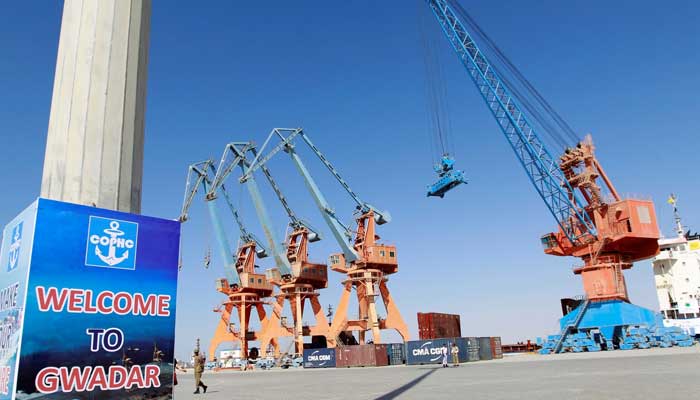
Openness Corridor: This accelerates Pakistan's integration into regional and global supply chains. Its scope includes: Gwadar Port development and the blue economy; enhanced customs and trade facilitation; cross-border e-commerce and digital trade; tourism and cultural exchanges; and academic partnerships and people-to-people exchanges.
Agricultural modernisation is also a major focus — introducing mechanisation, high-yield seeds, water-efficient technologies and advanced farming practices essential for Pakistan's food security and rural transformation. Gwadar's evolution into a Smart Port positions Pakistan as a connectivity hub linking Central Asia, the Middle East and Africa. CPEC 2.0 directly supports Pakistan’s progress on key global commitments, including SDG 7 (Energy), SDG 8 (Jobs), SDG 9 (Industry & Innovation), SDG 10 (Inequality Reduction), SDG 11 (Sustainable Cities), and SDG 13 (Climate Action). Tangible results are already emerging.
To sustain momentum, Pakistan is strengthening coordination mechanisms, ensuring transparency and merit-based execution, improving monitoring and evaluation and reinforcing regulatory stability to attract FDI and enable public–private partnerships.
As Pakistan and China approach the 75th anniversary of diplomatic relations in 2026, CPEC 2.0 marks a profound evolution. The 14th JCC has laid the foundation for a new era of cooperation – deeper, broader and more people-centred. The shared mission is clear: convert connectivity into competitiveness, growth into prosperity and partnership into shared destiny.
CPEC 2.0 is not merely a continuation of past efforts but a strategic transformation. It reflects the aspirations of URAAN Pakistan, aligns with China’s 15th Five-Year Plan and informs Pakistan's 13th Five-Year Plan. Together, both nations are shaping a future defined by productivity, innovation, climate resilience and inclusive human development — building not only economic corridors, but hope, opportunity and a prosperous tomorrow for the region.
Disclaimer: The viewpoints expressed in this piece are the writer's own and don't necessarily reflect Geo.tv's editorial policy.
The writer is the federal minister for planning, development, and special initiatives. He posts@betterpakistan and can be reached at: [email protected]
Originally published in The News