What was Pakistan's 2025 story?
To make sense of the year, it is helpful to examine Pakistan through three lenses
Published December 31, 2025
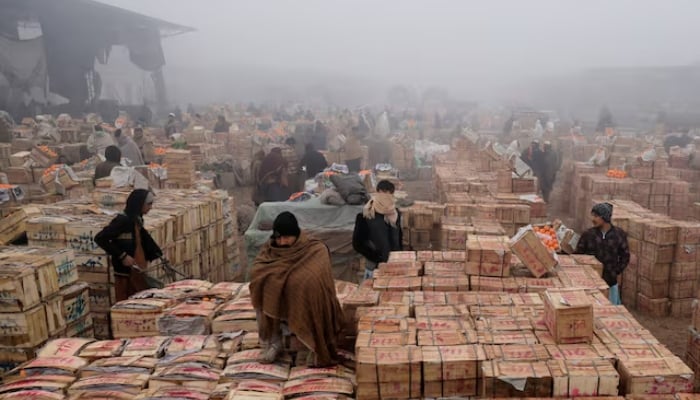
As 2025 draws to a close, one can safely say that it was yet another eventful year for Pakistan. It unfolded amid persistent uncertainty, recurring climate shocks, and familiar structural constraints. Yet it also produced outcomes that many would not have predicted at the start of the year.
Some indicators surprised on the upside, others moved little, and a few revealed tensions that are easy to miss in headline numbers. To make sense of the year, it is helpful to examine Pakistan through three lenses. Through the three pillars of sustainability — economy, environment (read: climate stresses) and social development. Only by placing these three pieces of the jigsaw puzzle side by side does the year come into focus.
Before turning to what improved and what did not, it is worth recalling the backdrop against which 2025 began. At the end of 2024, headline inflation was still in double digits, foreign exchange reserves stood below $9 billion, and the current account deficit had re-emerged after a brief pause.
External financing needs exceeded $24 billion, repeated stop-start stabilisation cycles had weakened confidence and loss-making public-sector organisations were devouring billions of rupees of taxpayers’ money. Climate risks were no longer abstract, while the social sector was under visible strain. These conditions set the contours of Pakistan’s economic, environmental and social scorecard in 2025.
On the economic front, over the last twelve months, the most visible shift was inflation. After averaging above 20% in 2024, inflation fell sharply during 2025 and moved into the low single digits by the final quarter. For households, this eased the daily anxiety associated with frequent price increases in food and fuel. For businesses, it restored a degree of predictability in costs and pricing decisions.
The State Bank of Pakistan’s cautious move towards monetary easing reflected growing confidence that inflation expectations had stabilised. Yet the relief remained partial. Wage growth did not catch up with earlier price increases, and household budgets continued to be constrained by rising costs of utilities, transport, housing and education. Lower inflation reduced stress, but it did not return the lost purchasing power.
On much-needed growth, real GDP rose from 2.6% in FY2024 to around 3.0% in FY2025. This was enough to signal recovery but not enough to ease labour market pressures or create significant fiscal space. Pakistan’s growth constraints remain structural. Investment as a share of GDP stayed below 14%, exports remained concentrated, and productivity gains were limited. Growth has begun, but it has not accelerated.
The external account delivered the year’s most striking macro development. Pakistan recorded a current account surplus in FY2025, the first in fourteen years, compared to a deficit of about 0.5% of GDP in FY2024.
This improvement was supported by resilient remittance inflows that crossed $30 billion and by expanding services exports, particularly in information technology.
The State Bank’s foreign exchange reserves crossed $15 billion by late 2025, compared to less than $9 billion a year earlier. This eased the immediate balance-of-payments pressure and reduced the sense of constant emergency that has often shaped policy decisions.
Yet dependence did not disappear. External financing needs for FY2026 remain above $25 billion, and stability continues to depend on bilateral rollovers and multilateral disbursements.
Fiscal policy remained constrained throughout the year. The fiscal deficit narrowed modestly from about 7.4% of GDP in FY2024 to an estimated 6.5% to 6.7% in FY2025, helped by expenditure restraint and higher indirect taxation. Engagement with the IMF provided financing, discipline and breathing space, but it also highlighted familiar weaknesses.
The tax-to-GDP ratio remained stuck around 10%, debt servicing absorbed more than half of federal revenues, and development spending was compressed.
Pakistan’s sovereign credit outlook stabilised in 2025, and the World Bank and ADB made new commitments. Market sentiment became less fragile than in 2024, as default fears dissipated. Large-scale manufacturing showed only tentative recovery, and foreign direct investment remained below $1.5 billion, reflecting continued concern over political uncertainty, policy reversals, and unresolved constraints in energy and logistics.
Against this backdrop, there was a significant development last week that went beyond indicators and forecasts, directly affecting the credibility of the reform.
The year closed with an outcome that would have seemed unlikely in January 2025. After years of false starts, the government completed the long-delayed privatisation of Pakistan International Airlines, transferring majority ownership to a private consortium through a competitive bidding process.
The move eased pressure on public finances and strengthened confidence that reform of other loss-making state-owned enterprises is no longer off the table. In this respect, the IMF programme functioned less as an external imposition and more as a catalyst that helped convert long-standing commitments into action.
On the climate front, Pakistan braved yet another stress in 2025. The monsoon floods damaged infrastructure, disrupted agriculture and affected millions, particularly in Punjab and Sindh. Past experience would have suggested a sharp spike in inflation and a visible slowdown in growth. Fortunately, that did not occur. Inflation remained contained and growth held up.
Strong remittance inflows, improved buffers, tighter macroeconomic management and relatively moderate international oil prices helped absorb a shock that would previously have triggered a broader crisis.
In 2025, while damages were significant, the macroeconomic fallout was far more contained. Pakistan did not become climate-safe, but it absorbed the immediate macroeconomic shock better than in the past, which is encouraging.
Here, it is pertinent to note that shock absorption is distinct from long-term climate resilience, which depends on infrastructure, adaptation capacity, and reduced vulnerability at the household and community levels. Many of these are facets of social development.
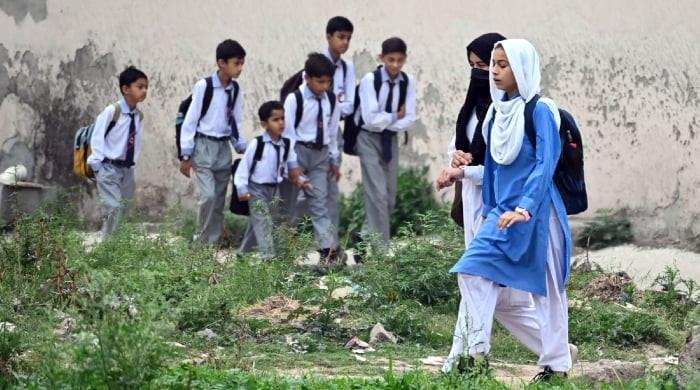
The social development, however, tells a more sobering story. According to the UNDP Human Development Report 2025, Pakistan ranks 168th among 193 countries, down from 164th in the previous report. Education outcomes remain weak, health indicators continue to lag behind peers, and income gains are uneven.
Food security indicators reinforce the concern. Pakistan’s Global Hunger Index score of around 26 places it in the ‘serious’ category, with slight improvement from 2024. Progress on the Sustainable Development Goals remains slow, particularly in poverty reduction, nutrition and climate resilience.
This disconnect between improving macroeconomic indicators and stagnant social outcomes defines Pakistan’s 2025 story. Stabilisation and reduced volatility did not bring much improvement in the living standards of the masses. This matters a lot as economies that fail to turn stability into human development find it hard to raise productivity, diversify exports, or sustain growth.
The above disconnect was articulated sharply at the SDPI’s annual Sustainable Development Conference in November by the UNDP’s country representative, who described Pakistan as a country living through two parallel realities.
One reflects macroeconomic stabilisation and regained control over immediate pressures. The other reflects declining human development and persistent social stress. Samuel Rizk’s formulation captured, in a single phrase, what many Pakistanis recognise in daily life but rarely see acknowledged in economic narratives.
Set against this backdrop, the international environment offers little reassurance. As outlined in The Economist’s 'World Ahead 2026', slower global growth, geopolitical fragmentation, uneven technological change and intensifying climate stress are likely to test economies with weak buffers first, and to reward consistency over improvisation.
The year 2025 showed us both what disciplined management can achieve and how far the country still is from translating macro repair into everyday wellbeing. Pakistan cannot shape the global headwinds that may affect it in 2026. However, it can strengthen its weak buffers through investing in the resilience of its people.
The writer heads SDPI, chairs the board of the National Disaster Risk Management Fund, and serves on the ADBI’s Advisory Board. He posts on LinkedIn @Abidsuleri
Disclaimer: The viewpoints expressed in this piece are the writer's own and don't necessarily reflect Geo.tv's editorial policy.
Originally published in The News