What is Physical AI: Fourth industrial revolution's engine of autonomy
Amazon, Foxconn reveal double-digit gains from early physical AI adoption
Published December 11, 2025
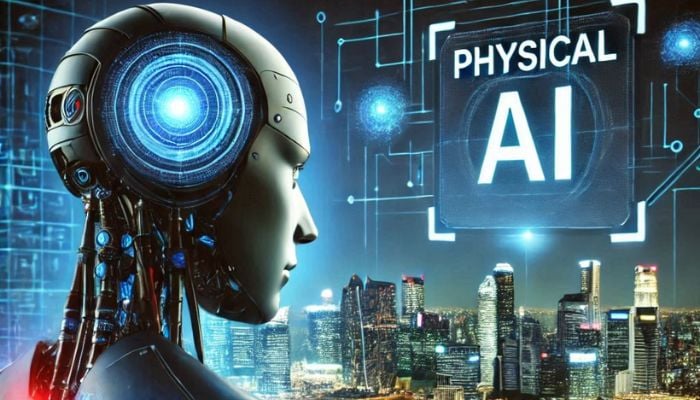
A new industrial dawn is breaking with the introduction of physical AI into various realms.
In simpler terms, physical AI is an advanced form of artificial intelligence that allows machines, especially autonomous systems such as cameras, robots, and self-driving cars to perceive, comprehend, use reasoning, and perform or orchestrate complex actions in the physical world.
It integrates AI with physical systems enabling them to learn from real-world data and adapt to dynamic and unpredictable environments.
As described in the white paper of the World Economic Forum, physical AI is significantly altering the future of manufacturing, workforce, dynamics, and global supply chains.
Three waves of automation
- Rule-based (1960s-present): The traditional, pre-programmed robots excelling at repetitive, high volume tasks such as automotive welding.
- Training Based (emerging now): Robots trained by AI and machine learning in simulations, enabling them to handle variations and mid-volume tasks with faster deployment.
- Context-based (new frontier): Equipped with vision, tactile sensors, and powered by AI foundation models, these robots can perceive their environment, comprehend unfamiliar tasks, and make autonomous decisions, exhibiting human-level task intuition and planning.
With this progression, there’s a fundamental leap from automation to autonomy.
Physical AI addresses a perfect storm of challenges including persistent supply chain fragility, soaring costs, chronic labour shortages and increasing demands for greater customization and speed.
Intelligent robotics by linking digital and physical worlds provides a path to operational agility.
Physical AI offers transformative results
The real-time evidence of advantages of Physical AI is reflected in the performance data from manufacturing giants. With over a million robots across Amazon’s fulfilment centers, AI-powered collaboration has led to a 25% boost in efficiency, a 10% increase in travel efficiency for mobile robots, and faster delivery times. Crucially, the company reported creating 30% more skilled jobs at a test site.
Similarly, using AI and digital twins to automate precise tasks such as screw tightening, Foxconn (electronics manufacturer) has cut new system development times by 40%, improved cycle times by 20-30%, and lowered error rates by 25%.
Significance of Physical AI
Physical AI represents a groundbreaking leap, changing machines from pre-programmed tools into intelligent systems that can perceive, understand, and adapt to the real world.
The key to this evolution is training within high-fidelity, physics-based simulations, that provide a safe and efficient environment for mastering complex tasks.
This technology unlocks true autonomy across industries. In robotics, it enables everything from warehouse navigators and adaptive robotic arms to precision surgical assistants.
For autonomous vehicles, it enables real-time processing of sensor data to assess unpredictable environments safely.
Additionally, physical AI powers “smart space” with the help of networks of sensors and AI to optimize logistics and safety in complex facilities such as factories.
Ultimately, it connects the digital and physical, creating machines that can interact with the world intelligently and collaboratively.