Defying US-backed odds, China develops machine to produce advanced AI chips
Published December 18, 2025
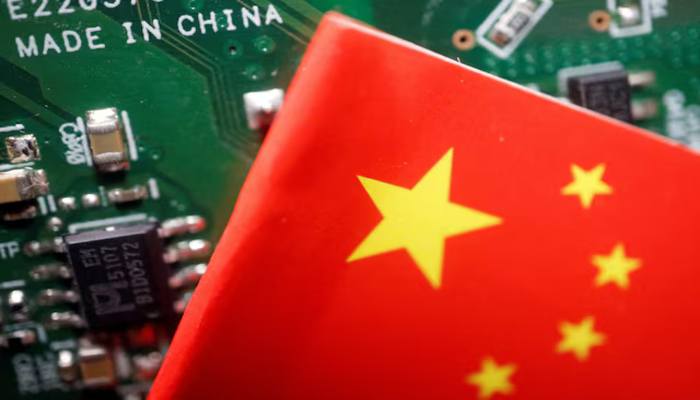
In an incredible feat that the US tried for years not to let happen, Chinese scientists have developed a prototype machine capable of producing advanced semiconductor chips essential for artificial intelligence (AI), smartphones, and military applications.
The development of an AI chip-making machine by China follows years of efforts by Washington to prevent such a technological advancement from taking shape.
The scientists completed the machine in early 2025, and the prototype covers nearly an entire factory floor and was created by a team of former engineers from Dutch semiconductor giant ASML.
To bring about the milestone, they reverse-engineered ASML's extreme ultraviolet lithography (EUV) machines, which are critical for etching ultra-thin circuits onto silicon wafers—a technology currently dominated by the West.
While China's machine can generate extreme ultraviolet light, it has not succeeded in producing functional chips.
ASML CEO Christophe Fouquet previously stated that China would require "many, many years" to develop such technology. But the completion of this prototype is a sign that China is closer to semiconductor independence than analysts anticipate.
The Chinese government eyes to produce working chips by 2028, with insiders suggesting a far-off target is 2030.
This development is part of China's bigger six-year initiative for semiconductor self-sufficiency, a priority endorsed by China's President Xi Jinping.
The project, said to be secretive, is overseen by Xi's confidant Ding Xuexiang and involves collaboration among various companies and state research institutes, with Huawei playing a key coordinating role.
The ultimate goal for China is to manufacture advanced chips using only locally produced machines without relying on U.S. supply chains.