The execution gap
In a competitive economy, credibility is earned by consistent delivery
Published March 04, 2026
In a competitive global economy, credibility is earned through delivery. Pakistan has an execution problem. We run a state of meetings, but not a system that consistently delivers.
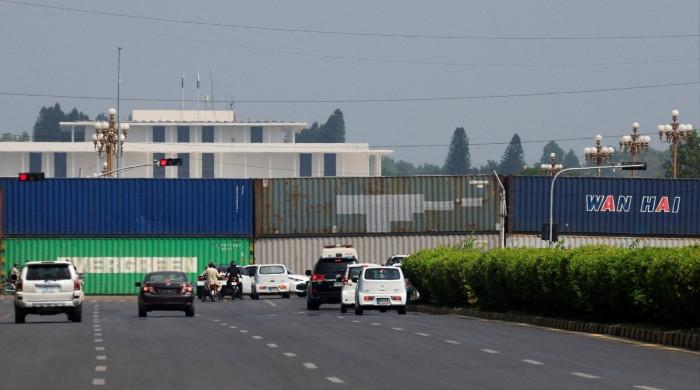
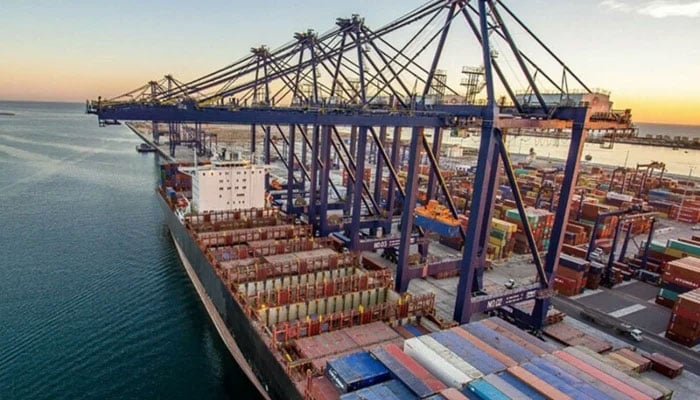
A textile exporter in Faisalabad has a container ready for Europe. Customs has cleared it, but the provincial transport department has delayed issuing an inter-provincial movement permit required for the truck to enter Sindh. Meanwhile, congestion at Port Qasim prevents his shipment from being loaded.
Further, his request for a rebate under the Duty Drawback of Taxes scheme is stuck in an audit, tying up his working capital. His costs escalate. His buyer grows impatient.
No single institution has failed. Each has acted within its mandate. Yet the container is not on the ship. This is a systems failure, an execution gap.
Pakistan is not short of coordination forums, cabinet committees, or joint task forces. Policies are debated and approved. Agreements are reached. But when execution requires multiple ministries, regulators, and provinces to move in sequence, responsibility diffuses.
Each institution performs its role. No single node owns the end-to-end outcome. At the top, we coordinate. On the ground, we fragment.
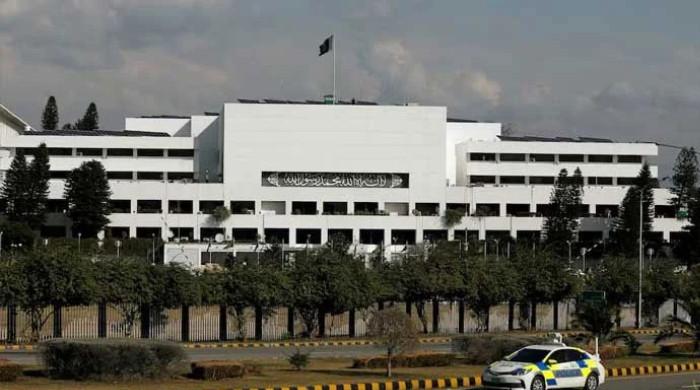
This silo effect is not accidental. It is embedded in the government of Pakistan’s Rules of Business 1973. These rules divide the state into neat administrative compartments — Ministry of Commerce here, FBR there, provinces in their own constitutional corner.
Each box has a clear mandate. The system is designed for order, not for outcomes. Officials are told, implicitly and explicitly: stay in your lane.
But export containers do not move in lanes. They move across lanes. Our governance model is vertically structured. The 18th Amendment rightly expanded provincial autonomy, a democratic and necessary evolution. Regulators such as Nepra and Ogra were designed to depoliticise key sectors. These were sound institutional choices.
But vertical devolution was never matched with horizontal integration. Budgets are allocated to ministries, not missions. Performance is assessed within departmental boundaries. Sharing outcomes often means sharing credit – and sometimes sharing control. That is the quiet political economy of fragmentation.
This challenge is not unique to Pakistan. What do Singapore, Seoul, Hanoi, and London teach us? Singapore embedded cross-agency delivery through shared KPIs and integrated data systems. South Korea sequenced industrial transformation across finance, trade, technology and skills.
Vietnam synchronised customs reform, logistics modernisation, and workforce development to power its export surge. The UK placed delivery units at the centre of government to track cross-departmental targets. They moved from coordinating policy to integrating delivery.
We have already proven that Pakistan can operate as one system when it chooses to. The National Command and Operation Centre (NCOC) was not merely a discussion forum; it was a command structure. Data flowed in real time. Federal and provincial authorities aligned daily. Decisions were sequenced. Outcomes were tracked. Delivery followed.
The same was true for large strategic initiatives such as Cpec. When projects were treated as national missions rather than departmental files, ministries coordinated across routine fragmentation, bottlenecks were escalated quickly, and obstacles were resolved at the centre. Execution improved not because mandates changed, but because ownership was unified.
When the state chose to act as one system, it delivered. The challenge is to make that coherence routine, not crisis-driven. Take exports. The aspiration to reach $100 billion is widely shared. But ambition alone does not move containers.
Achieving that target depends simultaneously on competitive energy pricing (Nepra, Ogra), predictable taxation and rebate administration (FBR), efficient customs clearance (Pakistan Single Window), functional industrial zones (provincial authorities), logistics coordination (ports, NLC), inter-provincial transport permissions, trade diplomacy, and workforce alignment (NAVTTC). Each element sits in a different institutional silo.
If energy pricing adjusts but notifications lag, competitiveness erodes. If customs reforms improve but transport permits stall, the container does not move. If skills programmes are misaligned with industrial needs, productivity suffers. If rebate processing remains unpredictable, working capital tightens.
Export-led growth is not merely an economic ambition. It is a governance stress test. If the state cannot move one container smoothly across agencies and provinces, it cannot reach $100 billion, no matter how ambitious the target.
The same logic applies to water security, climate resilience, and digital transformation. A farmer’s identity sits with Nadra. His tax status is held by the FBR.
His land records lie in a provincial database. If these systems cannot speak to one another, service delivery slows, and credibility weakens. Twenty-first-century challenges are interconnected, and governance must be too.
So, what would a whole-of-government reset look like? It does not require a constitutional overhaul. It requires institutional refinement – building bridges across mandates without eroding autonomy. It rests on three principles: one, shared outcomes. National priorities — exports, water security, stunting reduction, digital transformation — must become joint mandates rather than isolated projects.
Two, joint accountability. If export growth is a national mission, commerce, industry, energy, finance, and provincial counterparts must share measurable KPIs.
What gets measured gets managed. What gets rewarded gets prioritised. Three coordinated approaches. Planning cycles must align. Budgets should be taggable to missions, not merely ministries. Data systems must interoperate so that decision-makers see the same dashboard.
For national leadership, this translates into five practical levers: one, make missions mandatory: designate cross-cutting priorities as joint mandates with named co-owners.
A small Delivery Unit at the centre should track progress and unblock bottlenecks so the exporter has one place to go, not a runaround of offices.
Two, grade collaboration: embed collaborative KPIs into performance frameworks. Ministers and secretaries should be assessed partly on how effectively they enabled another department’s success. What gets measured gets managed. What gets rewarded gets prioritised.
Three: plan together, spend together: imagine PSDPs and provincial ADPs tagged to ‘National Export Competitiveness’ rather than siloed projects – so money for exports is not lost between a road in Punjab and a tariff in Islamabad. Track cumulative spending against missions.
Four, make data talk: interoperability between NADRA, FBR, provincial systems, and regulators is not a technical luxury; it is the nervous system of a modern state. Fragmented information perpetuates fragmented decisions.
Five, follow the money: outcome-based budgeting should reveal what we spend on exports, climate resilience, or digital transformation across all ministries. Without visibility, coherence remains aspirational.
Macroeconomic stabilisation has created breathing space. The next frontier is institutional coherence. Fiscal constraints make fragmentation unaffordable. Investors price delivery credibility, not policy intent. Exporters bear the cost of incoherence in time and money.
Exporters across the country do not need more committees. They need coordinated execution. It is time to stop meeting and start delivering.
The writer is the vice chancellor of the Pakistan Institute of Development Economics (PIDE) and a member of the Planning Commission of Pakistan.
Disclaimer: The viewpoints expressed in this piece are the writer's own and don't necessarily reflect Geo.tv's editorial policy
Originally published in The News