The Rs82bn windfall
At Rs55 per litre, the total windfall to pump dealers across the country is approximately Rs9.4 billion
Published March 12, 2026
On March 1, the government raised the price of petrol by Rs8 per litre, from Rs258.17 to Rs266.17 per litre, effective for the fortnight beginning March 1, 2026. The retail price of petrol includes the government’s petroleum development levy, inland freight equalisation margin, dealer’s commission, the margin of oil marketing companies (OMCs), and GST.
On March 4, the minister of finance briefed the Senate Standing Committee on Finance and assured lawmakers that there was no fuel shortage in the country. The committee was informed that petrol and diesel stocks were sufficient for 28 days, and crude oil stocks for 10 days.
This translates to monthly consumption of approximately 1.5 billion litres of petrol and diesel combined. On March 6, out of the blue, the government announced an increase of Rs55 per litre in both petrol and high-speed diesel, taking the price of petrol from Rs266.17 to Rs321.17 per litre and high-speed diesel from Rs280.86 to Rs335.86 per litre, effective from midnight March 7, 2026.
Imagine: when the government raised prices by Rs55 per litre on the night of March 6, approximately 1.5 billion litres of petrol and diesel were sitting in storage, in refinery tanks, OMC depots and petrol pump underground tanks across the country.
Every single litre of that stock had been purchased at the old, lower price. By midnight, it was being sold at the new, higher price. That is an instant, unearned inventory gain of Rs82 billion, distributed across refineries, oil marketing companies and petrol pump dealers.
The refinery did not pump more crude. The OMC did not import an extra drop. The petrol pump owner did not work a single extra hour. The price changed. The windfall arrived. Red alert: The motorcyclist, who has no inventory and no margin, simply woke up the next morning and paid Rs55 more per litre.
So who made how much from the Rs82 billion windfall? The government. Of the 1.5 billion litres in the system, the government stands to collect an additional Rs14.9 billion in GST revenue as this inventory moves through the system.
The refineries. Pakistan’s five refineries collectively hold approximately 550 million litres of refined product at any given time. Every litre was processed from crude purchased at pre-hike prices. At Rs55 per litre, their combined one-time inventory windfall is approximately Rs30 billion. Without refining a single additional barrel.
OMCs hold the largest share of system inventory, approximately 600 million litres across their storage depots and terminals. At Rs55 per litre, their collective one-time inventory gain is approximately Rs33 billion.
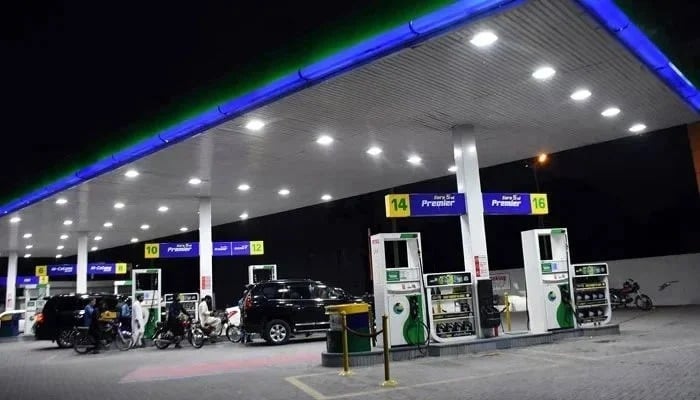
Petrol pump owners. Pakistan has approximately 12,000 petrol stations. Each holds roughly three to four days of fuel in underground tanks. Collectively, that is approximately 170 million litres. At Rs55 per litre, the total windfall to pump dealers across the country is approximately Rs9.4 billion — or roughly Rs783,000 per pump on average. The pump owner changed nothing. He opened his station the next morning, scanned the new price board, and dispensed the same fuel he had always dispensed — fuel bought cheap, sold expensive, overnight, courtesy of a government notification.
Five parties sat around the table of a Rs55 per litre price increase. Four of them made money. The fifth — the motorcyclist, the rickshaw driver, the small trader, the daily wage earner — was not invited to the table. They were the table.
The writer is an Islamabad-based columnist.
Disclaimer: The viewpoints expressed in this piece are the writer's own and don't necessarily reflect Geo.tv's editorial policy.
Originally published in The News