Let girls fly
25m children in Pakistan remain out of school, half of them are girls, one of highest rates of educational exclusion in world
Published March 08, 2026
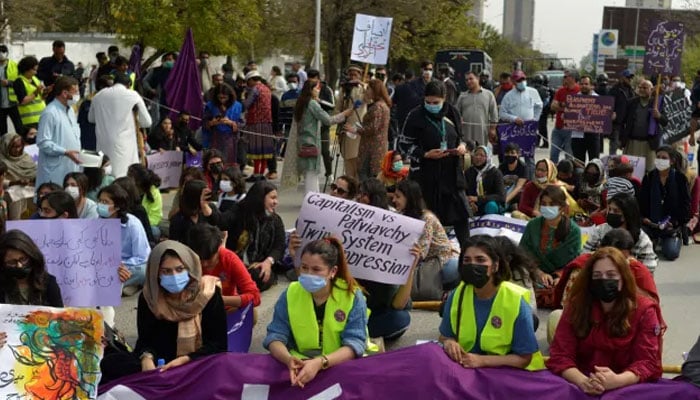
On International Women’s Day 2026, we are reminded that the future of Pakistan and Pakistani women is inseparable from the empowerment of its girls. When we invest in girls, we don’t just change individual lives; we shape the trajectory of economies, societies and nations.
Today, 54 million girls under the age of 18 live in Pakistan, and each day, around 9,200 girls are born into a world where survival, education and protection are far from guaranteed. For too many girls, the journey from vulnerability to opportunity is marked by systemic barriers that begin on day one.
Survival, especially in the early years, is the first barrier.
In Pakistan, 40% of children under five are stunted due to malnutrition, a condition that undermines brain development, weakens immunity and limits lifelong potential. Stunting is linked to nearly three out of four under-five deaths.
Anaemia — affecting over half of adolescent girls and most pregnant women — worsens the consequences of early marriage and pregnancy, increasing the risk of premature and low-birth-weight babies with long-term setbacks for children’s growth and cognitive development. Before many girls ever see the inside of a classroom, their futures are already at risk. The cost of under-investing in maternal and child health is not only measured in lives lost but in potential diminished.
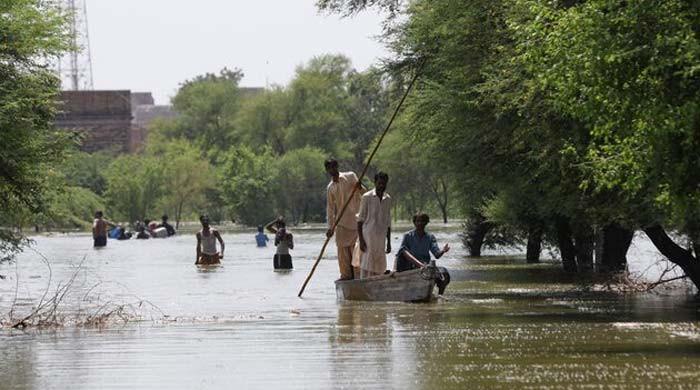
Yet progress is possible. Shabira, a young girl born in Sindh during the devastating 2022 floods, became malnourished and dangerously ill. A mobile health team arrived in her village, screened her and provided essential treatment.
Within two months, her health dramatically improved. Her recovery is proof that timely intervention works. Investing in early childhood health and nutrition is not only lifesaving but also the foundation of human capital and future success.
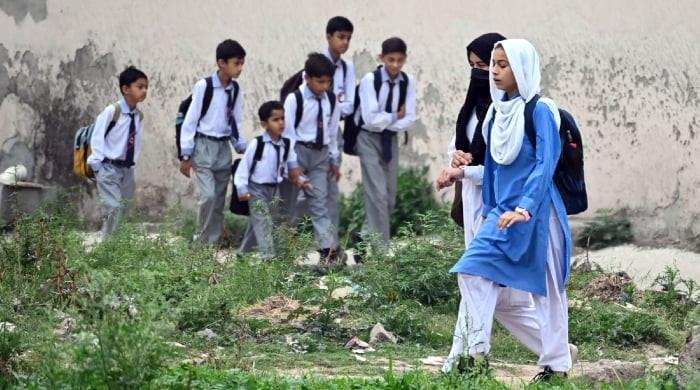
Once survival is ensured, education becomes the next key to unlocking girls’ futures. Yet, 25 million children in Pakistan remain out of school, half of them are girls, one of the highest rates of educational exclusion in the world.
Even among those who attend, nearly 80% of children cannot read or understand age-appropriate texts by age 10, and many lack opportunities to advance their studies beyond grade 8. This gap reflects entrenched barriers like poverty, gender bias, and underfunded education systems that discourage adolescent girls from attending school.
During a visit to Khyber Pakhtunkhwa, I saw a drawing by an Afghan child: "Let me learn, let me fly", alongside a white dove of peace. This plea for opportunity resonated deeply as I listened to children, adolescents and parents, all emphasising the central role that education plays in shaping their lives.
Education is not just a right; it is a multiplier. It drives economic growth, creates healthier communities and transforms societies. For Pakistani girls, each additional year of schooling increases their future earnings by up to 10%.
Educated girls marry later, have healthier children, and contribute significantly to their families and communities. Yet, many girls are still denied this fundamental right. Through informal setups, we can expand access to education for those excluded from formal schooling. These flexible, community-based pathways can allow girls to continue their education despite the odds.
But learning alone is not enough. Protection is equally vital.
Nearly one in five girls in Pakistan is married before the age of 18, three times the rate for boys. Early marriage cuts short education, limits economic prospects and traps girls in cycles of poverty.
Adolescence is a critical phase; the right investment can propel girls forward; neglect can leave them permanently behind. Currently, 56% of girls aged 15 to 24 are not in education, employment, or training, a stark contrast to the much lower figure for boys. This disparity represents lost potential at the national level.
The economic case for empowering girls is undeniable. Inclusion is not charity; it is smart economics. As Pakistan's population is projected to exceed 340 million by 2050, investing in girls is essential to unlocking Pakistan’s demographic dividend. Aligning our policies, budgets and institutions around girls’ health, education and protection is not optional – it is essential for sustainable growth.
Let this decade be remembered not for incremental progress, but for catalytic transformation — systemic, social and sustained. Investing in girls and women is among the most strategic decisions Pakistan can make. It yields returns across generations.
As we mark International Women’s Day, we must move beyond celebration to commitment. The real measure of our resolve will not be in speeches delivered, but in policies enacted, resources allocated, and barriers dismantled. Every girl, regardless of her birthplace or background, deserves the chance to survive, learn, thrive, and lead.
There is reason for hope. Evidence shows that despite systemic barriers, increasing numbers of girls are reaching tertiary education — outperforming expectations and, in many contexts, their male peers. Imagine what would be possible if their potential were matched by equitable investment.
Girls are not born lacking potential; they are born with wings. Too often, it is society that chooses to clip them — through discrimination, neglect and underinvestment. Our task is not to give girls power; it is to remove the barriers that prevent them from using the power they already possess.
The future of Pakistan will be written by the opportunities we choose to create and collectively sustain for girls today. When we give girls the space to soar, we do more than uplift individuals — we elevate a nation.
The writer is the Unicef representative in Pakistan.
Disclaimer: The viewpoints expressed in this piece are the writer's own and don't necessarily reflect Geo.tv's editorial policy.
Originally published in The News