Redirecting Zakat towards higher education: A call for structural philanthropy
Pakistan remains among the most generous societies in the world
Published March 01, 2026
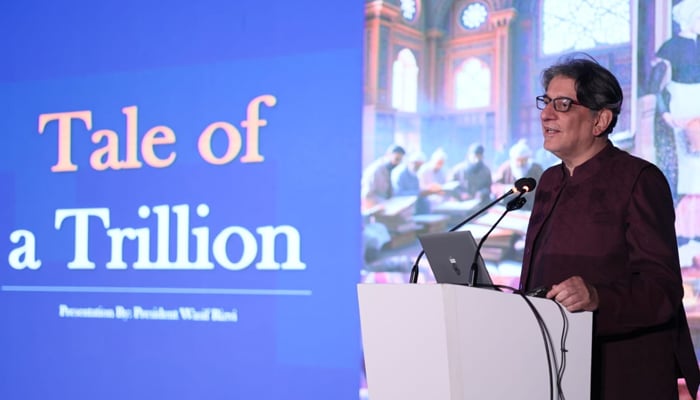
On March 1, 2026, leading philanthropists and business leaders gathered in Karachi under the theme Building the Future We Owe to reflect on a question of national consequence: how should Pakistan direct its considerable philanthropic capital?
Pakistan remains among the most generous societies in the world. Billions are given annually in Zakat and voluntary charity. Much of this generosity is directed, rightly, towards immediate relief, including food security, healthcare, and disaster response. These interventions are indispensable in a country where vulnerability is widespread. Yet relief alone, however essential, does not construct durable national capacity.
Historically, Islamic philanthropy was not confined to subsistence support. Charitable endowments sustained institutions of higher learning, research, and scholarship for centuries. Centres such as Bayt al Hikma in Baghdad and Al Azhar in Cairo were made possible through structured giving. Scholars such as Al Khwarizmi flourished in intellectual ecosystems enabled by philanthropy. Knowledge production was not incidental; it was institutionally supported.
Today, while Muslim societies collectively contribute vast sums annually, only a limited portion is directed towards higher education and research. In Pakistan, where public funding for universities remains constrained and institutional endowments are still developing, this imbalance carries long-term consequences.
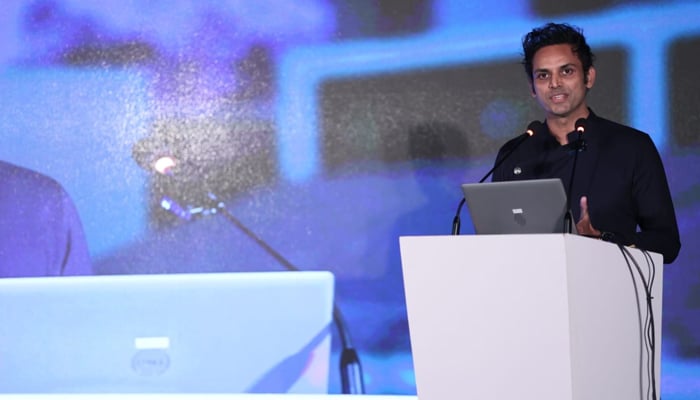
At the gathering, Habib University’s leadership argued that even a modest reallocation of Zakat towards structured scholarship funds and academic endowments could yield generational returns. The University reports that over 85% of its students receive financial support, much of it derived from Zakat and faith-based giving, with more than 42 million dollars disbursed in scholarships and aid since inception. The model proposed is not a substitute for relief efforts, but a complementary framework that recognises higher education as an essential component of nation-building.
The evening opened with welcoming remarks by Master of Ceremonies Muhammad Junaid, anchor and host, followed by a recitation from the Holy Quran by Kashif Habib. In his address, Shahbaz Yasin Malik recalled the vision of the late Rafiq M Habib, Founding Chancellor of Habib University, who believed that access to education is foundational to social transformation.
In his keynote, President Wasif Rizvi presented The Tale of a Trillion, tracing the persistence of Muslim generosity across centuries and questioning how that generosity is presently structured. The argument was straightforward: sustainable societies require institutions capable of producing knowledge, leadership, and innovation. Without durable funding mechanisms, universities remain fragile.
The gathering concluded with remarks by Bashir Ali Mohammad, founder and Chairman of Gul Ahmed Group, on behalf of the Board of Governors and Directors, reaffirming the shared responsibility of strengthening institutions that will serve generations.
The event ultimately advanced a measured but consequential proposition. Pakistan does not lack generosity. It faces the more complex task of structuring that generosity for long-term national capacity. Relief sustains the present. Higher education shapes the future. A balanced philanthropic architecture may determine whether the country merely responds to crises or builds the institutions necessary to transcend them.