The cost of new wars
The 21st century is proving almost as violent as the grisly one preceding it.
Published March 17, 2026
All great wars are existential. They reshape how people live, think, compete and consume. The 20th century understood this after the two World Wars and their attendant horrors. The guardrails collectively built to prevent conflict and its tragic spillover have since then splintered into a postmodern strategic cauldron of the new wars we witness with horror. Their strategic, political and human costs are both computed and contested in real time.
Machine learning, automation, precision mass options, cyber, space and information systems have all entered the mix of postmodern arsenals to wreak a new arc of potentially irreversible havoc, compounded by legacy hardware on the map of a world on fire. Aircraft carriers and elite stealth bombers strike alongside low-cost unmanned craft in air and water. Supply chains, energy lifelines, water, food and public truths now rival blood and treasure in any measure of finite and potential losses.
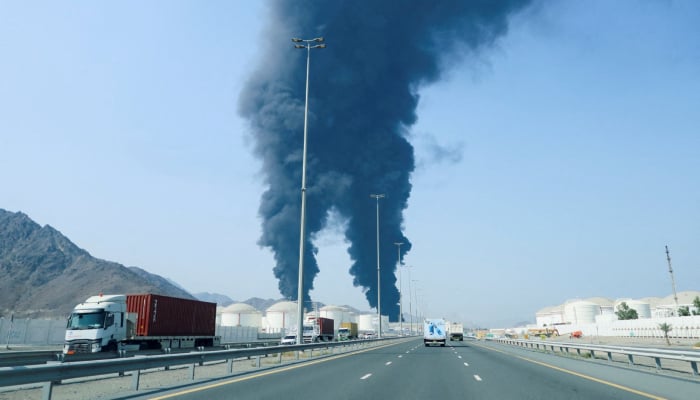
The 21st century is proving almost as violent as the grisly one preceding it. Other than the 61 active conflicts defining human experience all over the world, the West Asian war has moved global action to the most strategic of geopolitical theatres. The chokepoint economy of Hormuz asserts its pivotality at the heart of the global oil disruption, while investment futures built around stability in the GCC are under challenge between a diehard Iran and its surging war with Israel and patrons, principally the US. GCC states need the blocked strait to import food and export oil, while oil-importing economies all over the world continue to brace for impact on war pricing, shipping surcharges, even oil-product rationing.
For now, Tehran has locked in its stewardship of the strait and, from its stated position, will not surrender options, even if the war escalates in ways that impose formidable costs. At the same time, a fast-moving spiral of strategic volatility is setting new benchmarks for regional and global peril in more ways than one. Although it will eventually be rebuilt, the bombing of American bases in neighbouring Gulf countries has opened the door to a new fragility on geopolitical confidence based on hydrocarbons, Western protection and ring-fenced predictability. For the principal combatants, notions of sovereignty and endurance capacity will likely determine outcomes rather than clear-cut victories. Unthinkable tactical playouts too fill the newscape as war options in the realm of a dangerous new normal.
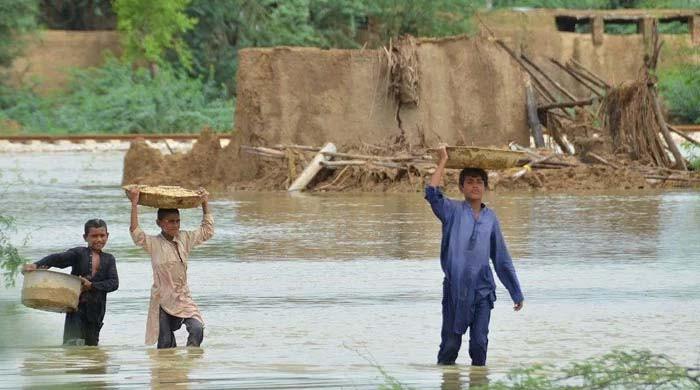
Yet, headline impacts and contingency responses are taking up most of the public oxygen on this war. Peace has lost its shine in times of epochal rupture. Rules that protected the weak have gone on sabbatical. It is not just the traditionally vulnerable cohorts of the poor, the displaced woman and lost child, that are collateral damage in this conflict. This time, it is the air, soil and water we so regularly expect to recharge or be available as global commons that are under severe risk of both contamination, irradiation and scarcity.
In Tehran, the black rain is one dark marker of the looming crisis to follow this single biggest disruption of oil supply lines in history. Experts say this means carcinogenic compounds, ultrafine particles and PAHs have already made their way into acid rain, which is the tip of the dark iceberg. It will not just impact Iran. The environmental crisis could trigger catastrophic impacts on ocean shorelines, marine life and even drinking water in a region that relies on seawater via desalination plants. Toxins will seep into the soil, causing incalculable damage to the quality of groundwater and the food grown on it.
The warnings are everywhere. The Conflict and Environmental Observatory cautions that a high incidence of missile and aerial activity, as well as attacks on energy infrastructure, is creating transboundary public health impacts that will continue well after the war is over. The scale and enormity of contemporary warfare are so staggering as to defy computation of its long-term harm. The risks also do not compute the dangers of a staggering burn rate on carbon emissions. Since emissions from war are not included in the Paris Agreement, the math on global warming is already way off mark for a world racing past its climate tipping points. Just for context, GHG emissions from the Ukraine war in its first two years reached France’s entire annual emissions.
All such calculations matter for Pakistan, which experiences frontline fallout in baking temperatures as high as 53 Celsius in the summer. Although ‘scorched earth’ has been a tactical ploy used as early as iron arrowheads in human conflict, non-combatants in today’s accelerated warfare will suffer in ways they did not in conventional wars. Today, despite quantum technological leaps, instead of conserving water, soil and air, the new weapons and AI almost ensure that their lethality is scaled up to the sleek agnosticism of freedom from consequence. In this amoral multiverse, the environment becomes a vast theatre of casual collateral damage. In development shorthand, that means more hunger, more scarcity, more inequality, more sick people with no safety net. Certainly not the prosperous future rolled out at conferences with big LED screens and tasteful white flowers.
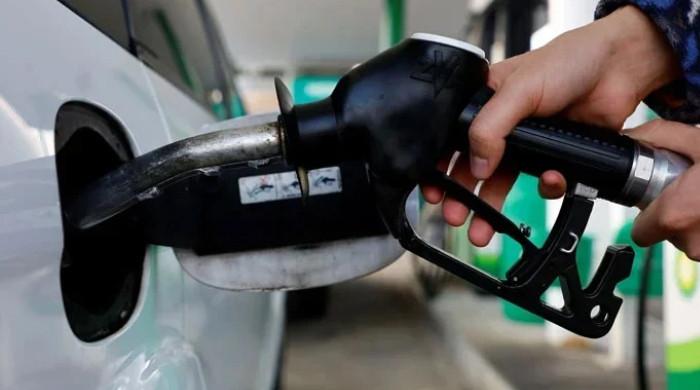
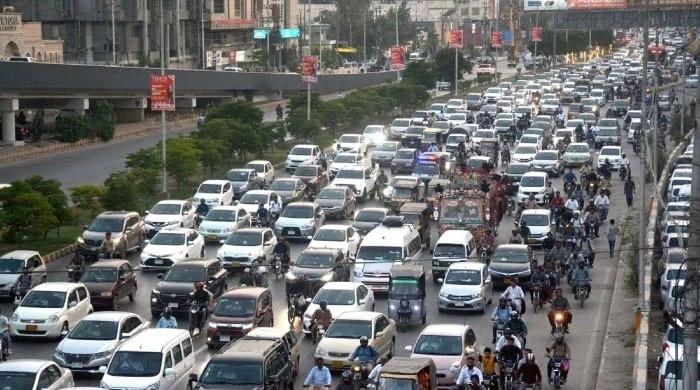
For Pakistan, with a shared coastline with Iran and proximity to Gulf countries, the hazards are real, but will continue to be seen as third-tier threats until the coastline turns oily or the air of Karachi turns a dark shade of grey. In either case, there is little that Islamabad can do immediately except treat resilience as a multidimensional challenge, with climate performance benchmarks for all strategic ministries. For the near term, in the hierarchy of disruptions brought on by this war, Pakistan’s threshold of anxiety will be common to many countries facing prospective reckonings at petrol pumps and gas stoves. It won’t be just a transport crunch. Or LNG deficits. Diesel shortages in countries like Pakistan, which grow food, can materially impact the upcoming sowing season.
While the government struggles to shield the public from more pain, a protracted war of attrition in the Gulf – even at reduced levels of violence – will be troublesome. All executive bandwidth will be devoted to maintaining a forex stability regime, hedging essential imports and managing petroleum stocks. So far, Pakistan has buffered extreme impacts, but the exposure to exogenous shocks will be hard to contain if the war crosses 60 days.
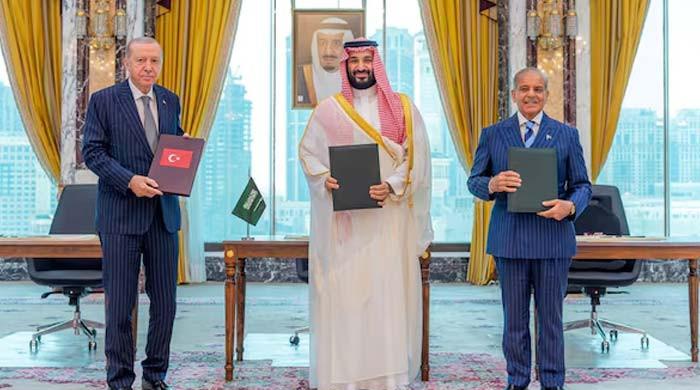
In this vortex of strategic global crises, Pakistan’s challenges are complex. Even without a war, the hedge between America’s choices and an unbreakable relationship with China has not been easy. Today, its diplomacy is tested daily between neighbourhood compulsions with Iran, defence pacts and vital economic ties with the Kingdom of Saudi Arabia, remittance exposure in the GCC, large domestic Shia cohorts, kinetic pressures from an intransigent Taliban regime in Afghanistan, a predatory India meddling in Balochistan and KP, and enduring notions of legitimacy.
On the Pakistani street, no matter how pragmatic the government becomes in embracing hard choices for the larger public good, no foreign policy can expect to be bleached of moral choice. The reported use of white phosphorus on Lebanon and the genocidal land-grab and trauma of Palestinians is not palatable to anyone. Nor are attacks on any country’s sovereignty or the bombing of desalination plants.
Which is why Pakistan was the first Muslim country to condemn such actions, including the tragic assassination of Ayatollah Khamenei. Despite vulnerability at multilateral forums that the Bretton Woods financial establishment controls, Islamabad did not join the ISF as a combatant, but also rightly condemned recent attacks on the GCC countries.
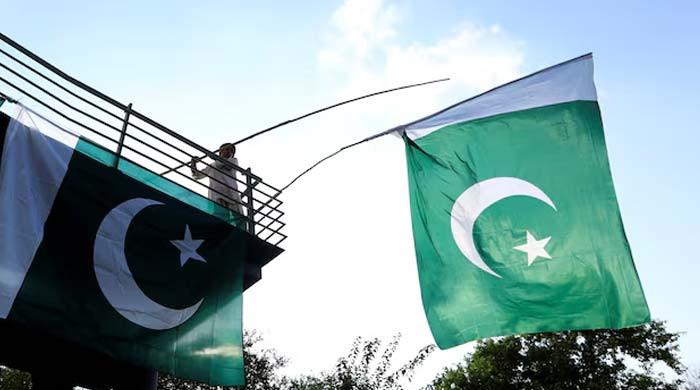
In a world where the fragile unity of the Muslim world has melted away faster than a missile pod after an intercept, Pakistan has stood longest in the frontline of holding the flag. A profound national commitment to Muslim suffering in both occupied Kashmir and Palestine has driven Islamabad to take consistent and clear positions against forced colonisations in both illegal gulags. Yet, the limits of Pakistan’s diplomacy must continue to adhere to the first overarching goal of any foreign policy, which is to protect its populations and not feed off justified anger or commit troops in harm’s way. Our capabilities have been decisively demonstrated in wars that landed in our airspace. Let’s keep that sky blue for as long as possible.
The writer is a former ambassador to the US, and chair of the Climate Standing Committee in the Senate of Pakistan.
Disclaimer: The viewpoints expressed in this piece are the writer's own and don't necessarily reflect Geo.tv's editorial policy.
Originally published in The News