Islamabad, Rawalpindi suspend public, goods transport until further notice
Rawalpindi police put on high alert with extraordinary arrangements in place to ensure foolproof security
Published April 19, 2026
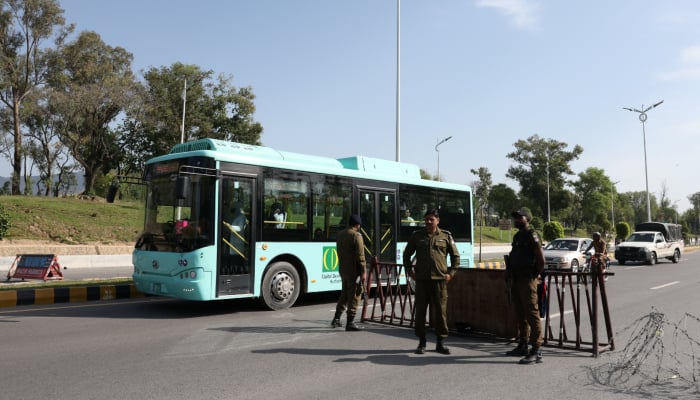
The district administrations of Islamabad and Rawalpindi on Sunday announced an immediate suspension of public and goods transport in the twin cities ahead of the potential second round of the US-Iran talks in the capital.
The Islamabad deputy commissioner has suspended heavy transport and public transport services until further notice, without citing any reason.
“Heavy transport and public transport in the city are being suspended until further orders. Citizens are earnestly requested to cooperate with the security agencies. Thank you,” the DC Islamabad posted on X.
Similarly, all private, public, and goods transport has been suspended with immediate effect in Rawalpindi. The official confirmed that further updates will be issued later.
“All private, public and goods transport in Rawalpindi is hereby suspended with immediate effect. Further updates will be shared,” the DC Rawalpindi said in his X post.
The announcement followed speculation about a fresh round of talks between the United States and Iran in Islamabad. Islamabad is reportedly set to host the second round next week, according to media reports; however, there has been no official confirmation from Pakistan, Iran, or the United States so far.
A day earlier, Iran's deputy foreign minister said no date has been set for the next round of negotiations between Iran and the United States, adding that a framework of understanding must be agreed first.
Security measures
A day earlier, the Rawalpindi police were put on high alert on the directives of City Police Officer (CPO) Syed Khalid Mahmood Hamdani.
“Rawalpindi Police have placed the city on high security alert and implemented extraordinary arrangements to ensure foolproof security in view of the movement of foreign delegations,” state-run news agency, APP, reported.
More than 10,000 police officers and personnel were deployed across the city to perform security duties, while over 600 special pickets were established with strict monitoring of all entry and exit points being done.
Special teams of Elite Commandos and trained snipers had been assigned security responsibilities, while the Elite Force, Dolphin Force, police station mobiles, and other quick response units conducted patrolling throughout the city.
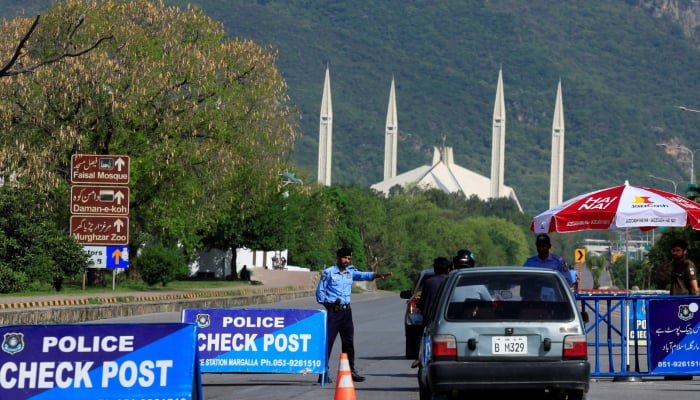
Search, sweep, combing, and intelligence-based operations had also been intensified, with close monitoring and checking of suspicious individuals continuing across Rawalpindi.
Security around sensitive installations, key public and private locations and residential places of importance has been further tightened, while Safe City surveillance, CCTV cameras and modern monitoring systems are being used for round-the-clock observation.
US-Iran tensions
The Middle East conflict began on February 28, following a large-scale surprise attack on Iran by the United States and Israel, despite the ongoing negotiations between Washington and Tehran at the time.
The previous meeting in Islamabad was held three days after the Pakistan-brokered ceasefire took effect on April 8. The meeting marked the first direct encounter between American and Iranian officials in more than a decade and the most senior engagement since Iran's 1979 Islamic Revolution.
US Vice President JD Vance and Iranian Parliamentary Speaker Mohammad Baqer Qalibaf led their respective delegations in the last round of talks to work out a slew of issues, including the Strait of Hormuz as well as Iran's nuclear programme and international sanctions on Tehran.