CJP Afridi rejects IHC CJ's request to convene meeting on judges' transfers
Transferring judges without clear justification would be "tantamount to punishment", observes top judge
Published April 24, 2026
- Such moves could undermine judicial independence: CJP.
- CJP Afridi raises concerns about impact on federal balance.
- CJP warns such actions could damage judiciary's credibility.
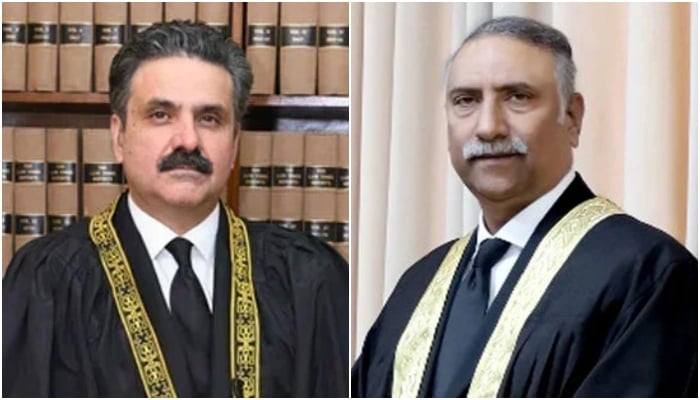
Chief Justice of Pakistan (CJP) Yahya Afridi has rejected a request by the Islamabad High Court's chief justice to convene a Judicial Commission meeting on the transfer of judges, citing constitutional and institutional concerns.
In a written response to IHC Chief Justice Sarfraz Dogar, CJP Afridi said that calling a commission meeting for a specific purpose was not possible.
The top judge observed that transferring judges without clear justification would be "tantamount to punishment" and warned that such moves could undermine judicial independence and autonomy.
He emphasised that no institutional need or valid reason had been presented for the proposed transfers of IHC judges.
CJP Afridi also raised concerns about the impact on the federal balance, noting that recalling judges belonging to Sindh would disrupt provincial representation in the IHC.
He added that the requirements of the Islamabad High Court Act, 2010, could also be adversely affected by the judges' transfer from the court.
Further, the chief justice maintained that transferring five out of nine judges could disrupt the judicial system and create uncertainty due to multiple vacancies in the IHC.
He stressed that the Constitution provided a clear mechanism under Article 209 for action against judges, and any administrative transfers would be inconsistent with constitutional provisions.
Treating judges as transferable administrative officers would be a dangerous trend, he said, warning that such actions could damage the credibility of the judiciary.
The CJP clarified that the Judicial Commission secretary is authorised to convene meetings, and directed that reasons for any such request be shared with all members of the body.