Indian PM Modi's decade-long efforts to isolate Pakistan 'failed', reveals report
Islamabad remains close partner of Beijing and emerges as trusted partner of Washington, reports Al Jazeera
Published May 30, 2026
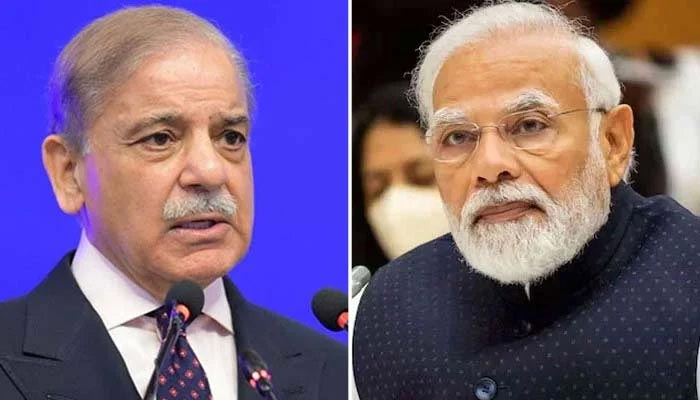
- Report comes 10 years after PM Modi vowed to isolate Pakistan.
- Pakistan capitalised on key events to emerge as main player: report.
- India failed to prove Pakistan’s alleged role in Pahalgam attack.
Indian Prime Minister Narendra Modi's decade-long efforts to diplomatically isolate Pakistan have failed, Al Jazeera reported, with analysts saying that Islamabad managed to make itself an important diplomatic player for superpowers and regional players alike.
The assessment comes nearly 10 years after Modi publicly vowed to isolate Pakistan following a 2016 attack in Indian Illegally Occupied Jammu and Kashmir (IIOJK) that killed 18 Indian soldiers.
Addressing a rally in Kerala at the time, Modi declared that India would intensify efforts to ensure Pakistan remained isolated globally. “We will make sure that you are isolated around the world.”
However, analysts argue that Pakistan today appears far from isolated. The country remains a close strategic partner of China and has also re-emerged as a trusted partner of the United States under President Donald Trump.
Over the past year, both Prime Minister Shehbaz Sharif and Chief of Army Staff (COAS) and Chief of Defence Forces (CDF) Field Marshal Syed Asim Munir have met Trump at the White House, while Pakistan has played a central mediating role in efforts involving the United States and Iran.
"In part, say analysts, that’s a reflection of Pakistan’s success in wooing Trump, and in capitalising on key geopolitical events to make itself an important diplomatic player for superpowers and regional players alike," the report stated.
Pakistan-India relations have remained largely frozen in recent years, with diplomatic engagement stalled. The two neighbouring countries have also experienced border skirmishes and a brief conflict last year.
In May 2025, Pakistan, during the 87-hour conflict, downed eight Indian fighter jets — four French-made Rafale, one Su-30 aircraft, one MiG-29 aircraft, one Mirage 2000 aircraft, and one “expensive” multi-role unmanned aerial system — as well as dozens of drones.
The war between the two nuclear-armed nations ended on May 10 with a ceasefire agreement brokered by the United States.
While India maintained that any ceasefire understanding resulted solely from bilateral engagement, Trump repeatedly asserted that Washington helped broker the truce and prevented a potentially catastrophic escalation between New Delhi and Islamabad.
The US president also offered to work with the nuclear-armed neighbours to find a solution to the Kashmir dispute, which has defined India-Pakistan relations since 1947.
The report further stated that Trump has since insisted on more than 30 occasions that he brokered the truce between India and Pakistan. The US president also asserted that Indian fighter jets were shot down on the first day of the conflict, echoing the Pakistani narrative.
India's reluctance to immediately address those claims further reinforced international perceptions that Pakistan had gained an advantage in the global narrative surrounding the conflict, analysts said.
On the other hand, the report quoting analysts stated, India also failed to convince the world of Pakistan’s alleged role in the attack that triggered the May 2025 fighting in the first place, analysts say.
Analysts say Modi’s refusal to give credit to the US president for the ceasefire strained US-India ties.
Pakistan, on the other hand, promptly acknowledged Trump’s efforts in achieving the truce and even nominated him for the Nobel Peace Prize.
Diplomatic relations
Amidst Modi's failed attempts, Pakistan’s diplomatic ties with Bangladesh have improved dramatically following the ouster of prime minister Sheikh Hasina Wazed, Al Jazeera reported.
On the other hand, Pakistan’s ties with China — the two have long been staunch strategic partners — further came to the fore during last year’s conflict. Pakistan used Chinese missile defence systems and jets.
India has also shifted its position on the Israel-Palestine issue, becoming Israel’s closest ally, its largest weapons buyer, and increasingly abstaining from UN resolutions critical of Tel Aviv.
That alignment with Israel under Modi complicated its standing with Gulf states, at precisely the moment Pakistan has deepened its security partnerships with the oil-rich Gulf Cooperation Council (GCC), the report added.
Amid Israel’s multiple wars — on Gaza and in the occupied West Bank, in Lebanon and on Iran, and its bombing of Qatar and Syria — Gulf nations have increasingly looked beyond their traditional reliance on a US security umbrella.
Earlier in September 2025, Saudi Arabia signed a mutual defence pact with Pakistan. Some reports also emerged that other Gulf nations and Turkiye might also consider joining the Saudi-Pakistan defence agreement.
And last May’s war strengthened Pakistan’s image as a credible security provider, with demands for Pakistani fighter jets having since surged.