Article 27 explained: FIFA rule that allows USMNT's Balogun to stay at World Cup
USMNT faces Belgium in the round of 16 Monday, July 6, at Seattle Stadium
Published July 06, 2026
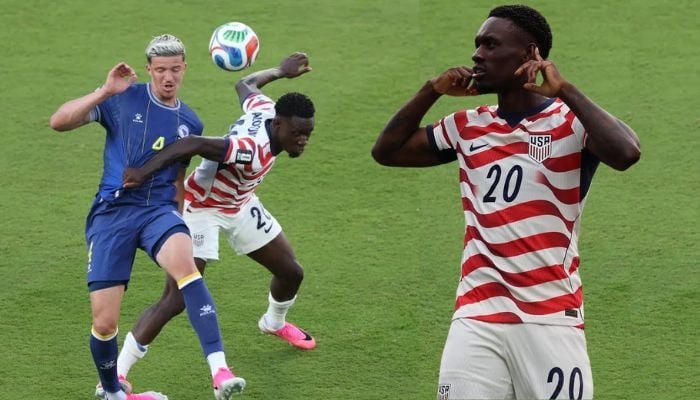
FIFA has stunned the soccer world after its disciplinary committee made a surprise announcement on Sunday, July 5, regarding USMNT striker Folarin Balogun.
Ahead of United States round of 16 game against Belgium, FIFA invoked article 27 of its Disciplinary Code that enabled red-carded Balogun to appear in today’s game (Monday, July 6) at Seattle Stadium.
Let’s know the ABC’s of FIFA’s Article 27 that has sparked buzz online.
What’ Article 27?
For days, the U.S. and its fans had thought there would be no redressal mechanism for the 25-year-old striker to get rid of his suspension.
But now, FIFA has suspended a red-card in the previous round, mentioned in Article 27 of the FIFA Disciplinary Code.
FIFA’s disciplinary committee is mandated to utilize Article 27 of its code, enabling the judicial body to fully or partially suspend the on-pitch disciplinary decision made for a stipulated time frame.
The sanction itself remains in effect but does not have to be served immediately unless the suspension is later revoked.
The sanctioned player is then placed on a probationary period between one and four years.
If the suspended player commits a similar offence during that period, the suspended ban is automatically reactivated on top of any new punishment.
In this context, Balogun’s match ban was suspended for a probationary time of one year.
FIFA’s disciplinary committee consists of a chairperson, a deputy chairperson and additional members.
However, Article 27 doesn’t provide the circumstances in which a judicial body decides to revoke a sanction.
FIFA’s judicial bodies include the Disciplinary Committee and the Appeal Committee.
For the unversed, Article 27 was earlier known as Article 26 until the Disciplinary Code revised back in 2019. It was changed to its current number in 2023.