'Explosive' diarrhea parasite hits 18 states as health officials scramble to find source
The Center for Disease Control and Prevention first detected large clusters of cyclosporiasis in early May
Published July 07, 2026
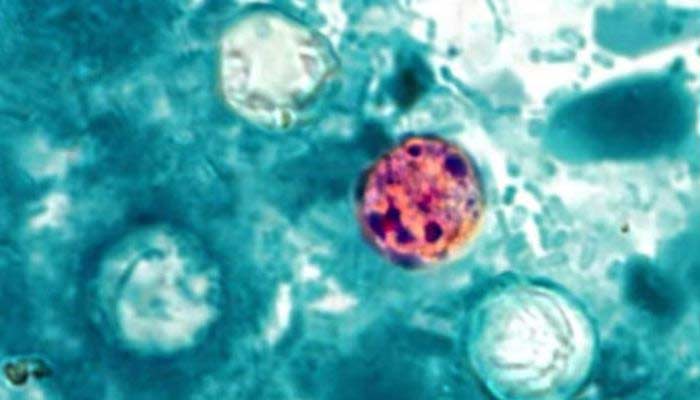
Health officials are struggling to find the source of a parasitic illness known as Cyclospora.
The outbreak has spread to 18 states with Illinois, Michigan, New York and Texas being the hardest hit.
The Center for Disease Control and Prevention first detected large clusters of cyclosporiasis in early May.
According to the CDC data reported on July 1, there were 145 confirmed cases of cyclospora across 17 states.
Health officials have been scrambling to find the source of the illness that is causing severe symptoms such as “explosive” diarrhea.
As of Monday, July 6, the parasitic illness has spread to at least 18 states.
Although the exact numbers are still unknown, the Michigan Department of Health and Human Services registered 572 cases of cyclosporiasis as of July 4.
New York State has reported over 100 cases of parasitic illness. However, the CDC didn’t release the exact numbers affecting people in Illinois or Texas.
The other states engulfed with the outbreak include Alaska, Connecticut, Colorado, Florida, Georgia, Louisiana, New Jersey, Massachusetts, North Carolina, Ohio, Tennessee, Pennsylvania, Virginia and Wisconsin.
As of writing this report, neither the CDC nor FDA officials have identified any specific produce, product, or supplier as the primary source of the outbreak.
What is cyclosporiasis and how does it trigger 'explosive' diarrhea?
The parasite can contaminate fresh produce and cause ferocious and long-lasting bouts of diarrheal illness, according to CDC.
Foodborne outbreaks of cyclosporiasis have been tied to various types of raw produce, such as raspberries, basil, snow peas, mesclun lettuce and cilantro, per CDC.
Cyclosporiasis is not defined as a life-threatening disease, but people can experience chronic symptoms, including cramps, nausea, fatigue, and vomiting.
The symptoms usually occur one week after confronting infection, but that time period can range from two days to two weeks.
The most commonly reported symptom is “watery diarrhea with frequent, sometimes explosive, bowel movements," according to CDC.