Researchers in Turkey discover Prophet Noah's Ark after 4,800 years
Researchers say they detected angular structures, corridors and interconnected spaces buried beneath the formation
Published September 02, 2026
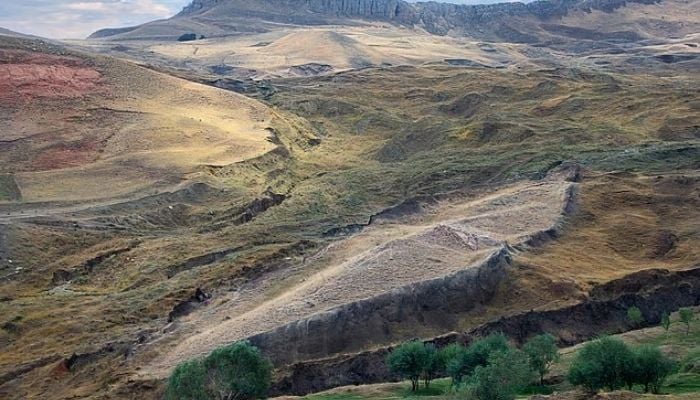
A new radar scan of a mysterious boat-shaped formation in Turkey has uncovered underground structures that researchers say could be linked to the remains of Noah’s Ark.
The latest findings come from the Durupinar formation in eastern Turkey, around 30 kilometres south of Mount Ararat, a site that has attracted Noah’s Ark hunters for decades.
Using advanced three-dimensional ground-penetrating radar, researchers say they detected angular structures, corridors and interconnected spaces buried beneath the formation.
The features were reportedly found as deep as around 6 metres below the surface and appear to form several levels inside the 157-metre-long structure.
That measurement has added to the excitement because it closely matches the dimensions of Noah’s Ark.
Researchers also point to soil tests taken from the formation, saying they found substantially more organic material inside than in the surrounding area. They say the results could be consistent with decayed organic material, possibly ancient wood.
The claims, however, have not settled the decades-old debate.
Most geologists have continued to regard the Durupinar formation as a natural geological structure created by folded rock, mudflow and erosion. Earlier geological research also concluded that the formation was not the remains of a boat.
There is another major caveat: the latest radar findings have not yet been published in a peer-reviewed scientific journal, and no confirmed pieces of wood, metal or other man-made material have been recovered from inside the formation.
The research team behind the Noah’s Ark Scans project says further investigation could provide a clearer answer, with researchers hoping to examine the underground spaces and collect additional samples.