Humpback whale mother appears to grieve stillborn calf in rare underwater moment
Humpback whale mother documented attending deceased newborn for first time off Australia
Published September 17, 2026
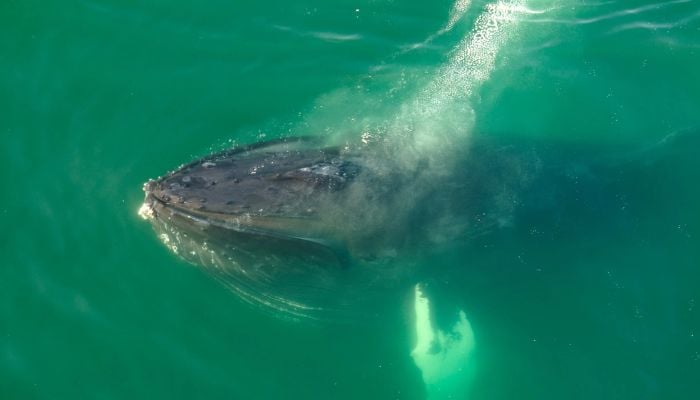
In a heartbreaking first, researchers have captured rare underwater footage of a humpback whale mother appearing to grieve her stillborn calf off Australia’s Gold Coast.
The footage, filmed in July 2025 using a GoPro camera at Palm Beach Reef, shows the mother whale remaining close to her deceased newborn as it lay motionless on the seafloor.
For more than an hour, she repeatedly returned to the calf, gently touching it with her head and pectoral fin, and resting beside it eye-to-eye.
Olaf Meynecke of Griffith University’s Whales and Climate Research Program said: “It’s really sad. It’s pretty heartbreaking to watch this female making continuous contact with the deceased calf.”
The study, published Wednesday, September 16, in the journal Discover Animals, marks the first detailed documentation of such behaviour in humpback whales. Significantly, the mother didn’t attempt to lift the calf to the surface, indicating she may have recognised it was dead shortly after birth.
Research suggests that the behaviour as "post-mortem attentive responses” is consistent with grief-related behaviour observed in other socially complex mammals such as elephants, apes, and orcas. In 2018, an orca named Tahlequah made headlines for carrying her dead calf for 17 days across 1,500 kilometres.
Meynecke said: “It is extremely rare to witness,” noting that only about 20 humpback whale births have ever been observed and documented.
None previously involved a stillborn calf. While scientists caution against directly comparing animal behaviour to human grief, the footage provides a powerful glimpse into the deep maternal bonds of humpback whales and suggests their emotional lives may be far more complex than once imagined.