Isle of Wight fossil identified as Europe's first long-clawed Megaraptoran Dinosaur
100-year-old fossil finally identified as new dinosaur species
Published October 14, 2026
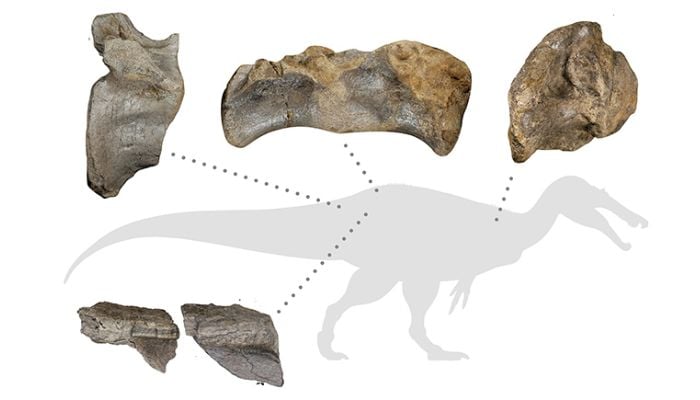
A new species of dinosaur, one that had long claws and the ability to hunt prey much like a tiger, has been unearthed through the discovery of its fossils on the Isle of Wight, dating back over 100 years. The discovery, which is published in the scientific journal Royal Society Open Science, is the first megaraptoran dinosaur to be discovered in Europe.
This dinosaur is named Invictibellatrix amberina, which means "unconquered female warrior." These dinosaurs were a group of swift-running carnivores known as megaraptorans, which were relatives of the T. rex and other tyrannosaurs. However, unlike tyrannosaurs, they did not have powerful jaws but had slender jaws with large claws.
This fossil, which is part of the rear section of the skull, was found by amateur palaeontologist Reginald Walter Tooley and was collected by the Natural History Museum in 1924. It had been lying unnoticed for nearly a hundred years until scientists performed a CT scan and compared it to the skulls of tyrannosaurs, spinosaurs, and raptors.
Lead author Dr. Cassius Morrison of University College London said Invictibellatrix would have been three to four meters long and about 1.5 meters tall, roughly human height.
It likely had feathers and claws up to 20 cm long, preying on small dinosaurs, lizards, and mammals.
Morrison said: “It was not the apex predator of its time, but for humans this dinosaur would have been more dangerous than a T.rex. We would have been perfectly sized prey.”
The discovery provides key evidence that megaraptorans migrated from Asia through Europe before reaching Gondwana, rather than island-hopping south. The study suggests they later went extinct in northern Laurasia while becoming apex predators in the south, reaching claws up to 35cm long.
Professor Paul Barrett of the Natural History Museum said the find highlights “the exceptional value of working with historical museum collections where there are still many discoveries to be made.”