Volcano in Nicaragua near 2 million people hides two magma reservoirs, study finds
Scientists map hidden magma beneath volcano threatening Nicaragua’s capital
Published October 19, 2026
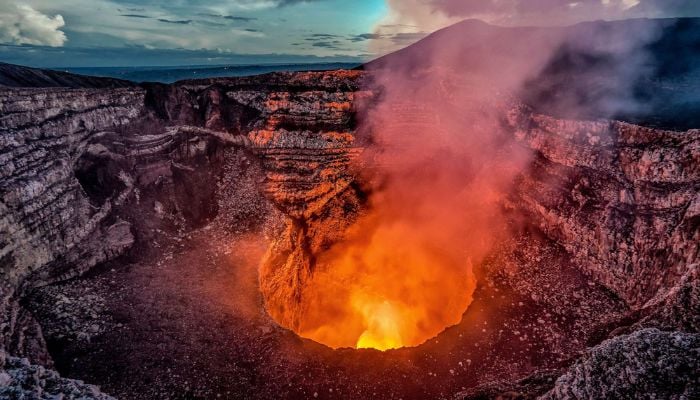
Scientists at Penn State have uncovered evidence of two previously unrecognised magma sources beneath Nicaragua’s Masaya volcano, revealing a far more complex underground system than previously understood, and potentially improving eruption forecasting for a volcano near roughly 2 million people.
Using six years of satellite observations from 2018 to 2024, researchers monitored subtle changes in the ground around Masaya with a technique referred to as interferometric synthetic aperture radar (InSAR), which can detect extremely small shifts in surface elevation and penetrates cloud cover common in tropical regions.
Their findings were published in Geophysical Research Letters.
The data showed that one part of the volcano initially sank before beginning to rise, possibly indicating fresh magma entering a deep reservoir.
Meanwhile, the ground around the active Santiago crater and its famous glowing lava lake continued to sink throughout the study, suggesting a separate, shallower reservoir was losing magma.
Lead author Lizzie Johnson said: “When it’s subsiding, that means that there’s probably magma draining away from the volcano, but once the ground starts uplifting again, that can mean that there’s potentially new magma moving in.”
The researchers stressed that their observations indicate no immediate danger. However, understanding the volcano’s baseline behaviour could help scientists recognise unusual changes and warn nearby communities in time.
Co-author Young Cheol Kim said: “Continuous monitoring allows us to understand the baseline activity and identify if things are changing.”
Masaya, located near Nicaragua’s capital, Managua, is a national park and a popular tourist destination. Although it last produced a major lava flow in 1772, it persistently releases sulphur dioxide, which can reach dangerous concentrations for visitors and surrounding communities.