Jensen Huang says Physical AI is next big thing: What is it, how will it change our lives?
Nvidia is working on simulation technology that lets robots practice in a virtual environment
Published October 20, 2026
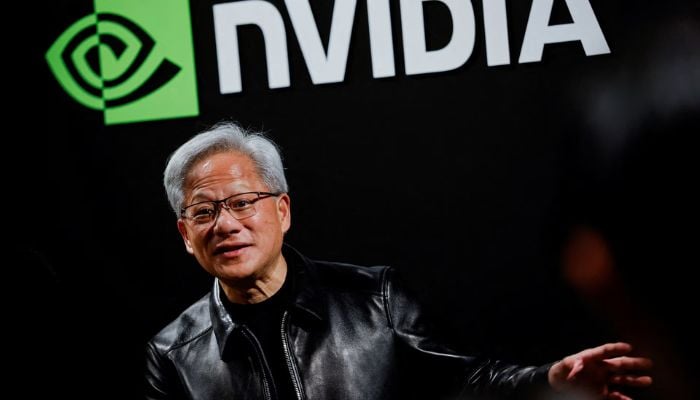
Nvidia CEO Jensen Huang believes the next major breakthrough in artificial intelligence will take the technology beyond computer screens and into the physical world.
He calls it Physical AI, a technology that could allow machines to understand their surroundings, make decisions and perform tasks without requiring instructions for every movement.
How is it different though, from the AI we already use?
ChatGPT can respond to queries, write emails and analyze information. For physical AI, it might be able to pick up a cup, understand it's fragile, and put it down on a table.
The technology fuses AI with cameras, sensors and robotic systems to enable machines to respond to real-world scenarios.
It is not just for humanoid robots.
It could be used for self-driving cars to start predicting when a pedestrian is about to walk across the street, or for automated robots in a warehouse to navigate around humans and pick up items without the need for predetermined routes.
Other industries that are investigating its use include hospitals and factories.
A big issue is, however, to teach machines the workings of the real world.
A chatbot can make a wrong answer, a robot making a similar mistake can cause damage to equipment or injury to a person.
To correct this, Nvidia is working on simulation technology that lets robots practice in a virtual environment before doing so in real life.
For instance, its Cosmos AI models are capable of creating realistic scenarios to train machines on the movement and interaction of objects.
Huang said that while there are technical, safety and cost limitations before robots can be readily adopted, they are now going through their own ChatGPT phase.
The distinction for regular folks may become as straightforward as asking an AI to do a task, rather than asking how to accomplish a task.