COP31: much ado about nothing
Before COP32, developing countries must strengthen their alliances and place responsibility for climate finance where it belongs
Published November 27, 2026
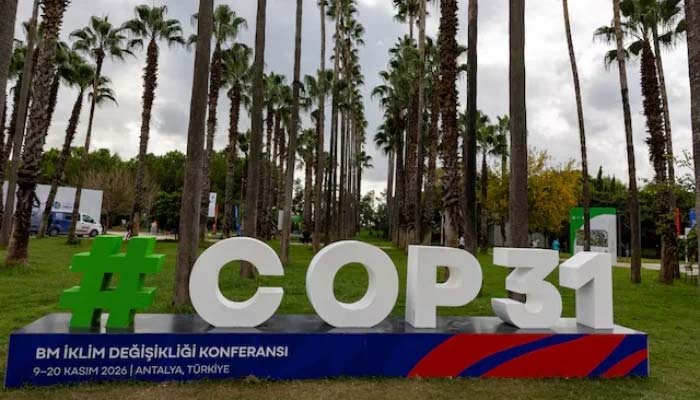
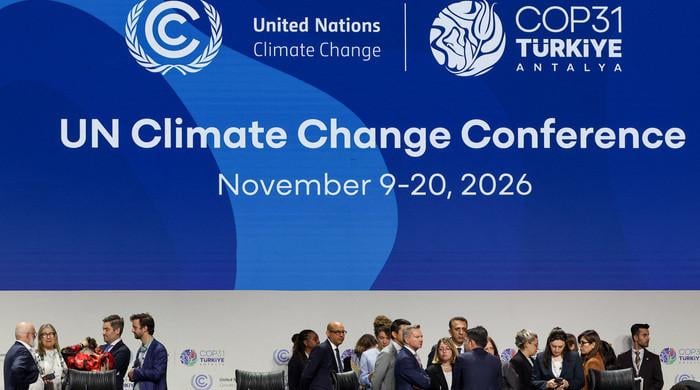
'Much ado about nothing’ is how I would sum up COP31, where the world spent more than two weeks negotiating a response to the climate crisis and could not agree on its central political text.
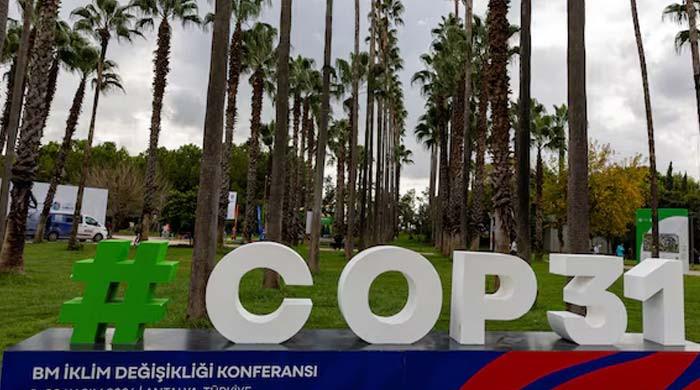
For communities already living with a warming planet, this failure is more than a diplomatic disappointment because it prolongs their wait for the support they need. I arrived in Antalya with hope because COP31 had been presented as the COP of Implementation, where commitments would finally be translated into action. Yet the negotiations returned to a question that powerful countries seemed unwilling to answer how developing countries can implement their climate commitments without the finance to do so.
The summit ran more than 44 hours beyond its scheduled close, making it the longest-running COP on record. Even so, the proposed Antalya Pact was not adopted after the European Union and several other parties objected to a text they considered inadequate. Although some separate decisions passed, the absence of an overarching agreement exposed the distance between the urgency of the crisis and the political will to address it.
The difficulties were apparent when the African Group’s request for a separate agenda item on tripling adaptation finance was not accepted. An early draft referred to at least $120 billion a year in adaptation finance by 2035, but that figure disappeared from a later version. Its removal reflected a deeper reluctance to agree on the resources required for implementation and the fossil fuel lobby’s influence on the outcome.
The United Nations Environment Programme estimates that developing countries will need around $305 billion annually for adaptation by 2035, while international public adaptation finance from developed countries stood at only $28.2 billion to $31.7 billion in 2024. Even tripling those flows by 2035 would meet less than a third of estimated needs, which explains why another promise without a clear delivery pathway offers little reassurance.
Second, no decision has been made on the IPCC’s 7th assessment report, which serves as the central evidence on the planet’s health in the context of climate change and overshoot projections. If evidence is delayed, developing vulnerable countries could face deeper challenges with respect to climate action and the crisis that could impact their socio-economic development.
The adaptation finance should allow countries like Pakistan to act before disaster strikes, helping local governments turn early warnings into timely action while enabling farmers to prepare for changing rainfall. To reach those most at risk, this funding must be sustained over several years and provided primarily through grants that local institutions can access without complex procedures.
The same principle applies to loss and damage, where Pakistan helped lead the call for a dedicated fund while chairing the G77 and China at COP27. The fund’s first round received requests worth $2.8 billion against an initial envelope of $342 million. Although these requests do not measure the full global cost of loss and damage, they show why the fund must be replenished and judged by the grants that reach affected communities. Adaptation can reduce future risks, but it cannot restore a life lost or recover a place destroyed. People facing irreversible harm should not have to shoulder the cost of rebuilding on their own.
The proposed COP31 text failed to name the principal driver of the crisis, as it did not explicitly mention fossil fuels despite the COP28 agreement to transition away from them in energy systems. Although the draft referred indirectly to that agreement, it offered little assurance that the transition would be pursued with the urgency required.
The presidency’s goal of increasing electricity’s share of final energy consumption to 35 per cent by 2035 also needed greater clarity. Electrification can help reduce emissions when power comes from cleaner sources, but developing countries need affordable investment to make that shift. Without a financing pathway, the headline target risks becoming another unfunded ambition.
One of the most unexpected moments came when the European Union refused to endorse a text that did not mention fossil fuels. In that respect, the EU stood on the right side of history, alongside vulnerable countries that also rejected the proposal. Yet its position must be matched by a stronger commitment to finance, particularly when the EU contested adding a climate finance work programme to the agenda and opposed a proposed dialogue on climate-related trade measures like the Carbon Border Adjustment Mechanism (CBAM). This is being viewed as an unjust measure for exporters from countries affected by the climate crisis.
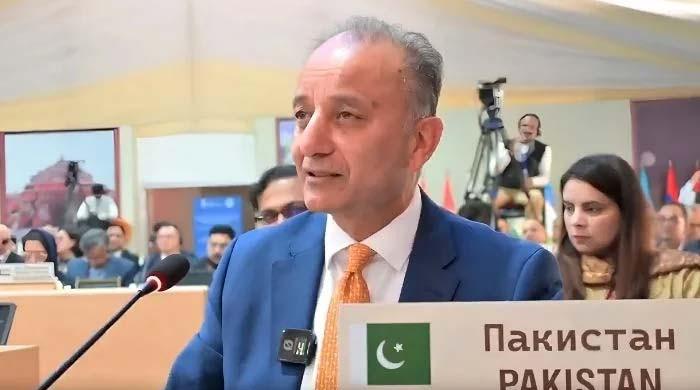
Pakistan’s delegation took a different position at the closing plenary, urging parties to keep working on the text instead of abandoning elements that others could accept. Its representative observed that “climate action is not a menu from which we can select only what suits us,” reminding the conference that vulnerable countries’ needs must be addressed alongside emissions reductions.
I share that call for a comprehensive response, although I believe the proposed pact fell short of the ambition it required. The African Group also warned against reopening settled understandings on climate finance under the Paris Agreement. Although the treaty was not formally reopened at COP31, developing countries must resist any effort to dilute the obligations of developed countries, particularly when those who contributed least face rising costs.
The mountain agenda offered a promising example of regional cooperation, with Pakistan joining its partners to raise the risks facing mountain communities while Nepal and Bhutan pressed for a more structured response. The proposed pact included a two-year work programme that could strengthen glacier observation and improve early warning for communities exposed to glacial lake outburst floods. These dangers extend beyond remote valleys because changes in mountain water systems affect communities downstream. Because the pact was not adopted, the programme was not established. Hence, the mountain countries must carry the proposal forward while seeking finance for these shared risks.
The absence of a pact does not erase the Paris Agreement or earlier COP decisions, but it should change how vulnerable countries work together. South Asian countries need stronger cooperation on shared climate risks, while building partnerships with African countries and small island states. Although their interests will not always be identical, they can develop common positions on finance and resist any further weakening of climate commitments.
Developing countries should jointly propose an internationally agreed climate justice tax on major polluting countries, with each country’s fair share determined by its historical emissions and ability to pay. Under a negotiated legal framework, participating countries that fail to disburse their agreed share of grant-based climate finance could be required to make up the verified shortfall through a mandatory payment into a fund that gives vulnerable countries a meaningful role in decision-making.
The resources collected should support adaptation and loss and damage through grants, while transparent reporting tracks how much is paid and disbursed. Developing countries should also assess whether coordinated trade measures could strengthen their negotiating position in response to the European Union’s CBAM, while ensuring that any new charges do not fall disproportionately on their own consumers. Since participation would have to be negotiated, vulnerable countries must build a coalition that can press major emitters to join, while ensuring that the mechanism strengthens existing climate finance obligations under the Paris Agreement.
Antalya should leave us with more than disappointment, because vulnerable communities cannot afford another year of negotiations without delivery. Before COP32, developing countries must strengthen their alliances and place responsibility for climate finance where it belongs. For people living with the consequences, the measure of global cooperation will be the support that reaches them in time.
The writer is an environmental scientist and leads the ecological sustainability and circular economy programme at the Sustainable Development Policy Institute (SDPI), Islamabad.
Disclaimer: The viewpoints expressed in this piece are the writer's own and don't necessarily reflect Geo.tv's editorial policy.
Originally published in The News