Karachi among world’s least liveable cities: World Bank report
Published November 11, 2016
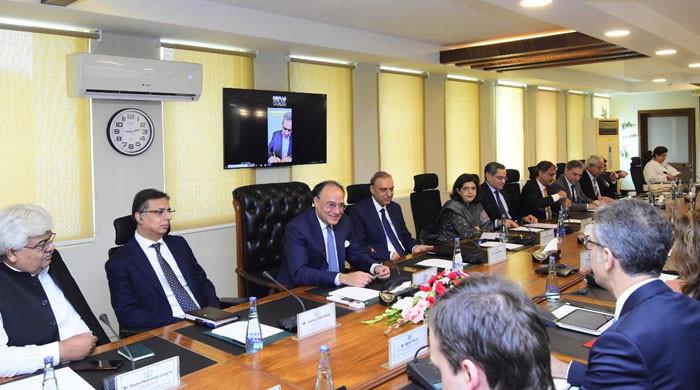
KARACHI: A World Bank report released Thursday highlights the plight of Pakistan’s biggest city and suggests measures needed to be taken to preserve its position as the country’s main growth driver.
The report titled ‘Pakistan Development Update – Making growth matter’, launched in collaboration with the Sindh government, devotes an entire chapter to Karachi’s problems. It states that Karachi continues to rank among the bottom 10 cities in the 2015 Global Liveability Index.
Karachi’s security and liveability face threat from regional conflicts, organised crime, and social and ethnic tensions arising from an incoming tide of immigrants, the report states.
Despite it being Pakistan’s economic and industrial hub, Karachi’s infrastructure and institutions are in dire condition, making it prone to natural disasters such as floods, earthquakes, tsunamis, water scarcity and heat waves, it adds.
“Karachi faces a complex political environment, ad hoc planning, poor governance, and weak financial and institutional capacities,” the report states.
Water scarcity and garbage
The report declares water scarcity as the most serious and imminent problem facing Karachi. According to the report, the available water supply meets only 55% of the city’s needs.
The city lacks infrastructure to treat and dispose of sewerage water. Every year 47,50,00,000 gallons of sewerage water is released directly into the open sea without treatment.
The report holds bad governance responsible for the water scarcity, stating that the city has no formal policy for water supply and sanitation.
It further notes that only 50% of the garbage that the city produces is sent off to the landfill sites.
Prone to disasters
The report states that Karachi is vulnerable to diseases linked to environmental degradation, especially those stemming from pollution and sewage.
Lack of urban planning, poor infrastructure and inadequate emergency rescue services make the city extremely vulnerable in the event of natural disasters such as earthquakes.
Poor transportation
There is no central public transport network in the city and no transport policy, the report states. Approximately 42% of residents rely on public transport yet the city has only 5% of vehicles.
Nutrition shortage
The World Bank report also draws attention to the problem of chronic malnutrition in Pakistan. It notes that the country has the third-highest stunting (low height for age) rate in the world.
According to data from several rural districts in Punjab, Sindh and Khyber Pakhtunkhwa, drinking water is contaminated with E-coli and is unfit for consumption.