Pakistan partially opens Afghan border crossings for UN cargoes
Limited border opening comes amid growing shortages of food supplies and medicines in Afghanistan

Published December 04, 2025
- Food supplies to enter Afghanistan in first phase of border opening.
- Transportation of medicines, medical equipment to be allowed.
- Ministry of Commerce's decision made in consultation with MoFA.
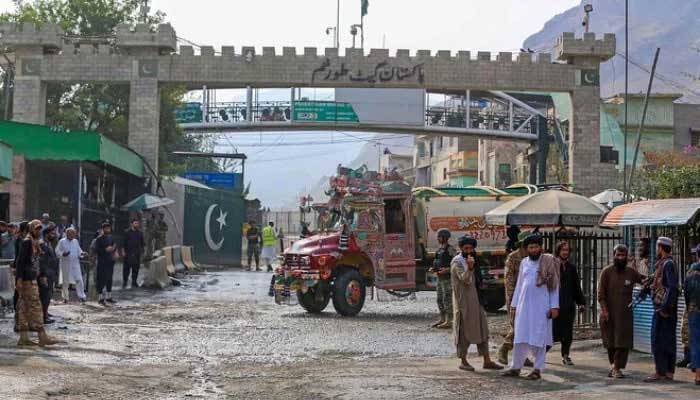
ISLAMABAD: After nearly 50 days of closure, Pakistan has reopened the Torkham and Chaman border crossings with Afghanistan for United Nations humanitarian cargoes.
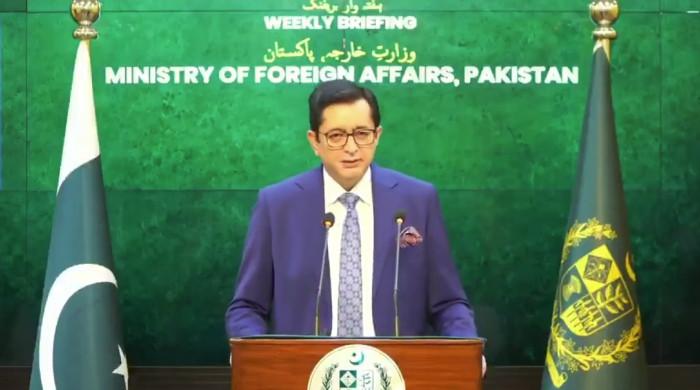
Speaking to Geo News, Foreign Office Spokesperson Tahir Andrabi confirmed that the Pakistan-Afghan border has been partially opened for UN aid on humanitarian grounds.
However, he clarified that the trade was still suspended, further noting that, "We have no problem with the Afghan people".
The confirmation comes after the sources said that the Ministry of Commerce had reached the decision to open the borders in consultation with the FO.
The limited border opening comes amid growing shortages of food supplies and medicines in Afghanistan following the prolonged suspension of cross-border trade.
To facilitate the process, the Ministry of Commerce has issued a formal letter to the Member Customs (Operations), Federal Bureau of Revenue (FBR) Islamabad, and the Director General Transit Trade, FBR Karachi.
The letter requests that all necessary measures be taken to enable the smooth movement of UN humanitarian containers.
According to the communication, Pakistan — after coordination with the Foreign Office — has approved a phased clearance of containers belonging to Unicef, World Food Programme (WFP), and United Nations Population Fund (UNFPA).
In the first phase, containers carrying food supplies for Afghanistan will cross the border, which will be followed by allowing the transportation of containers carrying medicines and medical equipment in the second phase.
In the third phase, containers carrying other essential items, including kits for students and teachers will be allowed to cross the border.
Both the Directorate General of Transit Trade and the FBR have been asked to expedite clearance procedures and onward transit arrangements so that these humanitarian shipments can be dispatched through the Torkham and Chaman routes without delay.
Pakistan closed the Torkham and Chaman borders with Afghanistan on October 12 after the Afghan Taliban, in association with their affiliated militants, attacked multiple Pakistan Armed Forces' posts along the border.
The border clashes between forces from the two countries began on the night between October 11 and 12 after the Afghan Taliban and militants launched unprovoked attacks against Pakistan’s border posts.
The resulting clashes led to the killing of over 200 Taliban and affiliated militants, while 23 Pakistani soldiers were martyred defending the motherland.
Pakistan also conducted "precision strikes" deep inside Afghanistan, targeting terrorists in Kandahar province and Kabul. A temporary 48-hour ceasefire was announced on October 15 at Afghanistan's request.
The temporary ceasefire was extended for another 48 hours on October 17 as delegations from the two countries headed to Doha, Qatar, for further negotiations.
Pakistan and Afghanistan agreed to an immediate ceasefire during the Qatar-mediated talks.
The two sides eventually reached an official ceasefire agreement on October 19 in Qatar in talks mediated by Doha and Turkiye.
Under the deal, terrorism from Afghanistan on Pakistani soil will stop immediately with Islamabad and Kabul agreeing to establish mechanisms to consolidate lasting peace and stability between the two countries.
The two sides then held further talks in Turkiye which collapsed after Pakistan refused to accept the Taliban delegation's "illogical" arguments and refusal to address Islamabad's concerns regarding cross-border terrorism.
However, mediators persuaded Pakistan to give the talks another chance, which ultimately resulted in an agreement to uphold the ceasefire.