Pakistan's solar revolution leaves the grid behind
Pakistan must develop a short- and long-term policy to create a mechanism for balancing this solar boom phenomenon
Published December 20, 2025
Throughout human history, many inventions have appeared, but only a few have truly changed the lives of mankind. A key feature of these important innovations was their accessibility; they reached both the rich and the poor, and both gained benefits from them.
When we discuss past inventions that changed human life, electricity and the telephone clearly stand out as revolutions whose effects continue today. In the modern era of the 21st century, numerous new inventions have made life easier. One of the most significant is the modern solar panel, which we now use in our homes.
Although the effort to create solar cells started in the 19th century, beginning in 1839 when French physicist Edmond Becquerel first discovered the photovoltaic effect, and leading to the invention of the modern solar cell in 1954, the true solar revolution began in the 21st century.
According to a global energy think tank, Ember, solar power now provides 9% of the world’s total electricity generation, and developing countries are adopting it even faster.
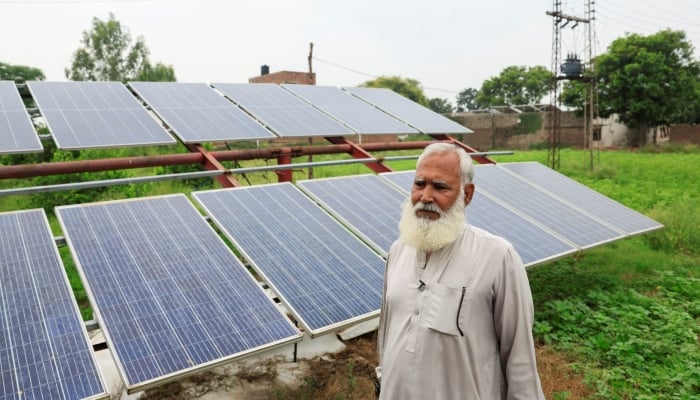
Like many developing nations, Pakistan’s demand for solar energy is increasing every day. Faced with load-shedding and high electricity costs, people have installed so many solar systems in recent years that Pakistan has become the world’s largest importer of solar panels.
Pakistan's solar boom
Data from Ember indicates that in 2024, Pakistan imported 10 gigawatts of solar panels, more than any other country. In 2020, solar power accounted for less than 2% of Pakistan’s total electricity production. By the end of May this year, it rose to 24%, and it is expected to hit 50% in the coming years.
In a recent report, Reuters claimed that a senior government official said that Pakistan’s rooftop solar generation will exceed power demand on the country’s electrical grid during daytime hours in some industrial regions next year.
Reasons behind sharp solar adoption
Available data shows that there was an unprecedented hike in grid electricity tariff by 155% over the last three years, which worsened people's economic conditions. As the use of solar energy rapidly expands across Pakistan, people are moving away from costly grid electricity.
China is one of the biggest producers of solar, and due to the implementation of anti-dumping regulations on Chinese solar by the US and European Union, Asia has emerged as a major alternative market for Chinese solar products. Bloomberg reports that Pakistan imported solar panels for $4.1 billion over the past four years, and in the current year, Pakistan imported $1.5 billion worth of solar panels. According to reports, Pakistan imports most of its solar products from China.
Another reason for sharp solar adoption is the persistent and prolonged load-shedding in the country, especially in peak summer. In many areas of Pakistan, temperatures reach 40 to 45 degrees Celsius in summer, and due to the increase in demand for electricity, people face 8 to 12 hours of loadshedding, which also forces people to install solar panels at their homes and workplaces.
Role of govt power policy
Although this solar boom is not the result of any long-term plan by the Government, there are certain factors like solar import policy and net metering that play an important role in it.
Generally, importing goods in Pakistan involves many taxes, but the Government did not impose any tax on solar imports till the financial year 2024-25. For the current financial year, the finance ministry proposed the 18% tax on solar imports, but later 10pc tax was imposed on the imports on solar panels and the Government insists that this decision will balance the fiscal need while maintaining the needs of clean energy.
Due to the zero tax on solar imports in previous years and the net metering policy, people started installing solar on rooftops and business places on a large scale and sent the excess electricity to the national grid to reduce their bills. In March 2025, the power division proposed a payback rate for net metering consumers to Rs10 to 11.3 from Rs27 per unit, but later on, Prime Minister Shehbaz Sharif halted the revision of the net-metering policy.
However, due to the massive transmission and distribution losses and power purchase agreements made under the IPP framework, the national economy is under financial pressure, and the burden is falling on those consumers who are not using solar power.
Way forward
Pakistan must develop both a short-term and long-term policy to create a mechanism for balancing this solar boom and for the productive usage of grid-based electricity, so that the energy sector can manage to reduce the burden on the economy.
We should see this solar boom as an opportunity that will make Pakistan the largest country in the world which is generating electricity from clean and green energy sources (solar, wind and water), instead of crude oil, coal, and other sources that cause environmental damage.