The paradox of joy — Basant edition
When people are given an opportunity to celebrate... they grasp it with sheer happiness and free will
Published March 11, 2026
It's been a while since the Basant festivities took place, but people are still experiencing the surge of energy. Going back to their mundane routine after giving their all to the long weekend of celebration and joy was easier said than done.
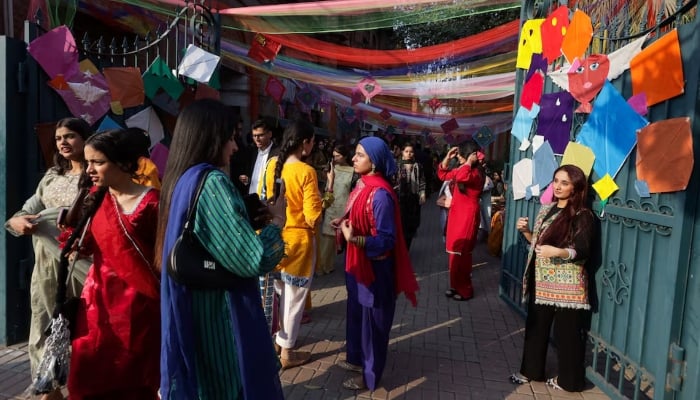
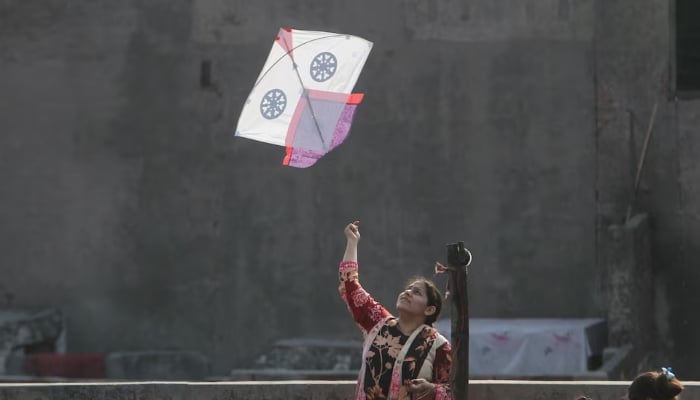
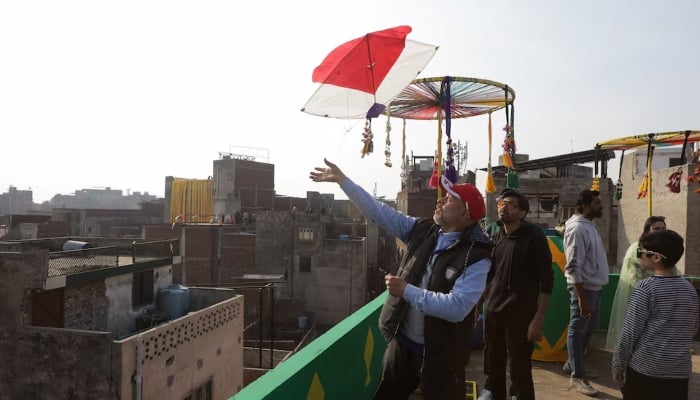
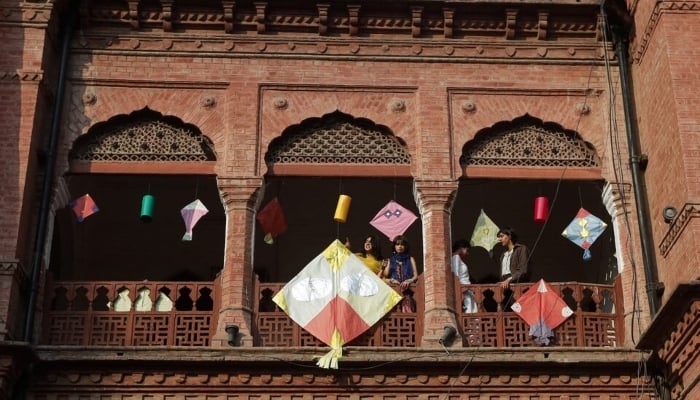
For three consecutive days, the skies of Lahore soaked in colours to welcome spring. Thousands of kites embellished the skyline, with everyone trying to showcase their kite-flying prowess. The rooftops were the beating hearts of this festival, which gave life to the age-old art of assembling and flying kites. The sky was an abode to the kites, while people were on cloud nine.
Basant was revived in its full glory with every individual lost in the vibrant hues of the occasion. People kept their provincial, religious, and political differences aside and came together just for the spirit of Basant. Unity on this spectrum is not easily attained. And we, for once, should be proud of our own people to truly embrace the shared love and passion of such festive occasions.
This long-awaited moment of joy was also met with skepticism by some. The strong suspicion regarding the orchestration of Basant started circulating over social media. The narrative of "Give them bread and circus and they will never revolt", a Roman saying, was circulated and posted by few citizens, dismissing the excitement of Basant. The idea that took hold of many was that this celebration is all just a facade. The positivity felt staged and people believed that these events were arranged to create a distraction. Distraction from political movements, crisis, or unfavourable socio-economic decisions. For some, the premise for not being joyous on Basant was that if you don’t want the masses to show resistance, then engage them in superficial, trivial activities to keep them entertained. This way, people won't be focused on significant fundamental issues.
But, a question arises. What are those fundamental issues that people believe will be ignored or overlooked by this distraction? Did Punjab, or Lahore, specifically indulge in visible resistance before the festivities of Basant kicked in? And if Basant was meant to conceal any defiance, then one is bound to ask about the existence of this revolt in the first place.
Let's shift our political lens to a psychological one. When masses are exposed to constant instability, whether that's political, social or economic, they fall prey to the phenomenon known as Learned Helplessness. Martin Seligman – an American psychologist and writer, devised this term to explain that when people are continuously subjected to situations that are not in their control, they will internalise a state of helplessness. And over time, they will even stop trying to make a change.
Being optimistic makes people feel unsafe and vulnerable. Moreover, there's an element of prevailing victimhood mentality. People pinpoint harm, negativity, and injustice to gain social credibility and validation. The number of shares and reposts that you get, earns you social media popularity within certain groups. Public bashing and critique is rewarded with engagement on online platforms. When Basant is framed as a "distraction", the narrative of suspicion is fueled. On the other hand, some viewed the Basant celebration as an insensitive act, taking broader issues into account. Nonetheless, the timely cessation of public events on February 7 by the Punjab government after the horrific suicide blast a day earlier in Islamabad will tell you otherwise.
Nevertheless, no amount of accusation or unfavourable narrative could deny the psycho-social perks that came with Basant. This widespread act of celebration served as a coping mechanism for the society at large. Communities came together, social bonding was promoted, feelings of belongingness returned, and a collective stress relief was experienced.
Yes, communal celebrations do not make structural problems disappear overnight, but they provide a safe space for the whole community to undergo emotional liberation. In high-stress environments, a tiniest flicker of joy can bring a wave of enthusiasm. Basant served as that symbolic event, which reminded people that they needed to take a much-deserved break from their monotonous routine and connect to their cultural roots for a moment.
This festival was not just a morale booster for people but also a gentle push towards their historic and monumental cultural legacies. This doesn't mean that acknowledging such events will make all socio-economic or political problems vanish, instead, this festival was a medium to channel people's exhaustion on a societal level. People overwhelmed with fatigue and responsibilities found this event to be a symbolic gesture to revive their interest in the little gifts of their culture. Basant was an extrinsic motivator for people to function spiritedly and be hopeful towards future developments.
Let's zoom out and visualise the impact on a broader level. Basant brought a dose of nostalgia for Gen X and Millennials, while we saw Gen Z and Gen Alpha discovering their cultural subtleties. It was a non-literal inheritance for the younger generation. Kids learnt new terminologies regarding kite flying, while elders taught them the techniques of mastering an airborne kite.
There is no denying the local merits of Basant, but, Pakistan also drew attention globally. The event of Basant received coverage from international media houses, people from all across the globe witnessed this festival in its complete splendor, and many became a part of it. The amplification of Pakistan’s soft image was a noteworthy output.
Not only for Pakistani citizens, but many international students who are currently enrolled in various universities of Lahore cherished the arrival of Basant and soaked in merriment. Ashfah Ameer, a Sri Lankan student, pursuing Forensic Science at the University of Lahore, shared her experience of witnessing the celebration of Basant in Pakistan.
“I was unable to go out much due to hostel timings, but I did see the decorations along the roads. I got invited to join Pakistani friends with their families to celebrate Basant, but sadly had to decline due to contradictory timings. Even so, it made me feel extremely grateful to have someone who would include me in their family gatherings. It reflected unity and culture."
Ashfah recounted her experience of witnessing the buzz around the city, stating that it was amazing to see the colours and culture being embraced. “I also found it really great that the provincial government decided to provide free transportation on those days. I don’t think it was easy to make such a decision, especially when those three days involved high use of public transport. They could’ve made a fortune if they hadn’t made it free.”
For the Sri Lankan student, Basant wasn’t just a festival, but an emotion.
Shamla Yazeer, another Sri Lankan national studying Pharmacy at the Lahore College for Women University, felt the experience of Basant was both culturally fascinating and personally meaningful for her.
Commenting on the use of kites in the celebration, she said, “Kite flying is not unfamiliar to us. We used to fly kites frequently in Sri Lanka, whether it was along the beaches, in public parks, or across paddy fields. This simple, yet joyful activity was part of our everyday lives. However, gradually over the past six to seven years, we’ve become distanced from those moments due to academic responsibilities in college and university.”
For Shamla, witnessing Basant in Pakistan felt like reconnecting with something left behind unintentionally. "The sight of countless kites filling the sky, the collective excitement on rooftops, and the vibrant atmosphere reconstructed the concept of kite flying from a casual pastime into a powerful cultural expression.”
She added that despite the differences in the form of celebration, the underlying human emotions like joy, freedom, and togetherness are universal. “Basant did not feel foreign to us; instead, it created a bridge between Sri Lanka and Pakistan, reminding us that cultures may vary, but shared experiences connect us deeply."
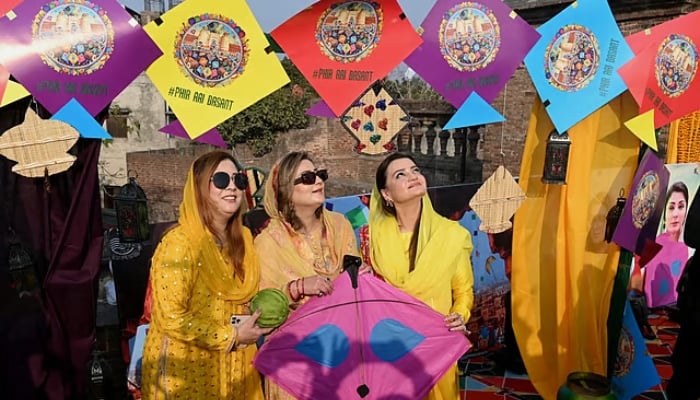
It won’t be an exaggeration to say that Basant was not a mere festival, but a highly significant opportunity to connect people of diverse backgrounds with the basic fabric of our country’s traditions and culture.
Such celebrations are a win for Pakistan on both the national and international levels. We cannot completely nullify any crisis or issue, but restricting ourselves to any joy is not going to solve them either. If we want our people, our society, our country to heal, we first need to trust the moments of jubilation stemming from our own roots. We should create space in our lives for some collective entertainment that can serve as a bonding unit for people all across the nation. With Basant now being expected in other cities of Pakistan, presumably after Eid too, we must create an environment of acceptance and faith to march towards a promising therapeutic future.
In essence, when people are given an opportunity to celebrate, to declutter their minds, they grasp it with sheer happiness and free will. Previously, seen on the occasions of New Year, Christmas, and now in Ramadan with the anticipation of Eid, Punjab government continues to adorn the cities with celebratory hallmarks. Matshona Dhliwayo once said, “Pebbles that bring you joy are better than diamonds that bring you sorrow”. So, let’s cherish these fleeting moments, as they, too, will become a memory of the past.