UN experts assail India for use of force, violation of Pakistan's sovereignty in May war
Experts say New Delhi failed to provide credible evidence of Pakistan's involvement in Pahalgam attack
Published December 19, 2025
- India's attacks killed and wounded civilians: UN experts.
- Report expresses deep concerns over India's abeyance of IWS.
- Water cannot be used as tool for political, economic pressure.
Reaffirming Pakistan's stance, the United Nations' experts have raised strong objections on India's unilateral actions of May 7 inside Pakistan, asserting that the use of force by New Delhi violated the principles of the United Nations Charter, according to a recent report.
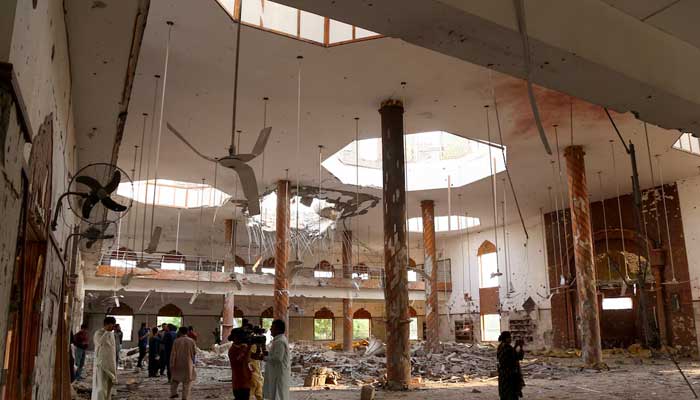
In the report cited by Radio Pakistan, the UN human rights experts said that Indian attacks targeted civilian areas, mosques and killed and wounded several civilians.
The UN experts further pointed out that New Delhi failed to provide credible evidence that Pakistan was involved in the Pahalgam attack and stressed that there is no recognised right for unilateral military force under the pretext of counterterrorism.
The report refers to the four-day armed conflict between the nuclear-armed neighbours after India carried out unlawful strikes inside Pakistan, which resulted in the martyrdom of several civilians and security personnel.
Pakistan, in addition to downing multiple Indian fighter jets, then launched a retaliatory strikes under "Operation Bunyan-um-Marsoos", targeting over 20 Indian military sites across multiple regions.
The hostilities ended on May 10 after the two countries agreed to a US-brokered ceasefire agreement.
Furthermore, endorsing Pakistan's stance on the Indus Waters Treaty, which has since been put in abeyance by New Delhi, the UN Special Rapporteurs expressed deep concern over New Delhi's move and highlighted that any obstruction or threat to the flow of water affects the fundamental rights of millions of people in Pakistan.
The rights to water, food, employment, health, environment and development are directly impacted by this decision, said the UN experts.
Emphasising that interference with transboundary water rights must be avoided, the UN report noted that water cannot be used as a tool for political or economic pressure.
Maintaining that no party can unilaterally suspend the IWS and it remains in effect unless both governments mutually terminate it through a new agreement, the experts also referred to the Indian refusal to participate in arbitration and challenging the scope of the Treaty.
Demanding that New Delhi fully honours the IWS and refrain from violating Pakistan's rights, the UN experts urged India to take concrete steps to prevent human rights violations and damages arising from the obstruction of water.
The UN Special Rapporteurs also sent a questionnaire to the Modi government, raising key questions, including the evidence of Indian allegations.
They also inquired about India's intentions regarding a peaceful resolution to the Indian Illegally Occupied Jammu and Kashmir (IIOJK) dispute. However, New Delhi did not respond to any of the questions.
'Int'l concerns over India's conduct'
Meanwhile, President Asif Ali Zardari has welcomed the report issued by UN human rights experts.
The president, in a statement, said the report reinforced Pakistan's long-standing position that the unilateral use of force across international borders constituted a violation of the UN Charter and a grave breach of the country's sovereignty.
He said that the findings relating to civilian deaths, damage to populated areas and religious sites of the country in May, and the heightened risk of escalation caused by India were deeply disturbing.
President Zardari appreciated the report's observations on India's unilateral declaration of "holding in abeyance" its obligations under the IWS, its aggressive posture and statements and the serious civilian losses resulting from Indian aggression.
He said the Treaty remained a binding international agreement and a cornerstone of regional stability, and stressed that bypassing agreed dispute-resolution mechanisms and actions affecting water flows violated Islamabad's rights and risked creating serious human rights consequences.
Stressing that the report also reflects growing international concerns over India's conduct as a rogue state that increasingly acts as a global bully, relying on coercion, intimidation and the normalisation of force and violence rather than law and dialogue, the president noted that serious reports of transnational violence and targeted killings attributed to India, raised in multiple countries, pointed to a dangerous pattern that extended beyond the region and undermined global norms.
The president expressed concern that the report clearly manifested the irresponsible state behaviour of India.
"India has long stonewalled its minorities and ignored its commitments to international forums such as the UN, but this pattern of rogue behaviour cannot continue indefinitely," he said, and underscored that such behaviour cannot be allowed to persist.
The president noted the report's clear conclusion that international law did not recognise any separate right to unilateral military action under the pretext of counterterrorism.
He said the affirmation of the country's inherent right to self-defence under international law highlighted the seriousness of the violations identified.
President Zardari welcomed the UN experts' scrutiny of India's regional conduct, including concerns relating to support for terror outfits and the use of the Afghan Taliban regime to advance hostile objectives and called for transparency and accountability in this regard.
Reaffirming the country's commitment to peace, restraint and respect for international law, the president said Pakistan would continue to pursue diplomatic and legal avenues to safeguard its sovereignty, protect the rights of its people and promote stability in the region.
— With additional input from APP