Does new US food pyramid put too much steak on your plate?
Kennedy administration unveils new dietary guidelines, flipping food pyramid
Published January 08, 2026
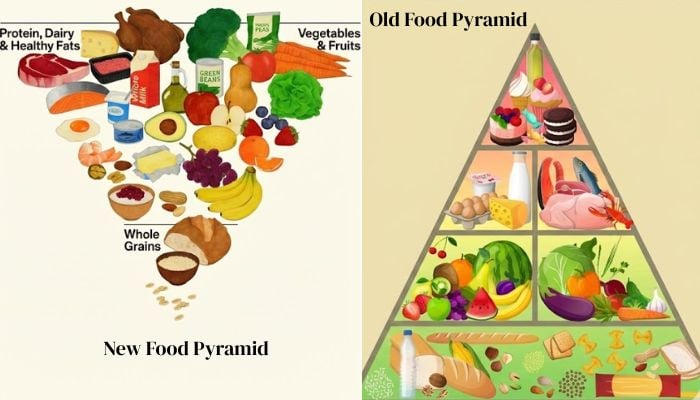
The Trump administration disclosed a dramatic overhaul of federal nutrition policy on Wednesday, January 7, 2026, introducing new dietary guidelines.
The guidelines are set to reshape the iconic food pyramid and encourage higher consumption of protein and full-fat dairy.
The new inverted food pyramid graphic was shared at a White House briefing, placing red meat, cheese, and vegetables at its widest, top tier.
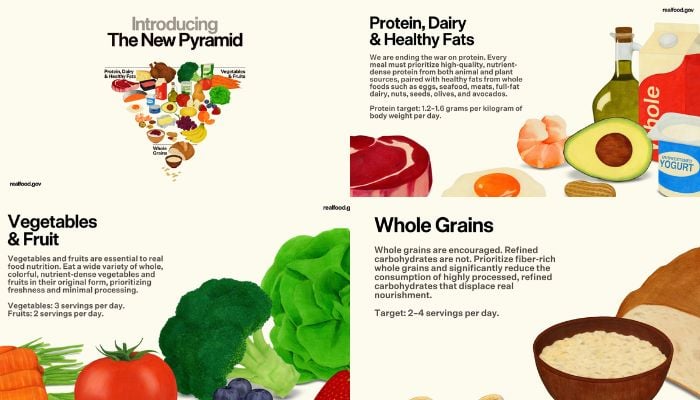
The guidelines declare an end to the “war on saturated fat,” instead urging Americans to prefer whole foods and “healthy fats” like olive oil, butter, and beef tallow, while strictly limiting ultra-processed foods and added sugars.
Labelling the update as a historic reset to fight against chronic diseases, Kennedy stated, “My message is clear, eat real food “A person should get 1.2 to 1.6 grams of protein per kilogram of body weight daily and three servings of full-fat dairy.
The shift has drawn mixed reviews. The American Medical Association applauded the focus on limiting processed foods, while the American Heart Association expressed concern that the emphasis on red meat and full-fat dairy could lead to excessive saturated fat intake.
Nutrition expert, Christopher Gardner of Stanford University called the pyramid “disappointing” arguing it contradicts decades of evidence.
These guidelines are highly significant as they play a fundamental role in directing meals in schools, on military bases, and in federal aid programs.
Apart from health concerns, the School Nutrition Association immediately raised concerns about the cost and logistical challenge of reducing processed foods in cafeterias, calling for increased congressional funding.
What health risks are associated with eating red meat?
High intake of red meat is associated with a significantly greater risk of chronic illnesses, including colorectal cancer, cardiovascular diseases, and type 2 diabetes. Key dangers stem from carcinogens formed during high-heat cooking, heme iron’s oxidative damage, and high levels of saturated fat and sodium. The World Health Organisation (WHO) classified unprocessed red meat as “probably carcinogenic.”