Geographical significance of Iran's Kharg Island: Will US strikes help or backfire?
Iran’s Kharg Island, also known as ‘The Orphan Pearl, ’ powers Iran’s oil lifeline
Published March 14, 2026
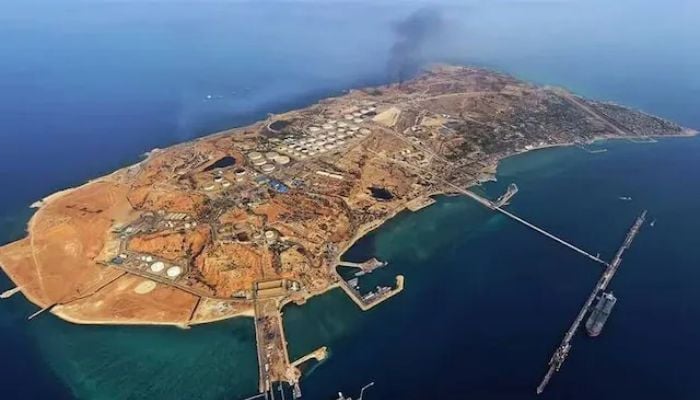
Kharg Island is situated in the azure waters of the Persian Gulf, approximately 30 kilometres off Iran’s southwestern coast.
Despite being a tiny island, this small coral formation serves as the beating heart of the Islamic Republic’s economy.
Poetically called “Orphan Pearl,” this narrow strip is totally isolated geographically. However, it functions as the main terminal of 90% Iran’s crude oil exports.
Its deep offshore waters present a rare geographical significance. It enables the anchoring of very large crude carriers (VLCCs), usually known as “supertankers”, which can’t be docked at most mainland ports due to shallower depth.
Hence, its geographical location positions the island as a primary artery connecting Iran’s inland oil fields to international markets, especially in Asia.
The island's economic output is staggering as it is capable of handling around 950 barrels of oil annually.
It serves as a collection and shipping point for large offshore fields such as Aboozar, Forouzan, and Dorood.
To facilitate this enormous volume, Kharg has large storage facilities with a capacity of approximately 30 million barrels, turning it into a gargantuan logistical warehouse floating on the waters of the Persian Gulf.
The island is located in the northwest of the port of Bushehr, which makes it closer to the Strait of Hormuz. This gives indirect leverage over global energy routes. But this same significance creates profound vulnerability as well.
The U.S. attack on the island highly represents how it wanted to exploit this vulnerability.
The limited US strike on Kharg Island helps in that it surgically degrades Iranian naval and missile forces without damaging oil terminals to prevent a global energy crisis.
It also shows military prowess to Gulf allies, disrupts Iranian planning to threaten the Strait of Hormuz, and increases Washington’s strategic hand without an economic backlash.