Through the ruins of a global order
Rising tensions in Iran and possibility of foreign intervention not only target govt but would have catastrophic consequences for entire region
Published January 14, 2026
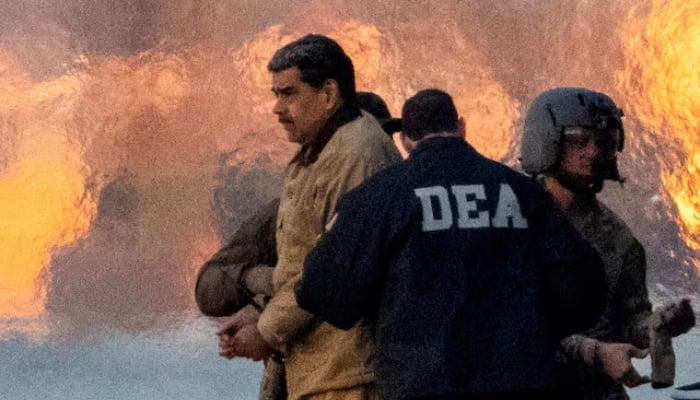
The world is in the midst of an unprecedented crisis. The post-World War II architecture of international relations and security has been dismantled by the Israeli genocide in Gaza and the recent hideous abduction of the Venezuelan President Nicolas Maduro and his wife Cilia Flores.
The rising tensions in Iran and the serious possibility of foreign intervention, reinforced by US President Trump’s military threats, not only target the Iranian government but would have catastrophic consequences for the entire region.
The primary aim of new imperial strategies is to undermine the sovereignty and territorial integrity of countries in the Global South. We have seen how many countries in the Middle East have been reduced to wastelands.
Iraq, Yemen, Libya, Syria, Lebanon, not to mention Gaza, have endured a relentless assault by the US or its proxies in the region. According to research conducted by Dr Matteo Capasso and Dr Ali Kadri, Syria and Libya’s developmental indicators have been reduced to levels comparable to those in the 1950s.
What we are witnessing is not merely regime change, but the destruction of the accumulated labour of societies, pushing them into a vortex of chaos, destruction and perpetual underdevelopment.
We have also viewed the heightened use of the sanctions regime against any government that refuses to toe Washington’s line. Venezuela and Cuba have been the primary victims of this policy. Not only was Venezuela prevented from selling its oil in the global market, but its assets worth billions of dollars were frozen in Britain and the US, producing the much-lamented economic crisis.
It is worth remembering that US-imposed sanctions remain one of the deadliest weapons in the imperialist arsenal, with over 38 million deaths attributed to them since 1970.
On the other hand, the West continues to face a terminal economic decline as its industrial base shifts to the global south. The rise of the Far Right in the Western world is an indication of the rot at the heart of the imperial core, where discontent against elites has turned into a crisis of legitimacy for the system. Apart from channeling their anger against the rising tide of immigrants, many of whom come from countries devastated by Western wars and sanctions, the Far Right aims to reverse the rise of China.
China’s emergence onto the global stage, in particular its remarkable capacity to develop its technological and industrial base, poses the most significant threat to the 400 years old Western dominated global order.
Moreover, Jason Hickel has shown that wages in China have risen eight-fold over the past 20 years, ending the country’s role as a subservient provider of cheap labour and raw materials to global corporations.
It is precisely this hindrance to profits for global capital and the loss of economic hegemony that threatens US dominance worldwide. However, with nearly 800 military bases worldwide and a military budget exceeding $1 trillion, the US remains an unrivalled military hegemon.
This is why, according to academic Toussaint Losier, the US grand strategy is to use its considerable military advantage to begin World War III in "pieces", decimating the sovereignty of any government that could potentially align itself to a non-Western global order.
Venezuela and Cuba, as key nodal points to China’s economic presence in Latin America, are major irritants in this imperial strategy. The same is the case with Iran, which has developed its economic resources despite US sanctions, is a major source of energy for China and provided key military support to Russia and anti-Zionist forces in the Middle East. The aim is to decimate any potential allies of Beijing, forcing it to eventually capitulate in front of DC’s hegemonic designs.
A key element of the contemporary dynamic is that the US’s ability to destroy far exceeds its capacity to rebuild. After World War II, Washington leveraged its remarkable financial strength to rebuild Europe through the Marshall Plan, thereby preventing the threat of left-wing governments on the continent, as Communist Parties enjoyed popular support due to their leading role in the fight against Nazism.
Today, however, we witness the failure of imperial attempts to rebuild society in Afghanistan, Iraq, Libya, and other sites of imperial aggression. The global order is no longer undergirded by a hegemon that can stabilise a fractured situation. We have entered the realm of pure destruction without reconstruction.
This recognition makes the current attempts at regime change in Tehran and Caracas particularly ominous. After supporting the televised genocide in Gaza, no one actually believes that any Western capital takes the notion of human rights seriously.
It is clear that the plan is to destroy the sovereignty of these states and reverse their strategic reorientation towards Beijing and Moscow. When states collapse, the result is never freedom or democracy for the people. Instead, colonial history informs us that the vacuum is always filled by powerful external actors, and in this case these regions will fall under the tutelage of Washington and Tel Aviv, disabling any possible trajectory for a sovereign future.
Yet the relative decline of the US places serious limitations on the West’s capacity to impose its will. Already in Iraq, Afghanistan and Russia, the US was unable to find a sustained foothold in the region. Similarly, the brazen kidnapping of Maduro has not translated into regime change, with hundreds of thousands of Venezuelans taking to the streets to demand the return of their president.
Similarly, over a million people rallied in Tehran on Monday to express their opposition to any regime change operation from the US or Israel. These voices, however, are ignored in mainstream media since for BBC, CNN and other imperial outlets, ‘people’ only constitute those elements who are willing to align themselves with Washington’s strategic objectives.
The rising divisions within the Western bloc over Greenland further threaten to precipitate the collapse of the hegemonic order under the weight of its own contradictions.
These trends indicate an unprecedented global disorder, with sovereignty becoming central to politics. In Pakistan, our defence capabilities offer us a unique advantage within the Muslim world.
Yet, we remain disoriented without a clear path forward in this dangerous new world. When the post-war order was being constructed, the country’s leadership jumped into the Western camp by signing the SEATO and CENTO security pacts, locking our trajectory within the imperial order.
This decision was taken without any public discussion, turning Pakistan into a rent-seeking economy and causing immense misery by indulging in US-led wars in the region, particularly against Afghanistan.
Today, the decisions we take in the global arena will have even more consequences than the decision to align ourselves with Washington in the cold war. The West is offering wars, regional tensions and economic de-development through IMF-imposed austerity and high tariffs.
On the contrary, Pakistan requires a shift away from failed elite-driven economic policies by disciplining capital and pushing for job-creating industrial growth. This requires peace and stability in the region, and increasing cooperation with neighbouring countries, particularly China and Iran, two states the West seeks to destabilise.
As we walk through the ruins of a global order, Pakistan requires an open and honest debate about its future trajectory. Yet, we are witnessing an unprecedented crackdown on dissenting voices, the decimation of the judiciary and the repression of popular parties and movements.
The refusal to accept differing voices could push us into a trajectory that will again turn us into mere footnotes in imperial designs, with immense financial gains for a tiny elite while imposing death, destruction and perpetual misery for the vast majority.
Today, the question of sovereignty is intimately tied to popular legitimacy, a fact that our ruling elite is failing to comprehend. Without popular legitimacy, we will fall into the imperial trap, which offers us nothing but a planet of ruins. We must refuse and resist this future.
The writer is a historian, the general secretary of the Haqooq-e-Khalq Party and a member of the Tehreek-e-Tahaffuz Ayin-e-Pakistan.
Disclaimer: The viewpoints expressed in this piece are the writer's own and don't necessarily reflect Geo.tv's editorial policy.
Originally published in The News