Losing the game?
Mental health is a problem that is sought to be solved through medical means
Published January 18, 2026
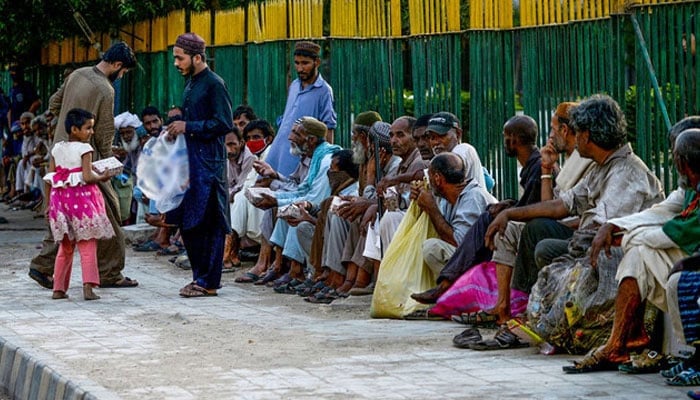
In recent months, I have repeatedly been shocked by stories of violent crime and deviant behaviour that clearly portray a society that is increasingly becoming dysfunctional. But I find little concern at a high level of our governance about what is happening to Pakistan in a social context.
All that the authorities need to do to become aware of this situation is to look closely at some media reports, which are usually buried under the stacks of ‘national’ news and political leaders' statements, as well as reports of global conflicts.
I have a good collection of these stories, and I have been wanting to write about the deprivations of Pakistani society for quite some time. However, I got this incentive on Thursday from an unlikely source: a column published in The New York Times. Here was the renowned Nicholas Kristof writing about his own country with this title: ‘Life, Liberty and Pursuit of Unhappiness’.
So, what did this have to do with Pakistan? Actually, Kristof has mourned the surprisingly low ranking of the US in the social sector. And this in a country that is the most powerful in the world, militarily and economically. He has cited the 2026 Global Social Progress Index that was released on Wednesday. I got excited because the issues discussed are also relevant for Pakistan and, yes, Pakistan also figures in this index.
First, let us get Kristof’s grumble out of the way. He is upset because the US is ranked 32nd out of 171 countries. This is obviously a poor showing by a country that sees itself as number one. Another thought that comes immediately to mind is that the quality of life of the people of a country does not entirely rest on its wealth or military might. Other measures, such as health, education and safety, are crucial.
We may not go into Kristof’s analyses of why America has continued to go down in this ranking. There is some comment on what President Trump is doing with the power that he wields. By the way, this index was introduced in the 2010s by a high-powered team of experts and scholars. This year, the first five countries are: Norway, Denmark, Finland, Sweden and Switzerland.
Now, Pakistan. I searched the index on Google to find that Pakistan is ranked 142nd among 171 countries. While the Global Social Progress Index is a very extensive document, with details about the indicators that were taken into account, we are only looking here at the rankings that may be seen as the outcome of the study.
It should be noted that the index is focused only on the non-economic aspects of social performance. It offers “actionable data insights, revealing areas of need and opportunity for improvement for 171 countries”. To explain further, the index said: “Economic growth is an important driver of social progress, but GDP is not destiny”.
Obviously, the entire rankings of 171 countries would be interesting and there are certainly many surprises. Kristof has chided his country that at 32, it is behind countries such as Poland, Lithuania and Cyprus. We may be more interested in the rankings of countries in our own region, particularly South Asia, to get a sense of where we stand compared to our neighbours.
One qualification, here. If we consider Afghanistan as a South Asian country, which it can claim to be after becoming a member, in 2007, of the South Asian Association for Regional Cooperation (Saarc), then we have a bit of consolation that, technically, we are not the last in South Asia. Afghanistan, it seems proper, is at 168. But what’s it worth, when we are so far behind from other South Asian countries?
Anyhow, here is South Asia: Sri Lanka is at 87. Bhutan is at 92. India is at 109. Nepal is at 111. Bangladesh is at 125. Take many steps down and Pakistan is up there at 142. While it matters how countries collect their data, the experts who compile these surveys are expected to be objective in their assessments.
I am not an expert. As a journalist, I do make an attempt to go out there and walk the streets and interact with as many people as I can. I do this in different cities and localities. I may not be able to quantify it but the social conditions that I perceive are dreadful. It is possible to read what is written on the faces of ordinary people – and on the walls.
To conclude, let me include the considered observations of two of our own experts. A month ago, our leading political economist (and a friend) Akbar Zaidi wrote a column titled ‘In decline’. It has triggered many conversations. The gist of what he had to say, with statistical references, was summarised in his opening sentence: “Pakistan is in decline – in serious, considerable and sharp decline – as manifested by its economic, social and human development indicators”.
The other reference I have is perhaps more pertinent to the main issue of how we view Pakistani society. Dr Murad Moosa Khan is our prominent and respected psychiatrist. His column, published early this week was titled: ‘Mental health in a broken world’. Though his peg is a book ‘Searching for Normal’ by Dr Sami Tamimi of UK’s National Health Service, the message is more specific for Pakistan.
If I try to make it simple, I would say that mental health is a problem that is sought to be solved through medical means. Medication or therapy. But, as Dr Moosa Khan puts it, “are we medicalising human suffering and distress in ways that obscure its social origins?”
Mental suffering may not always be a matter of individual pathology. These symptoms are caused by social conditions. The task is to reshape the social world. Hence, “societies facing economic hardship do not need more medicalisation: they need jobs, food, housing, safety and security”.
The writer is a senior journalist. He can be reached at: [email protected]
Disclaimer: The viewpoints expressed in this piece are the writer's own and don't necessarily reflect Geo.tv's editorial policy.
Originally published in The News