The Gaza calculus
Pakistan must adopt positive role that safeguards Palestinian trust while also preserving its position as responsible, effective stakeholder in Middle East
Published January 23, 2026
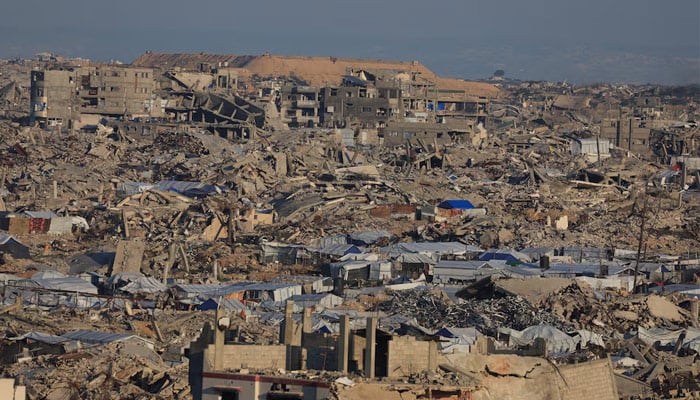
US President Donald Trump’s offer inviting Pakistan to join the Gaza Peace Board has secured prominent coverage in international media. Historically, our emotional and moral attachment to Palestine predates the creation of Pakistan itself.
I firmly believe that if today global powers are looking towards Pakistan for a resolution to the long-standing Palestinian issue, it is largely due to Pakistan’s established credibility as a formidable and disciplined military power in the region. Pakistan has been serving in UN peacekeeping missions for decades.
From Congo and Somalia to Bosnia and several African states, Pakistani peacekeeping troops have earned international respect for their professionalism, neutrality and discipline, contributing meaningfully to stability in conflict zones. However, in my assessment, the current situation in Gaza is entirely different from the past.
In my view, if Pakistan joins any military or security framework operating under the patronage of openly pro-Israel forces or one that the people of Gaza perceive as an extension of the Zionist agenda, then the immediate reaction will inevitably be negative. Such a move risks igniting anti-Pakistan sentiment across the Middle East, particularly among Palestinians. Pakistan has historically stood as a standard-bearer for the Palestinian cause, and any damage to this moral credibility would be irreversible.
Conversely, if Pakistan opts to play no role whatsoever or just a symbolic presence with limited participation, remaining uninterested in Gaza-related stabilisation efforts and distancing itself entirely from Middle Eastern politics, the consequences may prove even more severe.
Such disengagement would not only diminish Pakistan’s diplomatic relevance but also render its long-standing sympathy for the Palestinian people ineffective in practical terms. In Pakistan’s absence, the resulting vacuum would inevitably be filled by those players who may not share Pakistan’s principled commitment or emotional alignment with the Palestinian cause.
In this evolving context, Saudi Arabia’s role has become critical. In my view, Pakistan urgently requires sincere allies such as Saudi Arabia to reassert its leadership role on the diplomatic front. If the Saudi leadership has decided to support President Trump’s proposed Gaza peace initiative, then Pakistan should also stand shoulder to shoulder with Riyadh.
Once again, Pakistan stands at a historic juncture. On one side lie public sentiment, diplomatic credibility and moral responsibility; on the other, the potentially grave consequences of miscalculation. In such circumstances, Pakistan’s presence should not be linked to any military or offensive operation; instead, it must be strictly limited to peacekeeping, humanitarian assistance and post-conflict reconstruction.
Pakistan’s participation must not serve to legitimise any controversial political-military agenda, nor should it create, even indirectly, the perception of justifying Israeli aggression in the Palestinian territories. Therefore, every step must be taken with the highest caution. Pakistan must adopt a positive role that safeguards Palestinian trust while also preserving its position as a responsible and effective stakeholder in the Middle East.
In my view, the American president’s offer to Pakistan will shape the political trajectory of the coming decades. History not only remembers decisions as it transmits their consequences across generations.
The writer is a member of the National Assembly and patron-in-chief of the Pakistan Hindu Council. He tweets/posts @RVankwani
Disclaimer: The viewpoints expressed in this piece are the writer's own and don't necessarily reflect Geo.tv's editorial policy.
Originally published in The News