How to counter Israeli machinations
Israel's recognition of Somaliland creates outrage across the Muslim world
Published January 24, 2026
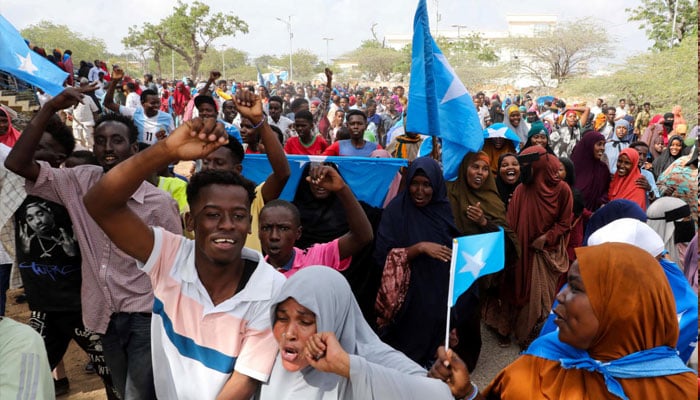
The recognition of Somaliland, a breakaway region of the Federal Republic of Somalia, by Israel has created outrage across the Muslim world.
The recognition has also lent credence to speculations that Tel Aviv is spreading its tentacles beyond the Middle East, which many people feel might spell disaster for Africa and Muslim states, besides creating challenges for nation-states.
Located in the northwest of the country, Somaliland declared its independence in 1991, but no country had recognised it until December 25 last year. The region is immensely important for its location. It could provide Israel access to vital maritime routes.
According to Ehud Yaari, a fellow at The Washington Institute, “Normalisation of relations with Israel may open opportunities for bilateral cooperation in many spheres, including intelligence sharing and access to naval and air bases". A former Israeli diplomat also revealed that the Zionist state might use this recognition to teach a tough lesson to Houthi rebels in Yemen.
But while the recognition is set to benefit Israel, it might turn out to be a recipe for disaster for Africa. The people of Somaliland and those of the republic have the same language, culture, traditions, customs, religion and even sect. The vast majority are Sunni Muslims.
The only dividing point is tribe. The country's main tribes are Darod, Hawiye, Dir, and Isaaq, with the Rahanweyn (Digil and Mirifle) also forming a significant group. Some of these tribes are dominant in Somaliland and others in the republic.
International law recognises the right of nations to self-determination, not that of a tribe, which is a smaller unit of a people. Somaliland, critics might argue, declared independence on a tribal basis and Tel Aviv recognised a state housing a particular tribe or tribes. This could result in many complications because the African continent is home to over 3,000 tribes, many of which have strained ties due to colonial policies that favoured one tribe over another.
It is perhaps because of this that many African states have tribal fault lines which erupted in the past. The conflict in Rwanda made it very clear that tribal tensions could lead to horrific massacres. Even today, the continent is facing over 50 active conflicts.
Many of these conflicts also have tribal angles in one way or another. The continent is considered an epicentre of global conflict, hosting 40 per cent of the world's wars and armed conflicts. The situation has resulted in the largest displacement crisis on the planet, with over 45 million people forced to flee their homes.
According to the International Committee of the Red Cross, Africa witnessed a staggering 45 per cent increase in conflicts since 2020. In addition to that, the continent is also riddled with religious fault lines, with Boko Haram and other terrorist outfits wreaking havoc on the lives of Christian and other non-Muslim minorities in Muslim-majority states of the continent.
So the recognition of Somaliland might encourage these African tribes and religious minorities to intensify their efforts to separate from their mother countries. This might mean a massive balkanisation of the region, which would plunge it into death and destruction, besides affecting separatist movements elsewhere.
For instance, the Israeli action might prompt Kurds to revisit their decision of reconciling with their mother states, which means more instability and more political strife not only in Africa but in other parts of the world as well.
According to Abdi Aynte, a former minister of planning and international cooperation of Somalia and a co-founder of the Heritage Institute for Policy Studies, "Israel's recognition of Somaliland signals something broader: the growing use of secessionist movements as disruptive instruments of geopolitical strategy across the Middle East and the Horn of Africa."
An 'axis of secession' is already visible in Libya, Yemen, Sudan, Somalia and Syria. Led by Israel and supported by a network of regional partners, this axis targets countries whose central governments, hollowed out by conflict, exercise only partial control over their territory. The logic is simple: weaken central authority, bolster breakaway regions, and cultivate dependent entities willing to align with Israel and sign onto the Abraham Accords."
Aynte claims that these emerging client polities offer Israel strategic footholds in volatile regions. "From them, it can monitor rivals, project power, secure key maritime routes and expand intelligence networks. Over time, Israel also hopes this strategy will coerce 'mother states' into reluctantly joining the Abraham Accords themselves."
However, the former Somali minister believes this approach might boomerang on Israeli policymakers, as the move has infuriated many countries in the region and beyond.
The African Union, the Arab League, the Organisation of Islamic Cooperation, the European Union, and India have supported Somalia's sovereignty and territorial integrity. Even the US, Israel's closest ally, joined other members of the UN Security Council in restating its commitment to Somalia’s unity.
Despite this overwhelming support for the republic, some believe the situation could take a turn which might be beneficial for Israel. For instance, Yaari believes the recognition may encourage the US and other countries to follow suit.
Recently, Nigel Farage, an anti-immigration leader of the Reform Party UK, addressed a gathering of Somalilandis celebrating the recognition of their state. The pro-Israel politician, who is leading in many political surveys and might make it to the power corridors of London in the next election, is likely to leave no stone unturned in appeasing the Zionist state.
That said, it must be admitted that Somalia failed to understand the gravity of the matter. It could not forge unity among the various sections of society. In addition, the republic miserably failed to snuff out the Al Shabab insurgency.
This machination of Tel Aviv should also prompt multinational, multi-tribal, and religiously diverse states to come up with mechanisms that address the grievances of their minorities or smaller ethnic and religious groups. If they do not address such grievances, then it will open the doors for external forces to meddle in their internal affairs. However, some states do not want to mend their ways.
For instance, Islamists in Syria have unleashed a reign of terror against the Kurds, Druze, Christian and other minorities. The government of Syria, headed by a former jihadist, has yet to form an inclusive government representing all sections of society. The same could be said about the Afghan Taliban government, which has established gender apartheid on the one hand and alienated religious and ethnic minorities on the other.
Muslim states should ensure adequate representation of all ethnic and religious entities, not only in government but also in bureaucracies and armies. This might go some way in preventing their fragmentation along religious, sectarian, ethnic, and tribal lines. Otherwise, Israel will keep carving out more Somalilands out of Muslim states.
The writer is a freelance journalist who can be reached at: [email protected]
Disclaimer: The viewpoints expressed in this piece are the writer's own and don't necessarily reflect Geo.tv's editorial policy.
Originally published in The News