Gold surge
The lesson of history is unmistakable: gold thrives in fear and uncertainty
Published January 30, 2026
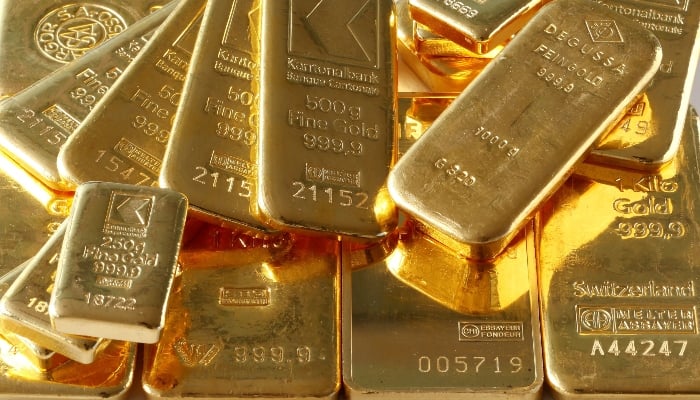
The news that the price of gold in Pakistan has crossed Rs532,000 per tola has taken many by surprise. Historically, the value of gold has never been confined merely to wealth; rather, it carries deep cultural, religious, social and political significance. Since ancient times, humans have sought gold, searched for gold mines, hoarded reserves and attempted to produce it through chemical processes. The presence of gold in royal treasuries symbolised power, stability and splendour, often determining the fate of empires.
The region we inhabit today was once famously described as a Golden Sparrow, a land so prosperous that it attracted invaders and traders alike. In ancient India, rulers of various kingdoms donated vast quantities of gold to temples. Alongside royal patronage, regular people also offered gold as religious devotion. Gold-decorated temples, massive golden thrones and crowns, ornate jewellery, gilded domes, gold coins and ceremonial vessels were common features of socio-religious life.
For many centuries, the Somnath Temple in Gujarat, located on the coast of the Arabian Sea, was renowned for the immense quantities of gold accumulated there. However, in January 1026, exactly a thousand years ago, the temple was attacked. Due to internal instability and weak defences, its vast gold reserves were seized and transferred to the treasury of the conquering ruler. Even today, temples in South India, particularly in Tamil Nadu, Kerala and Andhra Pradesh, bear testimony to gold treasures preserved over centuries.
During the Mughal era, India’s wealth of gold astonished the outside world. Emperors were ceremonially weighed against gold, which was then distributed to the poor. Gold usage was deeply embedded in society, especially during weddings and festive occasions. During British colonial expansion, gold and silver coins formed the backbone of the economy.
Interestingly, the paper currency was introduced by the East India Company. Farmers, labourers, traders and employees were paid in notes, while real gold increasingly came under colonial control and was shipped to England. People were assured that these notes were as valuable as gold and redeemable on demand. A promise that, in reality, was rarely honoured. It is often said that when the British arrived in India, gold was everywhere, but paper money was unknown; when they departed, paper notes were in circulation, but gold had vanished.
At the time of independence in 1947, gold was priced between Rs57 and Rs60 per tola, placing it well within the reach of the common citizen. By 1970, before the separation of East Pakistan, the price had risen to Rs180 per tola. The pace of increase accelerated thereafter, reaching Rs2,000 per tola in 1980. At the dawn of the new millennium, gold was priced around Rs8,000 per tola, climbing to Rs100,000 by the outbreak of Covid-19 in 2020.
Today, six years after the pandemic, gold has crossed Rs550,000 per tola, with expectations of further escalation. This dramatic rise, however, is not unique to Pakistan. In the global market, gold prices have surpassed $5,200 per ounce, raising fears that domestic prices may rise further in the coming days. Similar trends are being reported in the gold markets of the UAE, India, Thailand and other countries as well.
Undoubtedly, the recent surge has shaken households, unsettled investors, and raised uncomfortable questions about economic confidence, currency credibility and which way the country is headed. History clearly demonstrates that whenever economies weaken or global tensions escalate, gold prices rise. Loss of trust in paper currency compels people to invest in gold and heightened demand inevitably pushes prices upward.
In my view, the most influential factors driving gold prices today are global tensions, regional wars, border disputes and geopolitical uncertainty. The oil crises of the 1970s, the global war on terror, the Covid-19 pandemic, and the current volatile global environment have all contributed to gold’s relentless ascent. The lesson of history is unmistakable: gold thrives in fear and uncertainty. The world’s peace-loving nations must therefore step forward to play their due role in resolving global conflicts. Sustainable peace is not merely a moral necessity but an economic imperative.
The writer is a member of the National Assembly and patron-in-chief of the Pakistan Hindu Council. He tweets/posts @RVankwani
Disclaimer: The viewpoints expressed in this piece are the writer's own and don't necessarily reflect Geo.tv's editorial policy.
Originally published in The News