Beyond identity cards
Parties compete on identity, not outcomes, because identity mobilises faster
Published January 31, 2026
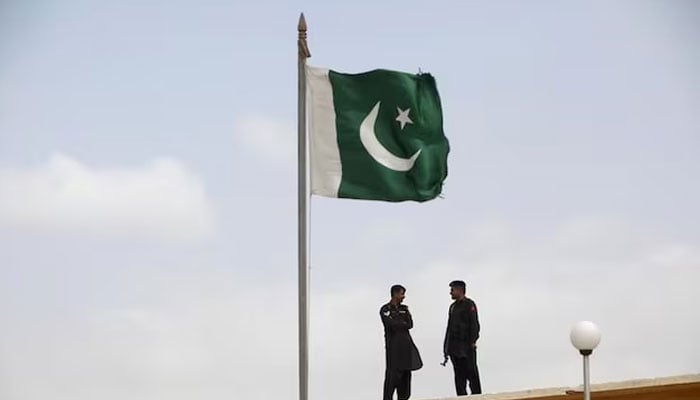
Watch Pakistan's political theatre long enough, and a pattern emerges. Our parties do not really compete on outcomes. They compete on identity — not because identity is inherently wrong, but because it is easier than governing a complex economy of 240 million people and because, frankly, it works.
The PTI has leaned into Pashtun pride with precision, turning Imran Khan's background into an emotional anchor across Khyber Pakhtunkhwa. Electoral messaging increasingly frames political struggle as ethnic assertion: this is your leader, your people, your moment. It mobilises quickly, requires no delivery, and creates instant loyalty.
The PML-N, sensing this shift, has begun responding in kind. Punjabi identity, once deliberately muted in national politics, has started to reappear — carefully, indirectly, but unmistakably. The subtext is defensive: protection of share, of influence, of provincial weight. This is less a policy argument than a reaction to an emerging identity arms race.
The MQM-P understood this logic long ago. Urban Sindh, particularly Karachi, was locked into a permanent state of identity siege. Governance failures — water shortages, broken transport systems, collapsing law and order — could always be reframed as persecution rather than incompetence. Karachi generates roughly 15–20%of Pakistan's GDP, yet remains chronically underinvested.
This is not an accident; it is the predictable outcome of politics organised around grievance rather than performance, where accountability dissolves into victimhood. Then there is Asif Ali Zardari, arguably the most skilled practitioner of identity as leverage. Sindhi, where consolidation is required, and Baloch, where bargaining power matters, are adaptable elsewhere. Identity here is currency, a tool to navigate a fragmented political marketplace where seats matter more than systems.
These ethnic narratives do not exist in isolation. Kashmir is invoked relentlessly — emotionally and symbolically — but rarely treated as a policy challenge requiring sustained diplomacy, economic resilience, and internal cohesion. Its political utility lies precisely in its abstraction. Similarly, Balochistan receives less than 5% of national private investment despite comprising nearly 45% of Pakistan's landmass.
Political movements there oscillate between genuine grievances and elite mediation, leaving the province trapped in a cycle in which slogans substitute for strategy. The result is a political ecosystem in which identity consistently crowds out policy. Linguistic divides, sectarian affiliations, and provincial grievances — all real and historically rooted — become shortcuts that allow leaders to avoid harder questions.
When was the last sustained national debate on exports, when Pakistan has remained stuck around $30–35 billion for over a decade, while Vietnam crossed $350 billion? Or on productivity, when Pakistani manufacturing output per worker is less than one-third of Vietnam's? Or on education quality, when nearly 25 million children remain out of school?
Identity politics persists because it delivers what politicians need. It requires no expertise, no infrastructure, and no follow-through. A government can preside over transmission losses of 20%, inflation touching 30%, and youth unemployment in double digits — and still survive electorally by validating identity and redirecting blame. Failure can always be outsourced to another ethnicity, another province, or another institution.
This is not simply elite cynicism. Identity politics works because Pakistan's institutional capacity to deliver economic outcomes has eroded so badly that voters have rational reasons to doubt policy promises. When the state cannot reliably provide electricity, education, or justice, ethnic solidarity becomes a form of insurance — a guarantee that at least someone will fight for your group's share of a shrinking pie.
The incentive structure runs deeper. Pakistan's political economy rewards short-term extraction over long-term investment. With uncertain election cycles, weak institutional continuity, and the constant threat of disruption, few actors are willing to invest political capital in reforms whose benefits may materialise years later. Identity mobilisation offers immediate returns; economic reform is a gamble someone else might harvest.
More fundamentally, Pakistan's growth model has been captured by narrow interests. The tax-to-GDP ratio struggles to cross 10%, not because of technical incapacity but because politically powerful sectors remain outside the net. Agriculture, real estate, and retail — elite-dominated sectors — are largely untaxed, while the salaried class and manufacturing shoulder disproportionate burdens. Correcting this imbalance requires confronting entrenched power. Ethnic mobilisation requires confronting no one who matters.
While Pakistan debates identity, others build. Bangladesh, which had a lower per capita income than Pakistan in the early 2000s, now exceeds it substantially. Vietnam, once war-ravaged, now exports more than ten times Pakistan's total exports. Even India, with all its internal contradictions, made economic scale and growth the dominant metric of political success for two critical decades. None of these countries erased identity. They simply stopped letting it dominate the scoreboard.
Pakistan chose differently. Industrial capacity utilisation hovers around 50–60%, with factories operating far below potential due to energy shortages, policy uncertainty, and a chronically fragile macroeconomic framework. Nearly 60% of exports remain concentrated in low-value textiles, not because textiles are inherently limiting, but because Pakistan has failed to move up the value chain or diversify at scale.
The tax base makes serious state capacity mathematically impossible. You cannot fund education, infrastructure, or healthcare on 10% of GDP while running chronic deficits. Every few years, the economy hits a balance-of-payments crisis. Politics responds not with structural reform, but with louder symbolism and intensified identity assertion.
It is in this context that Shahid Khaqan Abbasi's recent suggestion of a broad institutional reset deserves consideration — not as a panacea, but as recognition that the current system struggles to self-correct. His proposal gestures toward a framework in which major institutions acknowledge limits, define boundaries, and commit to rules of competition centred on outcomes rather than survival instincts.
Pakistan is not post-war Germany or post-apartheid South Africa. There will be no cathartic rupture. But the underlying intuition is sound: institutions locked in permanent blame cannot coordinate on growth. The value of such an exercise may lie less in public confession than in alignment around measurable goals.
Imagine political competition organised around targets that do not care about identity: sustained 6% growth, export doubling within a decade, universal primary enrolment, transmission losses halved, inflation kept below 8% – metrics visible enough that failure cannot be concealed behind narrative.
For ordinary Pakistanis, this shift would matter more than any rhetorical victory. Jobs do not ask which language you speak. Inflation does not check your sect. Electricity shortages do not discriminate by ethnicity. When economies grow, zero-sum politics loosens its grip; when they stagnate, scarcity turns identity into a weapon.
Pakistan has tested identity-first politics for decades. The results are measurable: weak institutions, squandered talent, and a state that permanently reacts rather than builds. A politics organised around economic delivery offers no guarantees. It would be harder, slower, and far less emotionally satisfying. It would require confronting interests that have long been shielded from accountability.
But unlike the current path, it has arithmetic on its side. There is no ethnic formula for solving a balance-of-payments crisis. No slogan that builds a power plant. No identity card that teaches a child to read.
The ethnic cards have been played. They have mobilised, divided, and distracted. What they have not done — what they cannot do — is make the country work. At this point, the real question is no longer whether a different approach carries risk. It is whether continuing this one is even mathematically survivable.
The writer posts @FarrukhJAbbasi
Disclaimer: The viewpoints expressed in this piece are the writer's own and don't necessarily reflect Geo.tv's editorial policy.
Originally published in The News