Uneven playing field
Detractors have framed Pakistan's refusal to play against India as contradictory, opportunistic or harmful to cricket’s spirit
Published February 05, 2026
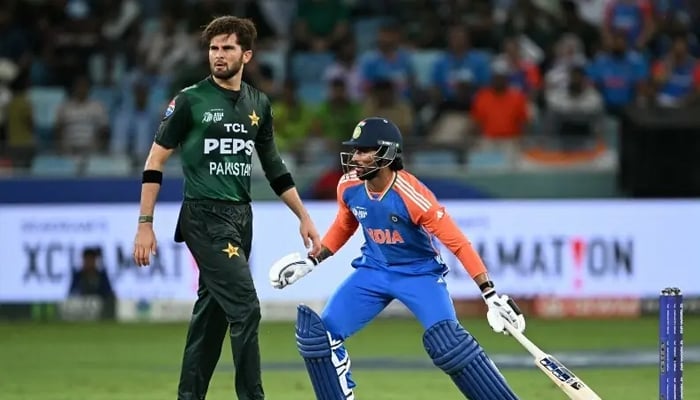
Pakistan’s decision to compete in the T20 World Cup while declining to play a scheduled February 15 match against India has attracted predictable criticism.
Detractors have framed the move as contradictory, opportunistic or harmful to cricket’s spirit. A closer look, however, shows something else entirely: a decision grounded in the long-established political realities of international cricket – realities the ICC has not only recognised in the past, but routinely accommodated, especially when India has been involved.
The most basic question critics avoid is also the most revealing. When India repeatedly refused to play Pakistan over the years, did the ICC ever warn New Delhi about harming the game or disappointing fans worldwide? The record is clear: it did not.
India’s withdrawal from bilateral cricket with Pakistan, often justified on the basis of government policy, was met not with reprimands or threats, but with acceptance. Pakistan and the PCB were told, in effect, that this was beyond the ICC’s control. The organisation’s position was consistent and explicit: when a government makes the call, the ICC cannot intervene.
That same situation now exists – with one key difference. This time, it is Pakistan’s government, not India’s, that has determined a specific match should not be played.
This distinction matters because it highlights the real limits of the ICC’s authority. The organisation lacks the authority to overrule sovereign governments, nor does its constitution permit it to penalise member boards for decisions imposed from above. This is not a debatable interpretation; it is a precedent repeatedly set and reaffirmed by the ICC itself.
Against that backdrop, the ICC’s recent language urging Pakistan to consider the 'consequences' of its stance and to seek a 'mutually acceptable solution' sounds less like principled leadership and more like selective moralising. When India adopted identical positions in the past, no such admonitions were issued.
The perception problem is compounded by the ICC’s current leadership. Its chair, Jay Shah, previously headed the BCCI and is the son of India’s home minister, Amit Shah – a senior figure in the BJP and a close ally of Indian Prime Minister Narendra Modi. The BJP’s antagonism towards Pakistan and its broader ideological posture are well documented, including within India itself. In such circumstances, expecting the ICC to be widely seen as neutral is optimistic at best.
More fundamentally, the ICC is structurally incapable of compelling compliance when a government steps in. Its governing documents do not empower it to punish a board for decisions taken at the state level. History bears this out. Teams have skipped tours, postponed series or withdrawn from fixtures without facing sanctions precisely because governments, not cricket boards, made those calls.
Pakistan’s present position fits squarely within that established framework. If the decision not to play India on February 15 stems from official policy or security assessments rather than a unilateral PCB move, then the ICC’s options are effectively nonexistent – just as they were when India declined to play Pakistan. Suggesting otherwise implies that the rules somehow change depending on who is involved.
At the same time, Pakistan’s choice to participate fully in the T20 World Cup is neither confused nor compromised. Global tournaments are not bilateral engagements. They are multilateral competitions shaped by international agreements, commercial realities and collective sporting interests.
By taking part, Pakistan avoids self-imposed isolation. It safeguards its players’ careers, maintains its competitive relevance and retains a seat at the table where global cricket decisions are made. Walking away entirely would achieve the opposite. It would weaken Pakistan’s leverage, marginalise its cricket further and deprive fans – particularly Pakistani supporters – of seeing their team compete at the highest level. Participation, therefore, is calculated engagement.
Some critics argue that refusing one match while contesting the tournament sends mixed messages. In practice, it mirrors how international cricket has operated for years. India has repeatedly participated in ICC events that included Pakistan while declining bilateral series outside those tournaments. The game did not collapse under the weight of that inconsistency. No alarm bells were rung about cricket’s integrity. Instead, the sport adjusted – because it had little choice.
Power dynamics also need to be acknowledged honestly. If the Indian government and the BCCI were to take a similar decision today, the ICC would neither force compliance nor impose meaningful penalties. The organisation’s caution, or rather double standard – particularly where India is concerned – is an open secret. Holding Pakistan to a stricter standard is neither equitable nor believable.
Ultimately, this is not a tale of Pakistani obstinacy or incoherence but about an international cricket system that has long learned to live with political intervention, while invoking lofty principles selectively.
By competing in the T20 World Cup, Pakistan has reaffirms its commitment to international cricket and to supporters around the world. By declining a specific fixture under government direction, it has asserted its sovereign right to make policy and security decisions without apology. These positions coexist, and have always coexisted, within the ICC’s own history.
If world cricket genuinely wishes to insulate the game from political influence, then its rules and principles must be applied consistently and without exception. Until that happens, Pakistan’s position is not only reasonable and defensible, but also firmly in keeping with how international cricket has, in practice, been managed for years.
The writer is a journalist based in Karachi. He tweets/posts @omar_quraishi and can be reached at: [email protected]
Disclaimer: The viewpoints expressed in this piece are the writer's own and don't necessarily reflect Geo.tv's editorial policy.
Originally published in The News