Economics of Basant
Basant, at its core, is not just a cultural moment; it is a temporary economic machine
Published February 07, 2026
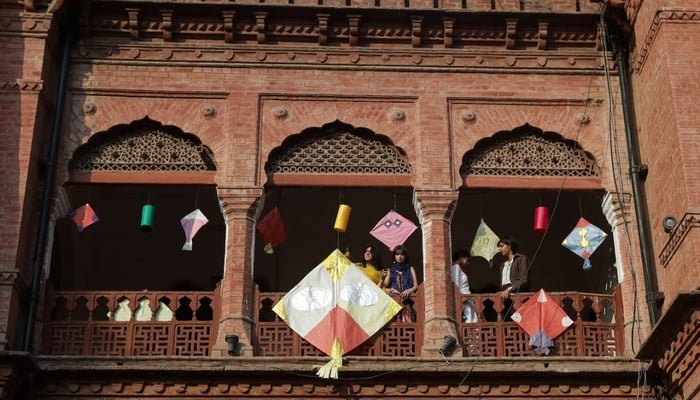
A February afternoon in Lahore: rooftops packed, kites tugging against the wind, yellow ribbons in bazaars and a city that looks like it is doing business with a smile.
Basant, at its core, is not just a cultural moment; it is a temporary economic machine – one that compresses months of demand into a few days and pulls a wide range of work into motion.
Economists have a simple way to describe why festivals matter: linkages. In one line, linkages mean an activity pulls suppliers behind it and pushes business ahead of it. A festival is a demand shock with a deadline. That deadline forces households and firms to spend now, stock now, hire now, travel now. In a city like Lahore – dense, service-heavy, highly informal – the impact shows up quickly in cash flow, daily wages and sales volumes.
Start with the backward linkages: the supply chain that exists because Basant exists. Kite-making is not ‘one product’; it is paper, bamboo/cane, thread, glue, dyes/inks, printing, packaging, transport and the small workshops that assemble it all.
Then come supporting inputs: food and catering supplies for gatherings, water and soft drinks, disposable plates, charcoal, gas refills, lighting, sound systems, small rental furniture and tailoring for festival-themed clothing. Because much of this sits in the informal economy, it is easy to undercount. When demand spikes, many informal businesses expand hours rather than capacity – meaning the economic effect appears as overtime, extra shifts and short-term hiring.
Now the forward linkages: what happens after the kites are in the air. Basant is an excuse for people to gather, and gatherings feed Lahore’s service economy. Visitors move through transport networks-ride-hailing, rickshaws, intercity buses-then spend on hospitality: rooftop access, small venues, cafés, hotels, and event-style home catering.
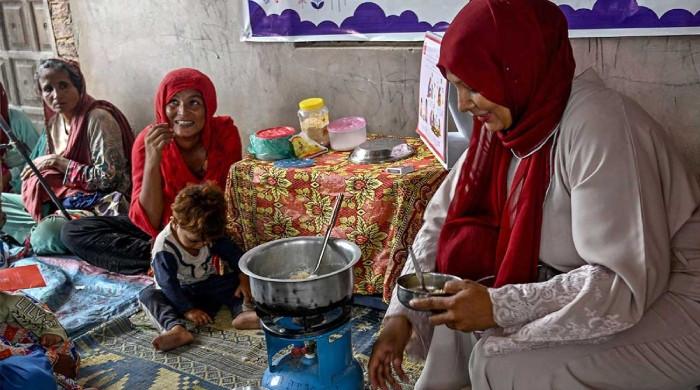
Food is the biggest winner because it scales quickly. A restaurant can add a second shift; a home kitchen can become a micro-business for two days; a street vendor can double sales if footfall is right. Even when individual purchases are small, the volume of transactions can be substantial, which is precisely how festivals sustain day-to-day livelihoods.
If Lahore’s revived Basant in 2026 is judged on economics, the cleanest place to start is a Back-of-the-Envelope estimate built from what we can plausibly count. This is an attempt to estimate, not an audit: Basant is cash-heavy, data is patchy and rules can change what even qualifies as ‘activity’.
Begin with an old anchor often cited for Lahore: Rs220 million of Basant-related direct activities in 2004. Translate it to today’s price level using the CPI: with CPIs of 51.1 (2004) and 386 (2025), the inflation factor is 7.55 (386/51.1), converting the same nominal basket into roughly Rs1.66 billion in 2026 rupees. Scale for city size: Lahore rises from 6.28 million (2005) to 15.15 million (2025) – about 2.41x – lifting the figure to around Rs4.0 billion. Add purchasing power: real GDP per capita moves from Rs117,415 (2004) to Rs167,326 (2024) – about 1.43x – pushing a direct-and-near-direct estimate to roughly Rs5.7 billion.
Then do the ‘engineering’ cross-check–the part the state can actually measure. Lahore administration has approved 1,413 sale points for kites, string and related material for a three-day Basant window. If an average registered point sells a conservative Rs1 million per day in kites, string and accessories, that alone implies about Rs4.24 billion in direct turnover at approved points.
The big uncertainty is the daily average per point. Some locations will do far more, others far less, and cash sales will not always leave a clean trail, but the method has one advantage over headline guesses: it ties the estimate to observable micro-units that regulators already manage.
Put those two approaches together and a sensible ‘direct and near-direct’ range for a regulated Basant in Lahore in 2026 sits around Rs4–6 billion. Its range is roughly $15–20 million. The bigger economic story, however, does not end there. Indirect effects run through suppliers restocking paper, dyes, packaging, fuel and food inputs; induced effects follow when workers paid during the festival spend that income on household needs afterwards.
Economists often bundle these into ‘multiplier effects’, but the practical takeaway is simpler: a festival recycles cash through many hands in a short time, which is especially valuable in a city where so many households live close to the margin.
A quick Pakistan-wide benchmark can still help readers. In FY2024–25, Pakistan had about 77.2 million employed persons and a nominal GDP of around Rs114,692 billion (Rs114.7 trillion). That crude ratio implies roughly 670 jobs per Rs1 billion of annual output, on average. So Rs5 billion corresponds to about 3,300 ‘job-years’ if that activity were sustained for a full year, not a one-off burst.
A useful external comparison is Indian Gujarat’s kite economy, not as a scoreboard but as a lesson in what formal supply chains can do to measured value. Gujarat accounts for roughly 65 per cent of India’s kite output, with a kite industry worth about INR6.5 billion (around $76.6 million) and supporting roughly 130,000 people year-round. The implication for Lahore is not ‘match Gujarat’, it is that when production, distribution and retail are organised and recorded, the economic footprint becomes easier to see – and easier to govern.
If Basant is to be assessed through an economic lens, the debate should move from slogans to measurement. Start with what is countable: registered sale points, event-day turnover and a simple sample-based estimate that can be repeated each year.
That is how a city turns a festival from a guessing game into an accountable, regulated burst of commerce – one where livelihoods, not just nostalgia, sit at the centre of the argument.
The writer is a research associate at the Centre of Economic Planning and Development (CEPD), Minhaj University, Lahore.
Disclaimer: The viewpoints expressed in this piece are the writer's own and don't necessarily reflect Geo.tv's editorial policy.
Originally published in The News