Pakistan in the new trade order
Rather than dismissing India's trade diplomacy, Pakistan should make clear assessment of exposure, follow it with practical steps
Published February 08, 2026
Trade diplomacy today is being redefined — driven less by textbook economic theory and more by the instinct to protect against uncertainty, as tariffs fluctuate with little warning, compliance rules shift mid-stream and market access is increasingly shaped by politics rather than price alone.
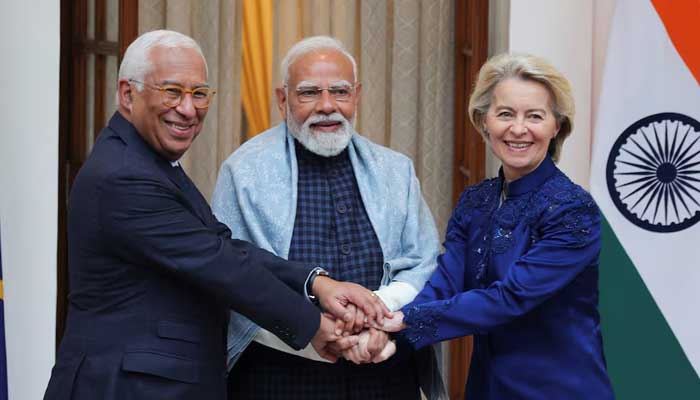
It is in this environment that friends and foes of the US are negotiating or deepening trade arrangements to limit their exposure to abrupt policy changes. India’s recent free trade and preferential trade agreements with the EU and UK also fit squarely into this global pattern.
Pakistan and India compete directly in several product categories in the EU, the UK and the US. Rather than dismissing India's trade diplomacy as just another global trend or reacting to it with panic, Pakistan should make a clear assessment of its exposure and follow it with practical steps to strengthen competitiveness.
To make any objective assessment, let us recognise that the scale gap between India and Pakistan is not new. In the EU, goods trade with India reached about €120 billion in 2024, compared with roughly €12 billion with Pakistan. In the UK, imports from India stood at £11.1 billion over the four quarters to the end of Q3 2025, compared with about £1.6 billion from Pakistan.
In the US, imports from India were around $87.3 billion in 2024, compared with roughly $5.1 billion from Pakistan. These figures do not constitute a verdict on policy efforts. They simply show where the two exporting nations stand. India approaches new trade deals as a diversified supplier with scale, while Pakistan enters the same markets as a more specialised exporter with far less room for error.
That narrow margin for error is most evident in Europe. Pakistan's exports to the EU are heavily concentrated in textiles and clothing, which account for nearly three-quarters of EU imports from Pakistan. This concentration has remained viable largely because of duty-free access under the EU’s GSP+ scheme, which is due for renewal in 2027.
Preferential access has cushioned exporters against high energy costs, logistics frictions and slow progress into higher-value products, allowing factories to remain competitive even when domestic conditions were less than favourable.
The EU–India free trade agreement will gradually narrow that cushion. Pakistan and India are direct competitors in the EU market, with textile and apparel exports of roughly $7 billion each annually to the bloc even before the new agreement alters tariff structures. Indian exporters, who previously faced tariffs of around 12% on textiles, are expected to gain much easier access once the agreement is implemented, likely within the next year.
This will not push Pakistan out of the European market. Buyers do not abandon suppliers lightly. But it will change the terms of negotiations. Prices will be scrutinised more closely, and delivery schedules will be more important.
Compliance gaps that were once tolerated will become costly. Assuming Pakistan secures the renewal of its GSP Plus status beyond 2027 and that Pakistan and India enjoy similar tariff treatment, Pakistani exporters will increasingly have to compete on performance alone.
The UK presents a slightly different competitive picture, but the pressure should not be underestimated. Pakistan already benefits from preferential access under the UK's Developing Countries Trading Scheme, so India’s UK deal does not immediately trigger a tariff shock. In practice, however, Indian suppliers will approach buyers with a stronger cost position, particularly in mainstream apparel categories.
The UK's large Pakistani diaspora does provide a loyal niche market and an opportunity for brand-led growth in traditional and occasion wear. But this demand is concentrated in branded and semi-formal segments and does not drive bulk textile exports.
For most large-volume orders, UK buyers prioritise price stability, lead times and compliance. Pakistani exporters will therefore need to tighten operations, improve consistency and deepen buyer relationships.
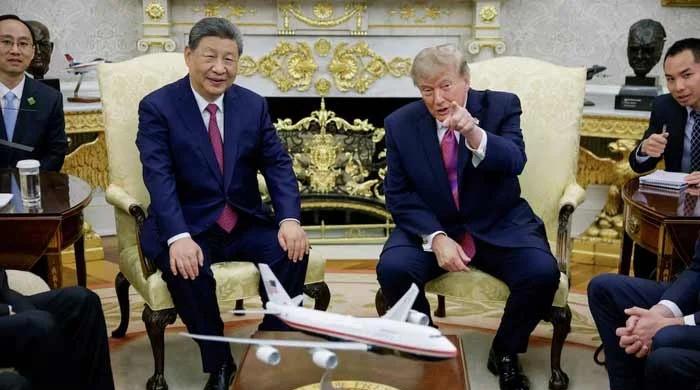
The US remains the most unpredictable of Pakistan's major export markets, and recent tariff claims against India only reinforce this reality. Reports suggest that cumulative tariffs on Indian exports may be reduced sharply, from as high as 50% to around 18%, in return for commitments reportedly involving large purchases of American goods, abandoning purchases of oil from Russia and zero tariffs on US products. Yet no formal text or legal instrument has been released.
US trade policy has become overtly transactional and politically contingent, with announcements often running ahead of enforceable commitments. Pakistan should therefore avoid treating short-term tariff signals for competitors as a lasting shift in market conditions and focus instead on strengthening its own competitiveness in a market where policy settings can change quickly.
There is also a familiar argument at home about currency. The Pakistani rupee is much weaker than the Indian rupee against the dollar, euro and pound, which theoretically could offer exporters a brief pricing advantage. That edge, however, fades quickly.
Depreciation increases the cost of imported inputs, from dyes and chemicals to machinery spares and freight, thereby raising production costs. Buyers, meanwhile, do not judge suppliers on price alone. Delivery reliability and compliance are equally important, and neither can be offset by a weaker currency.
So how should Pakistan respond to India’s trade diplomacy? The starting point is to defend market share where competition will be sharpest. Apparel and home textiles remain the main areas of overlap with India in Europe and the UK. Pakistan can retain and expand its presence by moving up within existing product lines through improved finishing, stronger design input, added value, shorter response times and stricter compliance.
This, in turn, makes trade facilitation a central priority for reform. Delays at ports, unpredictable documentation and slow refunds quietly erode competitiveness day after day. Cutting this friction is often cheaper, faster and more effective than subsidising exports.
GSP Plus must be treated as an economic priority and a lifeline for our exports. The EU has extended the current framework until the end of 2027, offering a narrow but valuable window. Losing preferential access would raise landed prices for Pakistan's exports in its most important market, just as competition intensifies. Pakistan should therefore focus on meeting the renewal requirements and use this period to strengthen its underlying competitiveness.
Policymakers also need to be candid about the constraints imposed by Pakistan's IMF programme. Measures that alter energy pricing, introduce broad subsidies or weaken fiscal discipline will require negotiation with the Fund, which has shown little flexibility regarding untargeted concessions.
Where support is necessary, it should be targeted, temporary and clearly linked to export performance, and designed within agreed fiscal limits. An export strategy that ignores these constraints will not be credible.
Finally, Pakistan needs to reduce its dependence on a narrow set of markets and a limited export basket. Expanding exports to the Gulf, East Africa and parts of Asia is not a retreat from Europe or the US. It is basic risk management. In an uncertain global economy, diversification is a backup plan rather than an ambition.
It is not our trade diplomacy versus theirs. The trade deals secured by India simply remove a layer of comfort from Pakistani exporters. In a world where tariffs can change quickly and preferences are never guaranteed, competitiveness remains the only durable defence, and that should be our focus.
The writer heads SDPI, chairs the board of the National Disaster Risk Management Fund, and serves on the ADBI’s Advisory Board. He posts on LinkedIn @Abidsuleri
Disclaimer: The viewpoints expressed in this piece are the writer's own and don't necessarily reflect Geo.tv's editorial policy.
Originally published in The News